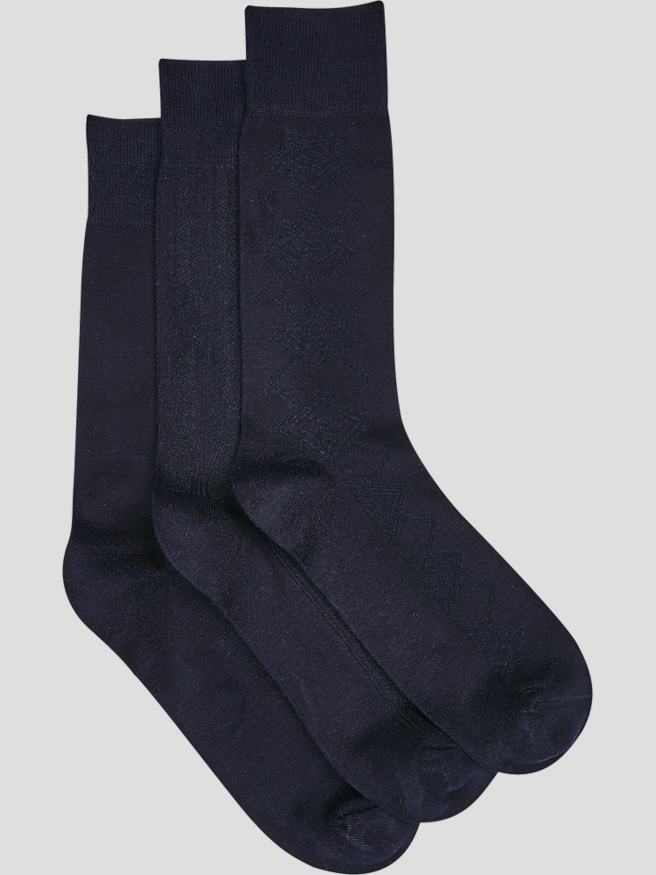
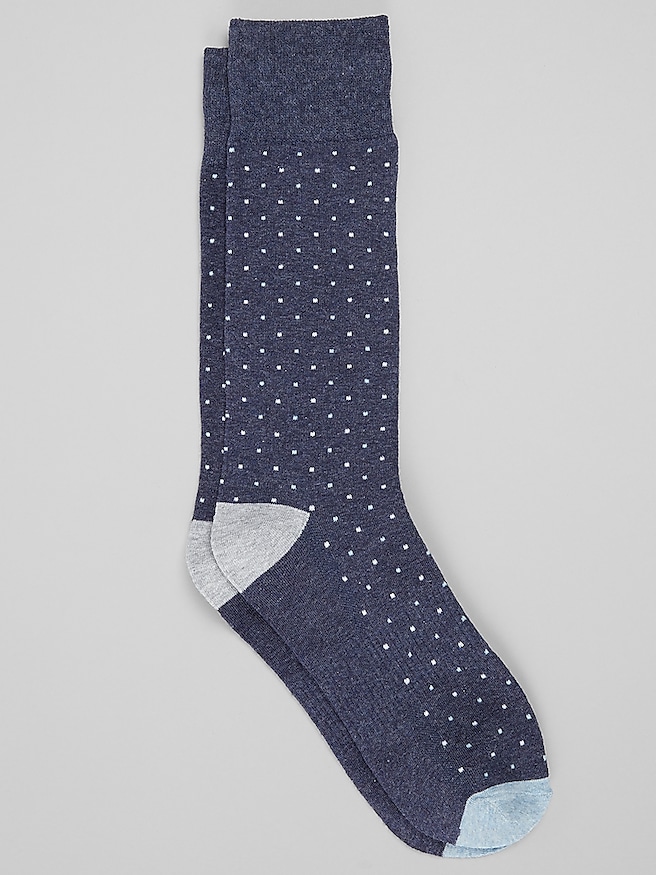
Nautical socks bring maritime character to everyday clothing through anchor motifs, sailboat patterns, rope-inspired details, and stripes associated with classic coastal style. Navy, white, red, and blue are familiar colors in this category, though the size and spacing of a pattern can make two pairs feel quite distinct. A small anchor repeated against a dark background reads as a subtle dress accessory, while larger boats or bold horizontal stripes give casual outfits a more playful finish. That range makes nautical-themed socks useful for everything from an ordinary office day to a dinner overlooking the harbor. They offer a way to acknowledge an interest in sailing or the waterfront without building an entire outfit around it. With navy trousers and brown leather shoes, a restrained maritime pattern adds detail that becomes visible when sitting down or crossing a leg. With chinos and sneakers, a broader stripe can feel relaxed and deliberate. For a coordinated look, repeat one color from the socks in a shirt, tie, or pocket square rather than matching every accessory. A patterned sock usually looks clearest beside a solid trouser fabric; when trousers already have a noticeable check, a smaller motif keeps the combination from feeling crowded. Color can also provide continuity without an exact pattern match, and men's navy socks offer a related direction for outfits built around deep blue. Nautical dress socks tend to work best when their pattern remains secondary to the clothing, especially in more traditional professional settings. For casual gatherings, bolder designs can take a more visible role. The appeal is in that balance: recognizable maritime imagery, practical everyday use, and enough personality to make a familiar combination of trousers and shoes feel more individual. Even a narrow glimpse above a loafer can introduce the theme without competing with the rest of the outfit.
Beyond the design, the most important differences in nautical socks are fiber content, knit construction, cushioning, and length. Cotton is valued for its soft feel and breathability, while blends often include nylon or polyester to help the fabric withstand repeated wear. Small amounts of elastane or spandex provide stretch and help socks recover their shape after movement. Fiber percentages alone do not tell the whole story: a fine, closely knitted cotton blend can feel quite different from a thicker knit with a cushioned footbed. For fitted dress shoes, a smooth, lightweight sock generally occupies less space and reduces the chance of making the shoe feel tight across the toes. Casual shoes with more room may accommodate additional cushioning comfortably, particularly for days that involve considerable standing or walking. Crew socks rise above the ankle and provide a visible area for stripes or scattered motifs. Mid-calf and over-the-calf styles offer more leg coverage, with over-the-calf designs often preferred under dress trousers to help keep skin covered when seated. Low-cut and no-show styles keep more of the pattern concealed and place greater importance on a secure heel fit. Size should follow the stated shoe-size range rather than the assumption that any stretchy sock will fit equally well. A correctly positioned heel pocket, toes that can move freely, and a cuff that stays up without digging into the leg are useful signs of a comfortable fit. Socks that are stretched too tightly may distort a sailboat or anchor motif; excess fabric can bunch inside the shoe and rub during movement. Smooth toe seams and well-shaped heels are worth considering for close-fitting footwear. Nautical styling describes the appearance, not a performance standard, so an anchor pattern should not be taken as evidence of specialized cushioning, moisture management, or suitability for water sports. Those qualities depend on the actual construction and stated features.
Good care helps nautical socks retain their color, fit, and recognizable details through repeated use. The care label should determine washing and drying methods, since blends and decorative elements can have different requirements. When permitted by the label, washing with similar colors and turning socks inside out can help limit abrasion on the patterned surface. Avoiding excessive dryer heat can help protect stretch fibers and reduce unwanted shrinkage; air-drying is another option when appropriate for the fabric. Socks benefit from enough room in the shoe, too, because constant friction at a crowded toe or slipping heel can wear through fabric regardless of how carefully it is washed. Reinforcement at the heel and toe can add durability in these high-friction areas, while a cuff with reliable recovery helps preserve the fit over time. Alternating pairs gives each a chance to be washed and dried fully before the next wear. When putting them away, keeping pairs together without tightly stretching one cuff over the other avoids leaving the top under prolonged tension. These practical details matter whether the socks are part of a regular work wardrobe or reserved for occasions with a maritime connection. Nautical socks can make a thoughtful gift for a sailor, boating enthusiast, coastal traveler, or anyone who enjoys a small patterned accent. The strongest gift choice reflects the recipient's usual clothing as much as an interest in boats: discreet anchors for someone who wears tailored trousers, graphic stripes for someone drawn to casual outfits, or a more expressive sailboat pattern for a person who enjoys novelty accessories. Knowing the recipient's shoe size and preferred sock height helps turn an appealing design into something that gets worn. For a waterfront wedding or a sailing club celebration, coordinated nautical motifs can also provide a subtle shared detail without requiring identical outfits. In everyday settings, their value is simpler: a comfortable pair that sits properly inside the shoe, holds its shape, and adds a clear touch of maritime style. The best match combines that visual character with the right weight, coverage, and fit for the way the socks will actually be used.