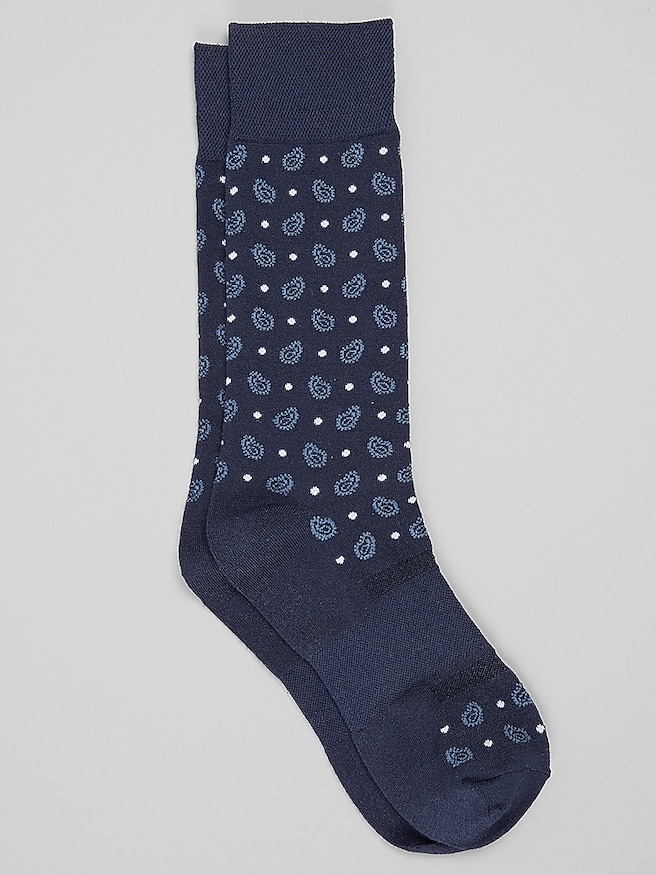
Navy blue socks bring a deep, understated color to everyday dressing, with enough versatility to work beneath suit trousers, chinos, and dark denim. Their appeal lies in the balance: navy is subtle enough for a conservative office but less stark than black against many shades of brown leather. With navy trousers, a closely matched sock helps maintain a continuous line from the trouser hem to the shoe, especially when sitting down or crossing a leg. With charcoal pants, the same color adds a quiet contrast that still feels appropriate for a presentation, dinner reservation, or wedding reception. Brown oxfords, burgundy loafers, and black lace-ups can all work with navy socks, depending on the rest of the outfit. The depth of the blue matters, too. An inky navy tends to recede into dark tailoring, while a slightly brighter navy makes the color more noticeable without becoming the focal point. Solid finishes emphasize simplicity; fine ribbing adds texture that can sit comfortably alongside flannel trousers, brushed cotton, or a smooth worsted suit. A restrained pattern can bring some personality to an otherwise plain outfit, though a clean, uninterrupted color is often the easiest starting point for coordinating separates. For a related look centered on unpatterned color, Solid Blue Socks complement wardrobes built around straightforward combinations. Navy also transitions naturally between levels of formality. A thin dress sock belongs comfortably inside a close-fitting leather shoe, while a more substantial crew sock suits casual footwear and relaxed pants. During the cooler months, that versatility is useful when the day includes a chilly commute, an indoor meeting, and an evening out. Rather than drawing attention away from the outfit, navy socks provide a finishing detail that looks considered when the hem rises and stays discreet when it falls back into place.
The feel of navy blue socks depends as much on fiber content and construction as on appearance. Cotton blends often have a soft, familiar hand that works well for everyday wear, while added nylon or polyester can contribute strength and help the fabric maintain its structure. Cotton absorbs moisture, so its comfort during a busy day also depends on the blend, knit weight, footwear, and how readily the fabric dries. Merino wool blends are another consideration for cooler conditions and changing indoor temperatures; fine wool fibers can help manage moisture vapor and provide warmth without requiring a bulky knit. For workouts or particularly active routines, purpose-built socks with moisture-managing synthetic fibers and cushioning are generally more appropriate than thin dress styles. A small amount of elastane or spandex supplies stretch, helping the sock follow the foot and recover after wear. Fiber percentages tell only part of the story, however. A smooth, fine-gauge knit feels distinct from a thick rib, even when their compositions are similar. Fit begins with the stated shoe-size range and a heel pocket that sits at the heel rather than pulling underneath the foot or riding toward the ankle. Toes should have room to move without loose fabric folding inside the shoe, and the cuff should feel secure without pinching. Crew lengths offer familiar everyday coverage, while over-the-calf dress socks provide more coverage beneath trousers when seated. For someone who spends much of the workday at a desk, that extra length can help prevent a visible gap between the sock and trouser hem. Cushioning deserves equal attention: a padded sole can soften contact underfoot, but too much thickness may crowd a fitted loafer or oxford. Smooth toe seams are worth considering for feet sensitive to friction, particularly during long stretches of walking. The most useful combination is one that matches the shoe as well as the occasion, whether that means a lightweight pair for tailored clothing or a sturdier knit for casual boots.
Durability and care help navy socks remain a dependable part of a regular wardrobe. The heel, toe, and ball of the foot take repeated friction, making reinforcement in those areas a practical construction detail. A resilient cuff and fabric that returns to shape after stretching also matter over time, particularly for socks worn through full workdays. Even a well-made pair can wear prematurely if the shoe is too tight, the fit leaves excess fabric rubbing at the toes, or rough footwear linings create repeated abrasion. Care should always follow the individual label, since cotton, wool, and synthetic blends may have distinct requirements. When the label permits, washing in cool water with similar dark colors and using a gentle cycle can help limit fading and unnecessary friction. Turning socks inside out before washing exposes the interior to cleaning while reducing rubbing on the visible surface, and a mesh laundry bag can keep pairs together. Avoid chlorine bleach unless the care instructions specifically allow it. High heat can affect stretch fibers and cause some fabrics to shrink, so low-temperature drying or air-drying is preferable when directed by the label. Wool blends may need especially gentle handling and a flat drying surface to preserve their shape. Letting socks dry completely before putting them away keeps the next wear more comfortable, while storing pairs together without tightly stretching one cuff over the other avoids prolonged tension on the opening. These small habits are especially useful for a color that may see frequent rotation. Navy blue socks also make a practical gift for a college graduate building a professional wardrobe, a partner who wears tailored clothing, or someone who appreciates understated everyday essentials. Shoe size, preferred sock height, and usual footwear provide better direction than color alone. A person who favors sleek dress shoes may appreciate a fine, smooth knit, while someone who spends weekends in boots may prefer more substance underfoot. With the right weight, fit, and care, navy socks serve a simple purpose well: comfortable coverage and a cohesive finish across the clothes already worn most often.