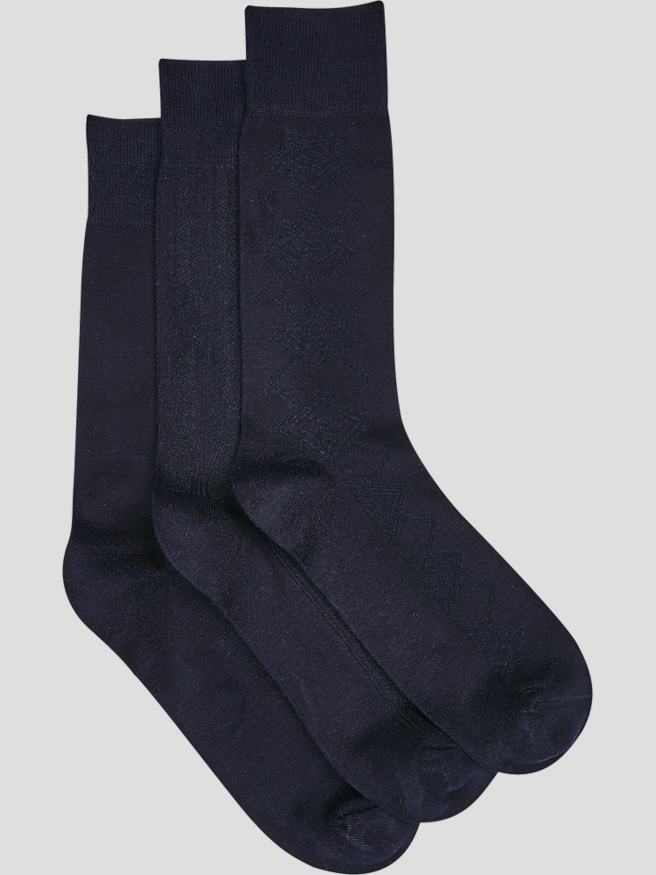
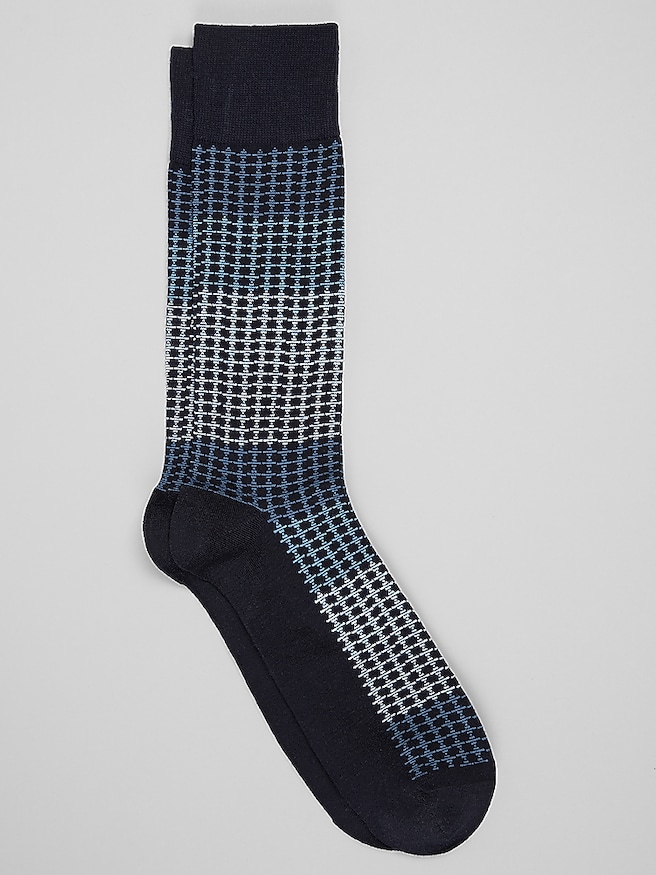
Men’s navy socks bring a deep blue foundation to dress clothes, business casual outfits, and everyday combinations. Less stark than black and more understated than brighter blues, navy works especially well when the goal is a clean line from trouser hem to shoe. With a navy suit, socks in a similar depth of color help keep the lower half of the outfit visually connected, particularly when the fabric lifts at the ankle while sitting. With charcoal or medium gray trousers, navy introduces a subtle contrast without drawing attention away from the rest of the outfit. Brown leather oxfords, burgundy loafers, and black dress shoes can all work with navy socks; the overall effect depends on the trousers, the occasion, and the texture of the socks themselves. Fine-gauge knits generally look more natural with tailored clothing, while a more substantial rib can sit comfortably alongside chinos, denim, and suede shoes. Solid navy is a dependable choice for interviews, presentations, ceremonies, and offices where understated clothing feels appropriate. Small dots, narrow stripes, or restrained geometric patterns add personality while keeping dark blue as the dominant color. A subtle pattern can pick up a shade in a shirt or tie without making every accessory look deliberately matched. For a wedding guest wearing a blue suit, a smooth, dark sock keeps the focus on the tailoring. For a relaxed dinner in stone chinos and brown loafers, a navy ribbed sock can provide a deliberate contrast at the ankle. Dark denim also pairs naturally with navy, though a noticeable difference in texture helps keep the combination from looking flat. The distinction between dress and casual socks is not simply color: thickness, knit texture, coverage, and the way the sock fits inside a shoe all influence whether the finished outfit feels polished or relaxed.
Material and construction determine much of how navy socks feel through a full day of walking, commuting, or working at a desk. Cotton contributes softness and absorbs moisture, while cotton blends often incorporate other fibers to improve stretch, shape retention, or drying performance. Merino wool can help manage moisture and resist odor, with fine fibers providing a smoother feel than the word wool might suggest. Nylon is commonly used to strengthen a knit, and polyester can support durability and moisture transport, depending on the fabric’s construction. Elastane or spandex supplies the stretch that helps a sock follow the foot and recover after wear. Fiber percentages alone do not tell the whole story: a dense, fine knit may feel quite different from a cushioned knit with a similar composition. For close-fitting dress shoes, a thinner sock usually leaves more room across the toes and instep. For sneakers or roomier casual shoes, cushioning under the heel and forefoot may make repeated steps more comfortable. Extra thickness is not automatically better, especially if it makes a well-fitting shoe feel cramped. Proper sizing matters just as much. The heel pocket should sit around the heel rather than pulling toward the arch or climbing above it, and excess fabric should not gather beneath the toes. A secure cuff helps prevent slipping, but it should not need to dig into the leg to stay in place. Crew-length socks suit many everyday combinations, while over-the-calf dress socks provide extended coverage when trouser hems rise. Lower-cut styles create a different look with casual footwear and do not provide the same coverage under tailored trousers. Smooth toe seams can reduce rubbing, particularly in shoes with a close fit across the front. Reinforced heels and toes may help areas exposed to repeated friction hold up longer. Breathability, cushioning, seam placement, and stretch are worth considering together rather than treating any single feature as a guarantee of comfort. The most useful choice is the one that suits both the wearer’s foot and the space inside the intended shoe.
Thoughtful care helps navy socks retain their shape, texture, and depth of color. The care label is the best reference because cotton, wool, and synthetic blends may require different treatment. Turning socks inside out before laundering exposes the interior to cleaning while reducing friction on the visible surface. Washing with similar dark colors can help protect the appearance of navy fabric, and avoiding chlorine bleach reduces the risk of discoloration or fiber damage. Wool blends may need a gentle cycle and a suitable detergent, while some performance fabrics require avoiding fabric softener to preserve their intended function. Excessive dryer heat can weaken elastic fibers and contribute to shrinkage, so drying should follow the label rather than a single routine for every pair. Storing clean, fully dry socks loosely together, instead of stretching one cuff tightly around the other, helps avoid unnecessary strain on the opening. Rotating pairs also gives each one a break from repeated wear and washing. These small habits matter for socks worn frequently with office clothes or a regular rotation of dress shoes. Within the broader color family of men’s blue socks, navy offers an understated option that coordinates easily with many established wardrobes. That versatility also makes navy socks a practical gift for a father, brother, partner, graduate, or someone building a professional wardrobe. The recipient’s routine provides useful context: a frequent suit wearer may appreciate smooth dress socks with reliable leg coverage, while someone who spends more time in chinos and sneakers may prefer a soft crew with modest cushioning. Shoe size, preferred sock height, fabric sensitivity, and tolerance for patterns help make the choice feel personal rather than generic. Whether worn beneath tailored trousers or paired with everyday denim, a well-fitting navy sock provides a quiet finishing detail: comfortable inside the shoe, appropriate to the outfit, and easy to reach for again.