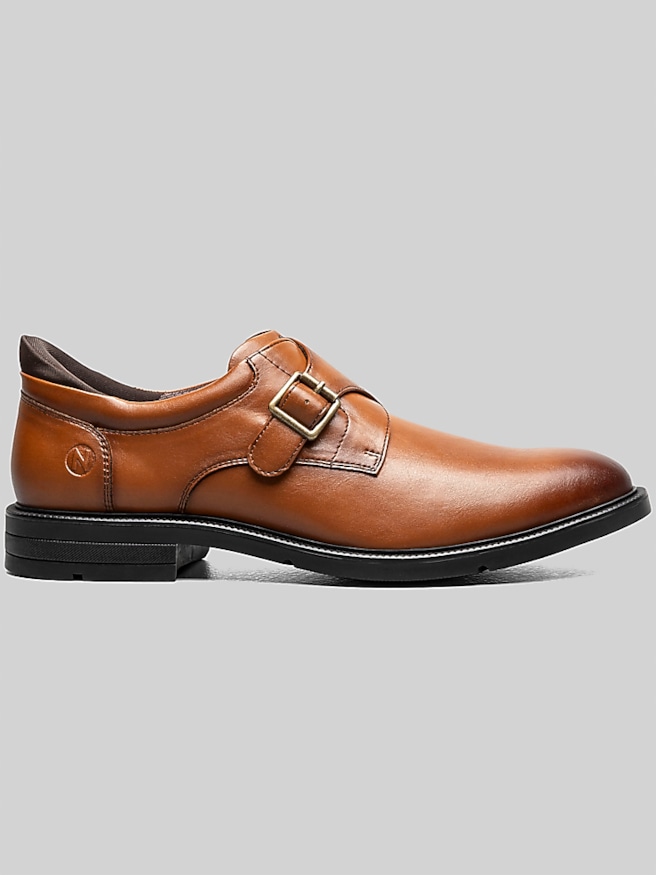
Monk shoes are dress shoes that fasten with one or two buckled straps across the instep instead of traditional laces. Also called monk strap shoes, they combine the structured appearance of a lace-up with a distinctive strap closure, making them a versatile choice for tailored clothing and smart-casual outfits. They generally sit between classic oxfords and loafers in formality, although the leather finish, toe shape, detailing, and sole all influence how dressy a pair looks. Single monk strap shoes have one buckle and a relatively clean upper, giving them an understated profile that works well with simple tailoring. Double monk strap shoes have two buckles, adding more visible detail without requiring a patterned or heavily decorated upper. Neither style needs an elaborate outfit to make an impression: a navy suit, a white shirt, and polished monk shoes create a composed look for a business meeting or a wedding with a suit-appropriate dress code. Black leather tends to read more formal, especially with dark gray or charcoal tailoring, while brown offers a broader range of pairings with navy, blue, tan, and textured fabrics. For outfits built around those warmer tones, brown leather monk strap shoes provide a natural connection between tailored trousers and more relaxed separates. Dark denim, chinos, and an unstructured jacket can also work with monk straps, particularly when the shoes have a rounded toe or a softer finish. A plain toe keeps attention on the strap and buckle, while a cap toe introduces a familiar dress-shoe detail. The trouser hem matters, too: a clean break allows the closure to remain visible without excess fabric gathering over the shoe. Buckles add a small metallic accent, but they do not need to match every accessory exactly. Keeping the overall outfit balanced is more important than making every finish identical. These are shoes for someone who likes the polish of traditional menswear but appreciates a detail that stands apart from the usual lace-up.
Materials and construction shape both the appearance and the everyday feel of monk strap shoes. Smooth leather can take a polished finish and develop character with wear, while suede has a softer, more textured appearance that often suits chinos, denim, and less structured tailoring. Leather quality is not determined by shine alone; the upper’s flexibility, surface consistency, stitching, and finishing all contribute to how it looks and wears. A heavily glossy surface creates a different effect from a subtle sheen or a burnished toe, so the best match depends on whether the shoes are intended for business attire, celebrations, or relaxed outfits. The lining and footbed also deserve attention, especially for someone who spends a workday moving between a desk, meetings, and time on their feet. A soft lining and supportive footbed can make the interior more comfortable, but cushioning cannot correct an unsuitable fit. Monk shoes should hold the heel securely, leave room for the toes, and follow the foot through its widest part without squeezing. The buckle offers some adjustment across the instep; it does not change the shoe’s length or compensate for a shape that is too narrow. Trying shoes with the socks intended for regular wear gives a more useful sense of fit than trying them with unusually thin or thick socks. Walking a few steps should reveal whether the heel lifts excessively, the toe area feels crowded, or the strap presses into the top of the foot. Leather may soften with wear, but painful pressure is not a reliable sign that a shoe simply needs breaking in. Sole construction matters as well. Leather soles often create a sleek dress profile, while rubber soles can provide flexibility and traction on everyday surfaces. Welted construction may allow resoling, depending on the shoe and a repair professional’s assessment; other construction methods offer their own balance of weight and flexibility. Secure stitching, neatly finished edges, and firmly attached buckle hardware are practical details to consider alongside the silhouette.
Regular care helps monk shoes maintain their shape and finish, particularly when they are part of a weekly rotation. Smooth leather benefits from having surface dust removed with a soft brush or cloth before an appropriate conditioner or cream is applied. Conditioning helps keep leather supple, while polish can restore color and add the level of shine suited to the outfit. A restrained sheen usually works well for everyday business clothing; a more carefully buffed finish can complement a suit worn for a celebration. Suede requires different care, typically with a suede brush and products specifically intended for its textured surface rather than ordinary leather polish. Manufacturer care recommendations are useful because coatings, linings, and finishes can respond differently to cleaning products. Testing a treatment on a small, inconspicuous area helps avoid an unexpected change in color. Buckles and straps deserve the same attention as the rest of the upper: fastening and unfastening them gently reduces unnecessary strain, and wiping the hardware with a soft cloth helps remove fingerprints and residue. Shoe trees can help preserve the shape between wears, and giving shoes time to air out before wearing them again helps manage moisture from normal use. Storage should allow the uppers to sit without being crushed, with enough space to protect the straps and prevent buckles from rubbing against another shoe. Scuffed heels, worn sole edges, and loose hardware are easier to address before they become larger problems. That attention makes monk straps a practical choice for someone building a dependable dress-shoe rotation, whether their schedule includes office presentations, dinners, or wedding receptions. They can also be a thoughtful gift for a graduate entering a professional workplace, a partner who enjoys tailored clothing, or someone updating a frequently worn pair of dress shoes. Knowing the recipient’s usual size, preferred width, and taste in buckle detailing makes the choice more personal. A restrained single strap may suit a minimalist wardrobe, while a double strap can appeal to someone who enjoys a more distinctive finish. The lasting appeal is the combination of recognizable dress-shoe structure and a closure that brings character to otherwise straightforward outfits.