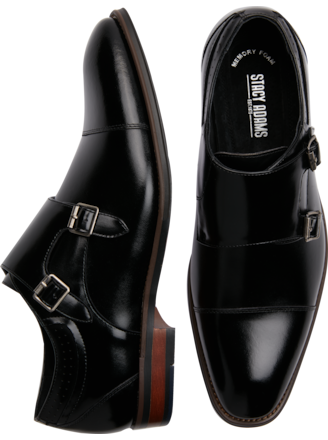
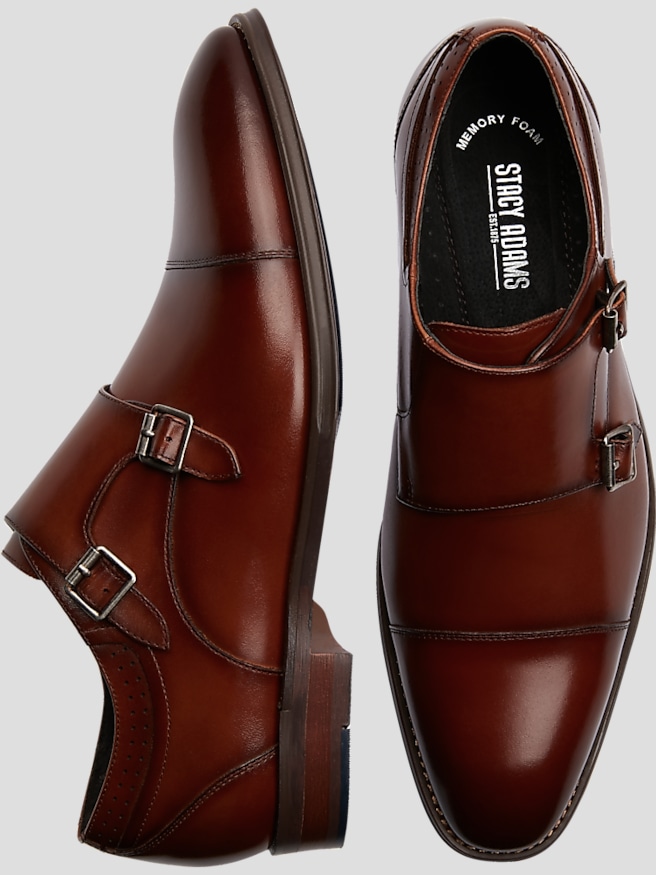
Monk strap formal shoes bring a distinctive finish to tailored clothing, replacing traditional laces with a leather strap and metal buckle closure. Single monk straps have one buckle on each shoe, creating a clean, restrained profile, while double monk straps use two buckles for a more noticeable architectural detail. Both offer the structure of a dress shoe with a closure that stands apart from lace-up styles. Their character comes from the balance of shape, leather, and hardware: a gently tapered toe looks refined beneath suit trousers, a rounded toe feels more traditional, and a subtle buckle keeps the emphasis on the silhouette. Smooth black leather is a natural choice for charcoal suits, conservative business settings, and dressy evening occasions. Dark brown pairs easily with navy, medium gray, and earth tones, while cognac creates stronger contrast and tends to feel less formal. A plain toe gives the shoe an uninterrupted surface; a cap toe adds a stitched line across the front without necessarily making the design busy. Brogue perforations introduce texture and generally move the look toward less formal tailoring. For shoppers comparing buckle closures with lace-up silhouettes, Oxford Monk Strap Shoes offers a related point of reference, though classic Oxfords and monk straps have distinct fastening systems. Monk straps work especially well for business presentations, wedding guest attire, graduation ceremonies, and dinners that call for a jacket. They can also ground a textured sport coat and pressed trousers during the cooler months, when heavier fabrics benefit from footwear with some visual presence. For strict black-tie occasions, traditional patent leather Oxfords or formal pumps remain the safer match unless the dress code allows flexibility. With a suit, a modest trouser break lets the buckles show without leaving too much ankle exposed. Fine-gauge dress socks in a shade close to the trousers create a continuous line, and a leather belt in a similar color family keeps the outfit cohesive without requiring an exact match.
Materials and construction shape how monk strap dress shoes look, flex, and feel over a full day. Smooth calfskin is valued for its fine grain and ability to take a polished finish, while other leather uppers can offer a firmer hand or more visible surface texture. Full-grain leather retains the hide’s natural surface, though the leather grade alone does not determine comfort or longevity; tanning, thickness, stitching, and overall construction matter as well. Suede gives monk straps a softer, less formal appearance that suits flannel trousers and relaxed tailoring, but its nap needs care suited to that finish. Synthetic uppers vary widely in flexibility and breathability, making the lining and overall feel worth considering alongside appearance. Inside the shoe, a smooth lining, supportive footbed, and well-finished seams can make a meaningful difference when the day includes a commute, several meetings, and an evening reception. Cushioning may soften each step, but it cannot make up for a toe box that pinches or a heel that slips. The fit should feel secure across the instep with room for the toes to rest naturally rather than press against the front or sides. Buckle settings allow some adjustment over the top of the foot, but they do not correct the wrong length or width. An elongated toe can leave space beyond the toes by design, so fit is better judged by heel security and whether the shoe flexes near the ball of the foot. Trying shoes with the dress socks intended for regular wear provides a more useful impression than using thick athletic socks. Leather soles provide a traditional dress-shoe finish, while rubber soles or rubber inserts may offer more grip on smooth surfaces, depending on their tread and composition. Welted construction can make resoling possible in some designs; cemented construction typically bonds the sole directly to the upper. Neither method guarantees comfort, and repair options depend on the complete shoe rather than the construction label alone.
Thoughtful care helps preserve the crisp outline and even finish that make monk strap formal shoes such a useful part of a dress wardrobe. After wear, a soft brush or clean cloth removes dust before it settles around toe seams, strap edges, and buckle attachments. Smooth leather benefits from occasional conditioning with a suitable product, followed by cream or wax polish when the finish needs refreshing. Testing any treatment on an inconspicuous area helps avoid unexpected color changes, particularly on burnished leather with intentionally varied shading. Suede calls for a suede brush and compatible care products rather than conventional shoe cream. Metal buckles usually need only a gentle wipe; polish meant for leather should stay off the hardware unless the care instructions specify otherwise. Unfastening the straps before taking shoes off reduces unnecessary pulling at the buckle holes and stitching, while a shoehorn helps protect the heel counter when putting them on. Between wears, cedar shoe trees help maintain shape and absorb some residual moisture. Shoes that become wet should dry naturally away from radiators and other direct heat, with surface moisture blotted away promptly. During cooler weather, wiping off street residue before storage helps prevent buildup, and alternating pairs gives the lining and upper time to dry between outings. These small habits matter for footwear expected to move from office corridors to ceremony aisles and restaurant tables. A versatile pair can serve someone building a first professional wardrobe, refreshing well-used dress footwear, or adding a buckle detail to familiar suits. Monk straps can also make a thoughtful graduation or career-milestone gift when the recipient’s size, width, and preferred fit are known. For frequent use, understated hardware and a familiar leather color usually integrate most easily with existing clothing. For occasional celebrations, a double strap or softly burnished finish can add character without overpowering the outfit. The strongest choice is one that looks balanced with the intended trousers, feels comfortable through a realistic day, and suits the level of formality the occasion requires.