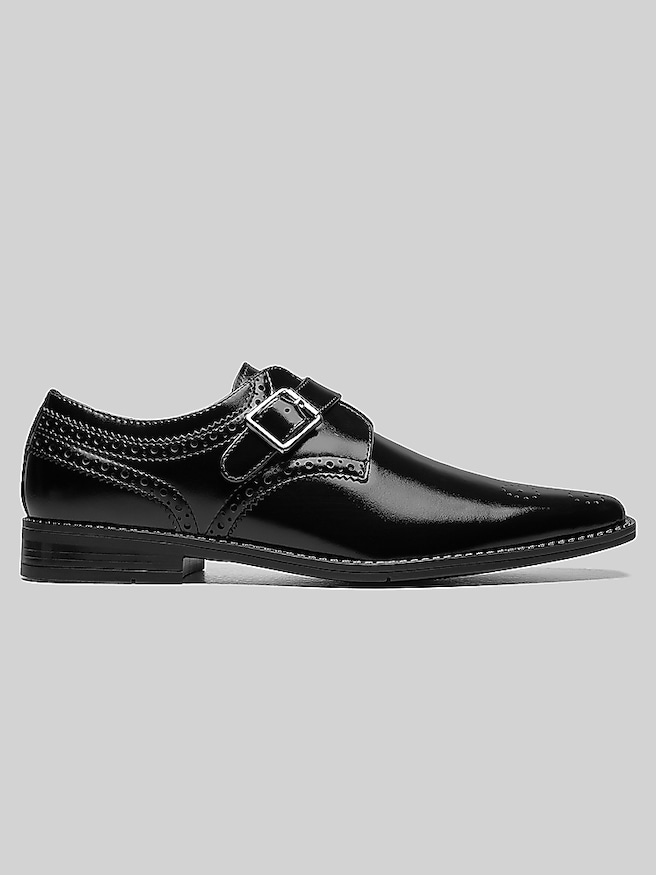
Monk strap prom dress shoes are dress shoes that fasten with one or two buckled straps instead of laces, giving a prom suit a distinctive finish without an overly casual look. A single monk strap has one buckle and a relatively simple profile, while a double monk strap uses two buckles for a more noticeable detail across the upper. Both styles offer an alternative to lace-up dress shoes, with the overall effect shaped by the leather finish, toe design, sole thickness, and buckle size. A smooth black pair with discreet hardware looks restrained beneath dark dress pants; a brown or burgundy finish brings more contrast to navy or gray tailoring. For a tuxedo, sleek black monk straps can work when the event’s dress expectations allow some personal interpretation, though traditional formal footwear remains the more conventional choice for strict black-tie dress. The most successful pairing keeps the shoes in proportion to the outfit: a slim, softly tapered toe complements tailored trousers, while a broader, rounded shape can balance a fuller pant leg. Very pointed toes, bulky soles, and oversized buckles draw more attention and create a less understated result. Toe detailing matters, too. A plain toe keeps the focus on the strap, a cap toe adds a defined line across the front, and decorative perforations give the shoe a more textured appearance. For shoppers drawn to the character and finish of leather, Men's Leather Monk Strap Shoes connects that distinctive buckle styling with a material often chosen for its ability to soften with wear and respond to regular care. The appeal for prom is straightforward: enough personality to show beneath a trouser hem in photographs, with a dressy shape that still feels appropriate at dinner, on the dance floor, and beside a carefully chosen suit. Coordinated leather accessories can make the look feel intentional, although every buckle and metal accent does not need to match perfectly.
Materials and fit have a bigger effect on the evening than the number of buckles. Smooth leather offers a clean surface that can usually be conditioned and polished according to the maker’s care directions, while suede has a soft, matte texture that gives tailoring a less formal finish. Patent leather provides a glossy appearance but needs care suited to its coating rather than the same treatment used on ordinary smooth leather. Synthetic uppers vary in flexibility and breathability, so the feel of the lining, the flexibility of the forefoot, and the shape of the shoe deserve attention regardless of the material label. Leather linings may become more comfortable with wear, but no upper should need to stretch dramatically to make the size workable. A good fit leaves room for the toes to lie naturally without letting the foot slide forward. The heel should feel secure, and the strap should hold the instep without digging into it. Depending on the design, buckle holes can provide a small amount of adjustment across the top of the foot, but they cannot correct a shoe that is too short, too narrow, or too roomy. Trying dress shoes with the socks intended for prom gives a more useful sense of fit than trying them with thick athletic socks. Both feet need to feel comfortable while standing and walking, especially through the ball of the foot where pressure can become noticeable after hours of wear. A short walk on a clean indoor surface can reveal heel rubbing, pinched toes, or a stiff edge before the event. Cushioned footbeds and flexible construction may help with extended standing, although comfort depends on the whole shoe rather than a single feature. Leather soles offer a traditional dress-shoe appearance, while rubber soles or rubber inserts may provide added traction, depending on their design and the floor surface. Neither should be assumed to grip equally well everywhere. A few brief wears before prom can help reveal trouble spots without relying on the event itself as the first test.
The details that make monk strap prom dress shoes look finished also influence how useful they remain afterward. A low-profile sole, neat stitching, secure buckle attachments, and even finishing around the edges contribute to a clean appearance beyond one evening. Construction affects long-term upkeep as well: some stitched designs can be resoled, while other constructions are not intended for the same kind of repair. Repairability depends on the individual shoe and should not be assumed from appearance alone. Black smooth leather is an adaptable choice for future formal dinners, school ceremonies, and dressier celebrations; brown can feel equally natural with many navy and gray suits for graduations, interviews, and weddings. For a student building a first dress wardrobe, that continued usefulness can matter as much as the prom outfit. A pair given as a graduation or prom gift is most helpful when the recipient can confirm the fit and feels comfortable with the buckle styling. Presentation is strongest when the shoes are clean, the trouser hems fall neatly, and the socks maintain a deliberate connection with the pants rather than interrupting the leg line unintentionally. After the event, removing surface dust with a soft cloth or an appropriate brush helps keep grit from settling into seams and creases. Smooth leather may benefit from occasional conditioning and a suitable polish, while suede calls for a suede brush and products intended for its nap. Any treatment should follow the manufacturer’s directions and be tested discreetly when appropriate. Shoes that become damp should dry naturally away from direct heat, and cedar shoe trees can help absorb moisture and support their shape between wears. Unfastening the buckles before taking the shoes off reduces unnecessary strain on the straps and heel counters. With thoughtful fit, balanced styling, and material-appropriate care, monk straps can retain the character that made them appealing for prom while becoming a dependable part of a dress wardrobe.