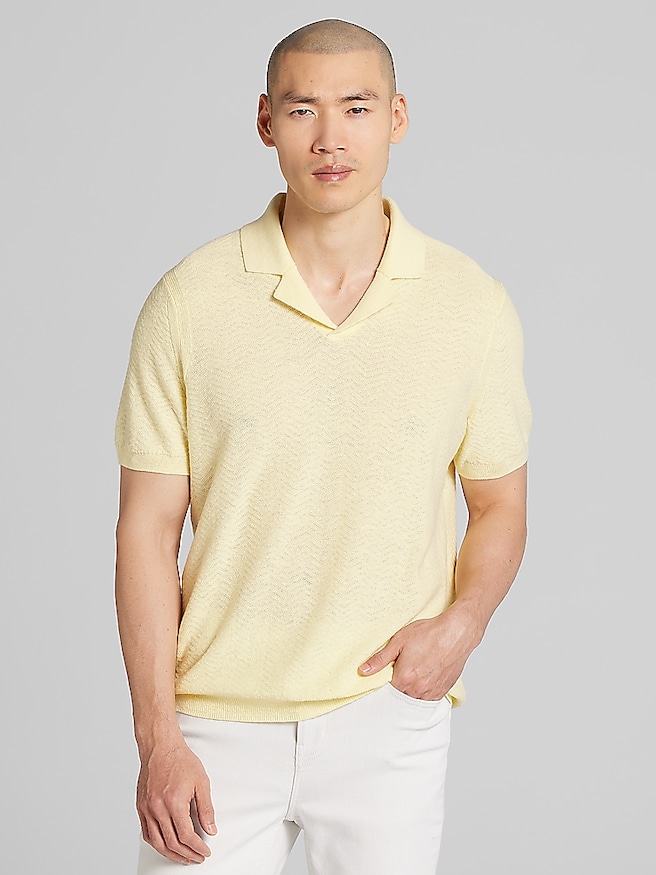
Mock neck sweaters for men have a short, upright collar that sits above the base of the neck without the tall, folded neckline of a traditional turtleneck. That small difference gives the sweater a distinctive place in a wardrobe: more defined at the neckline than a crewneck, but less visually prominent than a full turtleneck. The result is a clean silhouette that works on its own or beneath a jacket. A fine-gauge mock neck can create a smooth line under a sport coat, while a more textured knit brings depth to an outfit built around chinos or dark denim. For an office with a relaxed dress code, a solid mock neck worn with tailored trousers offers a polished alternative to a collared shirt. For dinner, a theater performance, or a gathering with friends, the same neckline can make a simple combination feel considered without requiring a tie. The closely related category of Men's Mock Turtleneck Sweaters shares this understated approach to dressing, with a shorter collar that frames the face and leaves room for jacket lapels. Color and texture influence the overall effect as much as the neckline itself. Black, navy, charcoal, and cream provide straightforward starting points for coordinating with existing pants and jackets. A dark sweater beneath a lighter sport coat creates a clear contrast, while similar shades across the sweater and trousers produce a quieter, more continuous line. Ribbing, subtle surface texture, and defined cuffs can give an otherwise simple outfit character without a prominent pattern. The collar also changes how accessories sit: a watch or a pocket square can provide a finishing detail without competing with an open shirt collar or necktie. Although a mock neck can complement tailored clothing, it remains a sweater rather than a substitute for attire required by a formal dress code. Its strongest role is bridging casual and polished dressing, especially when the fabric, fit, and surrounding pieces have a similarly refined feel.
Material helps determine how a men's mock neck sweater feels against the skin, how it drapes, and how comfortably it layers. Cotton knits often have a familiar, soft hand and can provide a relaxed appearance, though their weight and structure vary with the yarn and stitch. Merino wool typically uses finer fibers than many coarser wool fabrics, giving it a smoother feel that can suit a close-fitting neckline. Individual sensitivity still matters, particularly because the collar touches an area that may react differently than the arms or torso. Viscose can contribute softness and fluid drape, while nylon, polyester, or acrylic may be included to support qualities such as shape retention, resilience, or ease of care. A small amount of elastane can add stretch, but fiber content alone does not establish how flexible a finished sweater will be; the knit construction also plays a role. Fine-gauge fabrics generally sit more easily beneath fitted jackets, whereas substantial ribs or textured stitches create a fuller silhouette. Fit is especially noticeable at the collar, shoulders, and sleeves. The neckline should rest comfortably without pressing into the throat, and it should hold its shape without collapsing into an uneven band. For a conventional set-in sleeve, the shoulder seam usually sits close to the shoulder edge rather than hanging far down the upper arm. Across the chest and torso, a clean fit follows the body without stretching the knit into visible horizontal lines. Enough room to reach forward, sit, and bend the elbows helps a sweater stay comfortable through a workday or an evening out. Sleeve cuffs that finish near the wrist and a hem that rests neatly around the hip make proportions easier to balance with trousers. A ribbed hem may gently gather the fabric, while a straighter finish can create a looser line. When a jacket is part of the outfit, the sweater's thickness matters alongside its size: even a well-fitting knit can crowd an armhole if it is too substantial for the jacket's cut. The best combination allows both layers to move naturally, with neither pulling across the back nor bunching at the elbows.
Care and construction have a lasting effect on the appearance of mock neck knitwear. Even stitching, secure seams, and cuffs that recover after gentle stretching are useful signs of a well-finished garment, although no single detail guarantees durability. Areas exposed to repeated friction, including the sides beneath the arms and the places where a bag strap rests, may develop pills over time. Pilling can occur with natural or synthetic fibers and does not automatically mean a sweater is poorly made. Gentle handling and a fabric-appropriate sweater comb or shaver can help maintain the surface, provided the tool is used carefully and kept away from delicate stitches. The care label remains the most reliable source for washing and drying requirements, since similar-looking sweaters may need different treatment. Some fabrics tolerate machine washing on a gentle setting; others call for hand washing or professional cleaning. Excessive agitation or unsuitable heat can distort a knit, so the specified method matters more than assumptions based on fiber alone. When flat drying is recommended, reshaping the collar, sleeves, and hem helps preserve the intended proportions. Folding rather than hanging can reduce the risk of stretched shoulders, particularly with heavier knits. These practical details make a mock neck sweater a useful choice for someone who wants clothing that moves between familiar settings without much complication. It can suit a commuter who layers beneath a jacket, a professional whose workplace allows knitwear, or someone who prefers a composed outfit for meals and social plans. As a gift for a father, brother, partner, or friend, a mock neck is often easiest to choose when the recipient's preferred fit, fabric feel, and usual colors are known. Someone who wears mostly navy and gray may appreciate a coordinating neutral, while someone who favors textured clothing may enjoy a more pronounced knit. Collar comfort is worth considering as carefully as size. A sweater that feels natural at the neck, works with existing clothes, and has manageable care requirements is more likely to become a regular part of the recipient's wardrobe.