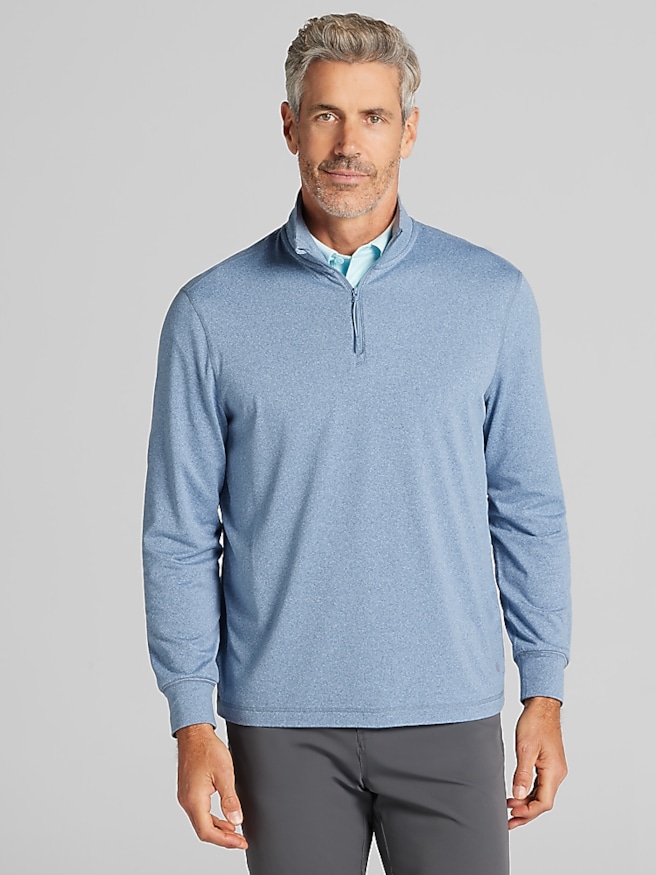
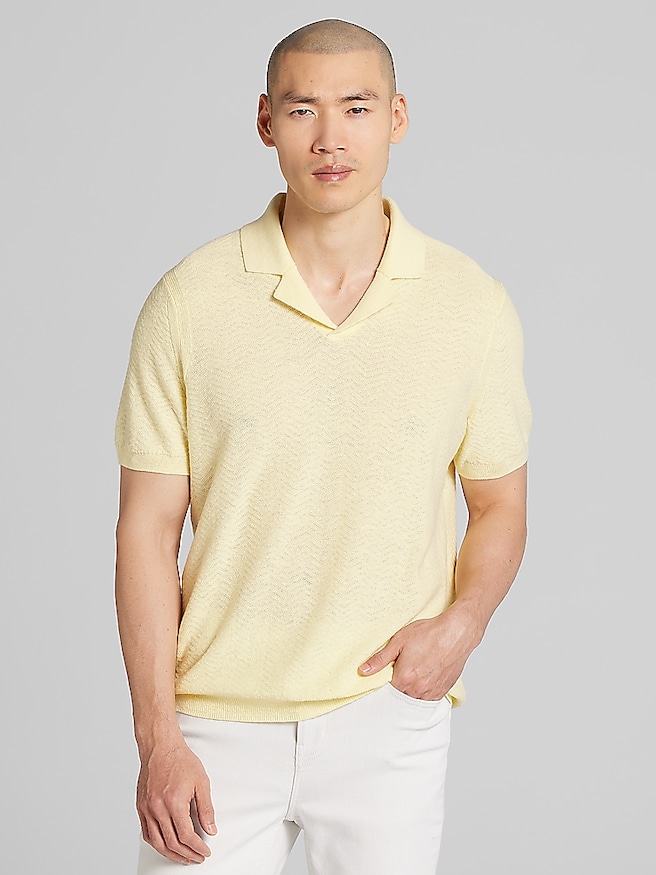
Men's mock turtleneck sweaters bring a clean, slightly elevated neckline to an outfit without the folded collar of a traditional turtleneck. A mock neck rises above the base of the neck and generally stands on its own, creating a neat frame beneath a jacket or a finished look when worn alone. The exact collar height and shape vary with the knit: a softly ribbed neck can feel flexible and relaxed, while a more structured collar holds a defined line. That balance makes the style useful for someone who likes the simplicity of a pullover but wants more coverage than a crewneck provides. Materials influence how the sweater feels, drapes, and fits into a wardrobe. Cotton knits can have a smooth, familiar feel and enough substance to work well as a standalone top. Merino wool is known for its fine fibers and natural resilience, making it a consideration for a refined sweater that layers without excessive bulk. Other wool knits may have a fuller texture, while blends can combine softness with added stretch, shape retention, or easier care, depending on their composition and construction. Fiber content alone does not tell the whole story; yarn thickness, stitch density, and finishing also affect comfort and appearance. A fine-gauge mock turtleneck tends to sit smoothly beneath tailored clothing, while a more substantial knit gives an outfit texture and visual weight. Ribbing adds depth without a prominent pattern, and a smooth surface puts more emphasis on color and silhouette. For direct contact with the skin, the feel of the inner collar deserves as much attention as the body of the sweater. A neckline that looks sharp should also feel comfortable when sitting, turning the head, or wearing it through a full day. The most useful choice is one whose fabric, collar, and overall weight suit the way it will actually be worn, whether that means regular office use, dinners out, or relaxed plans that still call for a considered appearance.
Fit determines whether a men's mock turtleneck sweater looks sleek, easygoing, or somewhere between the two. A close fit follows the torso without pulling across the chest, while a straight fit leaves more room through the waist and can feel less restrictive when worn on its own. Neither should require the collar to stretch tightly against the neck. On a conventionally set-in sleeve, the shoulder seam should sit near the edge of the shoulder; a deliberately relaxed construction may place it lower. Sleeves should reach the wrist without bunching heavily, and the hem should stay comfortably around the waistband or upper hip rather than riding up with ordinary movement. Ribbed cuffs and hems can help define the shape, but they should not grip so firmly that the body balloons above them. Under a blazer, a fine knit with clean armholes and restrained sleeve volume generally creates a smoother line than a thick, loosely constructed sweater. The collar should sit neatly inside the jacket neckline, and the sweater should allow the jacket to close without pulling. A black mock turtleneck with charcoal trousers creates a quiet, tonal foundation; navy with gray tailoring offers a softer contrast. For a less formal setting, a textured knit with chinos or dark denim keeps the outfit relaxed without looking unfinished. Suede footwear, leather loafers, or simple sneakers can each change the impression without requiring a different sweater. At an office where knitwear is appropriate, the mock neck offers an alternative to an open-collar shirt. For a dinner reservation or a gallery visit, its uninterrupted neckline keeps the focus on the fit and fabric rather than a tie or layered shirt collar. It is not a substitute for attire required by a stated dress code, but it can bridge the space between casual clothing and tailoring when the occasion allows. For another neckline with similar styling flexibility, explore Mens Collared Sweaters, particularly when an open neckline better suits the outfit or personal preference.
Care and construction matter just as much as the first impression, especially for a mock turtleneck that becomes part of a regular rotation. Even stitching, secure seams, and ribbing that recovers after gentle stretching are useful signs of careful construction, though no single detail guarantees how a sweater will wear over time. Areas exposed to friction, including the underarms and sides, may develop pilling, and contact with rough bag straps or abrasive surfaces can accelerate it. Pilling does not automatically mean a knit is poor quality; fiber length, yarn structure, and repeated rubbing all play a role. A fabric comb or sweater shaver used carefully according to its directions can help maintain a tidy surface. The garment's care label should always take priority over broad advice about a particular fiber. Some cotton and blended sweaters allow machine washing, while certain wool knits call for hand washing or professional cleaning. When washing is permitted, gentle handling and the recommended water temperature help protect the fabric, and avoiding unnecessary agitation can reduce distortion. A wet sweater should not be wrung or left hanging by its shoulders. Reshaping it and drying it flat, when directed by the label, helps preserve the length, neckline, and sleeve proportions. Folding rather than hanging also limits stretching during storage, especially with heavier knits. These practical details are worth considering when choosing a gift, since an easy-care preference can be as important as a favorite color. A mock turtleneck can make a thoughtful birthday, graduation, or milestone gift for someone who already wears sweaters, favors streamlined outfits, or regularly pairs knitwear with jackets. Familiar measurements and the recipient's preferred fit are more reliable than guessing from a size label alone. A color already present in their wardrobe makes coordination straightforward, while a subtle texture can add interest without changing their style. With an agreeable neckline, suitable fabric, and manageable care requirements, a mock turtleneck can earn its place through repeated, comfortable wear.