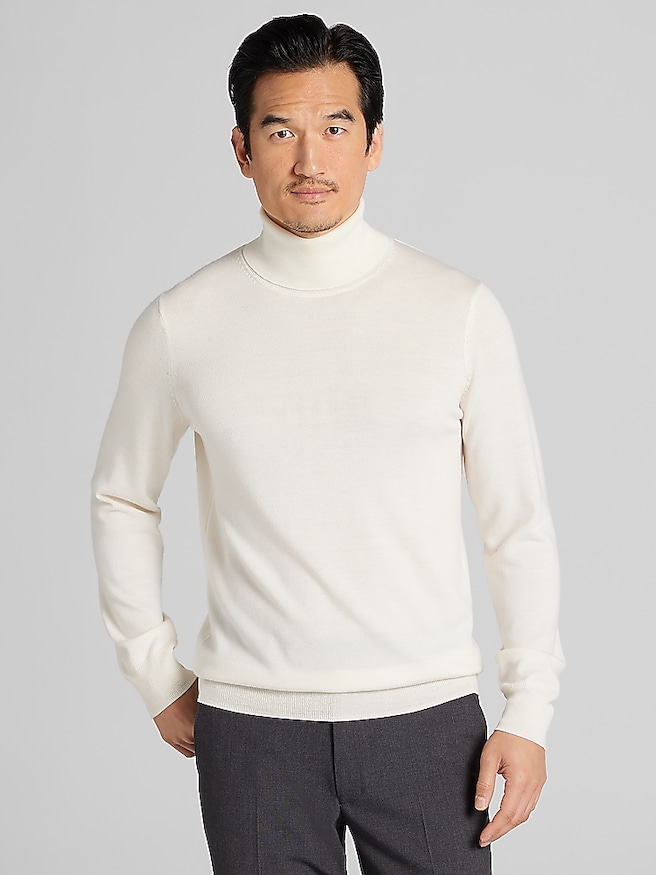
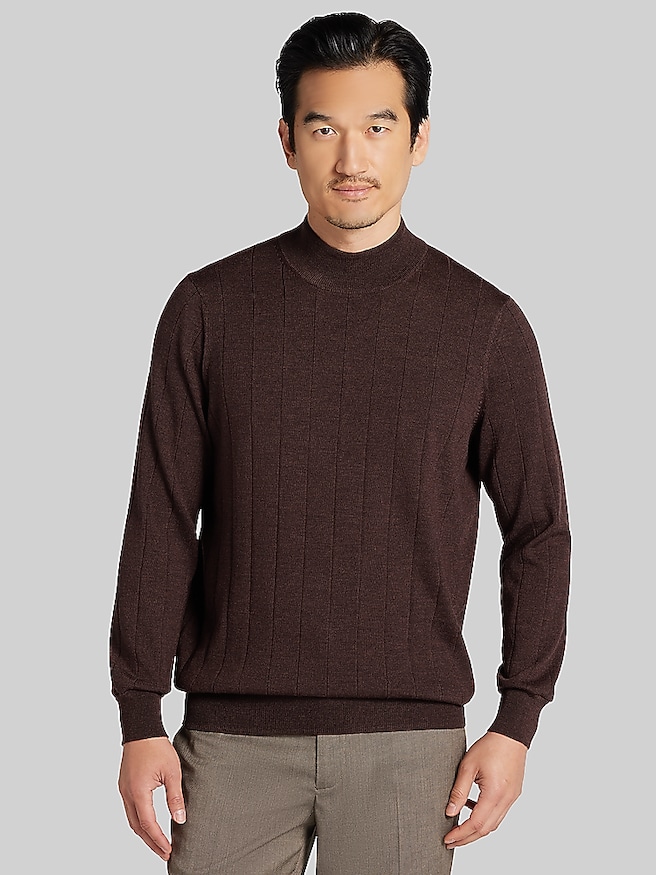
Men's slim fit turtleneck sweaters combine a high, close-fitting neckline with a streamlined shape through the chest, waist, and sleeves. They can stand alone with tailored trousers or sit beneath a blazer without the extra fabric that sometimes bunches around the arms and waistband. The effect is more relaxed than a shirt and tie but more dressed up than a basic crewneck, making this style useful for office days, dinner reservations, gallery visits, and gatherings with a smart-casual dress code. A fine-gauge knit creates a smooth surface beneath tailoring, while a ribbed knit adds visible texture when the sweater is worn on its own. Neither construction automatically determines thickness or fit; the yarn, stitch density, and garment measurements all matter. Material is another important distinction. Cotton generally has a familiar, soft feel and can suit those who prefer a knit with less loft. Merino wool is valued for its fine fibers, breathability, and ability to manage moisture, although softness varies with fiber quality and finishing. Viscose can contribute a smooth hand and fluid drape, while nylon or other synthetic fibers may help reinforce a blend or support shape retention. A small amount of stretch fiber can improve flexibility, but the overall construction still determines how closely the sweater follows the body. The fiber label gives a better picture than appearance alone, especially when comparing two sweaters that look nearly identical in a photograph. A smooth black turtleneck beneath a charcoal jacket creates a continuous, understated line; a lighter neutral knit with dark trousers gives the neckline and texture more definition. Navy, gray, and earth tones can also work across several combinations without requiring a matching jacket. For someone building a smaller, more useful wardrobe, the appeal is straightforward: one well-fitting sweater can look complete with jeans and clean leather sneakers, then take on a more tailored character with pressed trousers and loafers. The best choice depends on how it will be worn, how the fabric feels against the skin, and how much structure the outfit needs.
A slim fit should follow the body without pulling tightly across it. At the chest, the knit should lie relatively smooth rather than stretching into horizontal lines; through the waist, it should narrow without gripping every contour. With set-in sleeves, shoulder seams generally sit near the edge of the shoulder, and the sleeves should allow easy bending at the elbows. Trying the sweater while seated, reaching forward, or crossing the arms reveals more than standing still in front of a mirror. If the hem repeatedly climbs above the waistband or the fabric strains across the upper back, the size or cut may need adjustment. The neck deserves equal attention because it stays in contact with the skin throughout wear. A fold-over collar should turn down neatly and feel secure without pressing uncomfortably at the throat, while its height should suit the wearer's neck and preferred look. Some people favor a crisp, upright fold; others prefer a softer collar with a little natural movement. Body length also changes the result. Worn untucked, a turtleneck should cover the waistband comfortably without creating a long band of gathered fabric at the hips. A thin knit may tuck neatly into tailored trousers, provided it does not create bulk or pull when sitting. When layering under a blazer, check the combination together: the jacket should close comfortably, the sleeves should move freely, and the sweater collar should sit cleanly above the lapels. Slim describes a silhouette, not a requirement to choose a smaller size. Men with broader proportions or a longer torso may find a better starting point among Men's Big And Tall Turtlenecks, then compare garment measurements and fit details. Adequate length and shoulder room can create a cleaner outline than sizing down. The goal is a close, comfortable fit that holds its shape through a full day, whether that means working at a desk, walking to dinner, or spending several hours at a family celebration.
Thoughtful care helps a slim fit turtleneck retain the proportions that make it useful. Always follow the garment's care label rather than assuming every sweater can be treated the same way. Some cotton and blended knits allow machine washing, while certain wool or delicate constructions require hand washing or professional cleaning. Where washing is permitted, use the recommended cycle and water setting, avoid unnecessary agitation, and reshape the garment according to its instructions. For sweaters that call for flat drying, support the full body and sleeves rather than draping the wet knit over a narrow rail, which can leave stretched areas or creases. Folding is often preferable to hanging because the weight of a knit can lengthen the body or leave bumps at the shoulders. Give the neckline a tidy fold before putting it away, and keep sharp accessories or rough closures from catching the yarn. Friction beneath the arms, along the sides, and where a bag strap rests can cause pilling; this does not necessarily mean the sweater is poorly made. If the care instructions permit, a suitable sweater comb or fabric shaver used gently can help tidy the surface without tugging individual fibers. Durability also depends on choosing the right construction for the intended use. A delicate, fine-gauge sweater may need more careful handling around textured belts and bags than a denser knit, while firmly finished cuffs and hems can help maintain a neat outline. For frequent wear, comfort at the neckline and ease of care deserve as much attention as color. As a gift for a partner, father, brother, or friend, a turtleneck is most personal when it reflects familiar preferences: a favorite neutral, a fabric he already enjoys, and a shape that works with his usual trousers or jackets. Checking measurements against a sweater he wears comfortably can be more reliable than guessing from a size label alone. Those details turn a simple knit into something that feels natural to reach for, rather than something saved for an occasion that never quite arrives.