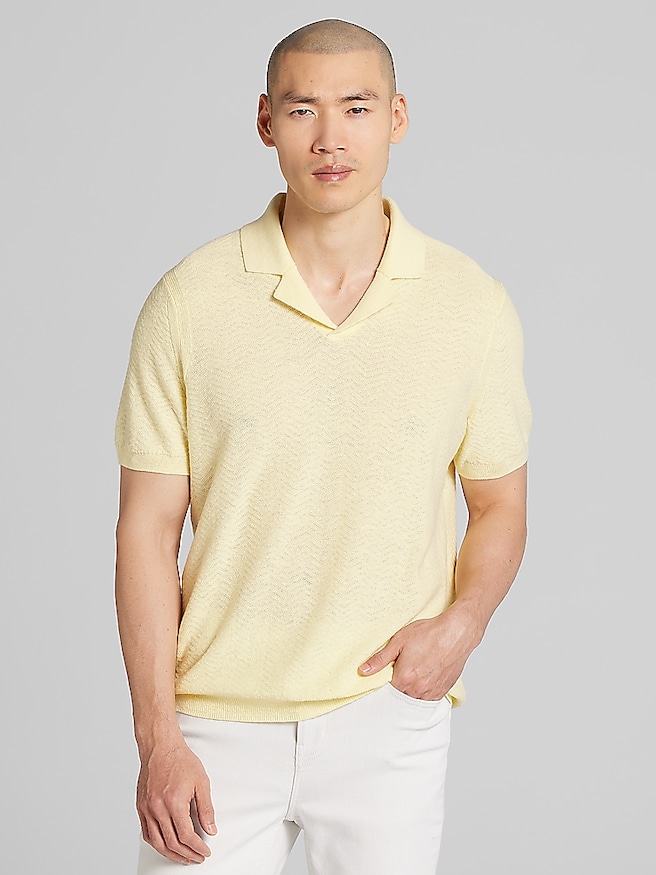
Mock neck sweaters give everyday outfits a clean neckline without the height or folded collar of a traditional turtleneck. The collar sits partway up the neck, framing the face while leaving a simple line beneath a jacket or blazer. That small change in shape can make familiar combinations feel more finished: straight-leg jeans and leather sneakers for a relaxed dinner, chinos and loafers for a day at the office, or tailored trousers when the occasion calls for a sharper appearance. The appeal is in the balance between the ease of knitwear and the structure of a raised collar. A smooth, fine-gauge knit keeps the look understated, while a more textured stitch adds depth without requiring a pattern or bold color. Black, navy, gray, and earthy neutrals can work with several trouser colors, making it easier to repeat a sweater without repeating the entire outfit. A darker mock neck beneath a lighter jacket creates a clear contrast at the neckline; similar shades produce a quieter, more continuous look. Men's mock neck sweaters also offer an alternative to a collared shirt when a setting allows polished knitwear rather than formal dress. The clean profile of Men's Mock Turtleneck Sweaters works especially well when the rest of the outfit stays uncomplicated, with a belt, shoes, and trousers that complement rather than compete with the knit. For a presentation, an evening gathering, or a restaurant reservation, the sweater can provide enough visual structure to stand on its own. Under a blazer, a less bulky knit helps the lapels lie smoothly and keeps the shoulders from feeling crowded. Worn without a jacket, the collar, cuffs, and hem become more noticeable, so their proportions matter as much as the color. A neatly sitting neckline and a hem that falls comfortably around the hips usually create a balanced appearance without the need for additional layers or accessories.
Material and construction affect how a mock neck sweater feels, drapes, and holds its shape through repeated wear. Cotton knits often have a familiar, soft feel and a more substantial drape, though their weight and texture depend on the yarn and stitch. Wool can provide natural resilience and a supple feel, with softness varying by fiber and finish. Merino wool is generally finer than many other wool fibers, while cashmere is associated with a softer hand and requires thoughtful handling. Blended yarns combine characteristics from multiple fibers; synthetic fibers may contribute strength or shape retention, and stretch fibers can help a close-fitting knit move with the body. The fiber label is more useful than assumptions based on appearance, since two sweaters that look similar can have different care needs and feel noticeably different against the skin. Anyone sensitive to texture may prefer a smoother knit at the collar, where the fabric stays in direct contact with the neck. Fit deserves the same attention. A mock collar should sit comfortably rather than press tightly at the throat or flare away from it. Across the chest, the fabric should have enough room to move without pulling into horizontal lines, and the sleeves should allow the elbows to bend without excessive tension. In a style with set-in sleeves, shoulder seams generally sit near the edge of the shoulder; dropped shoulders create a deliberately more relaxed shape. Cuffs that finish close to the wrist look tidy beneath a jacket, while an overly long sleeve can bunch at the hand. The hem should settle without repeatedly riding up when reaching across a desk or getting into a car. For layered outfits, consider the complete combination rather than the sweater alone: a comfortable standalone fit may feel crowded under a closely cut blazer. Ribbing at the collar, cuffs, and hem helps define the silhouette, and even stitching and secure seams contribute to a sweater that wears consistently. A heavier knit is not automatically more durable; yarn quality, construction, fit, and care all play a role.
Good care helps preserve the details that make a mock neck sweater look finished, particularly the collar shape and the smooth surface of the knit. Follow the garment's care label rather than treating all sweaters alike. Some fibers and constructions tolerate machine washing, while others require hand washing or professional cleaning. When machine washing is permitted, a gentle cycle and a mesh laundry bag can help limit agitation and contact with zippers or rough fabrics. Use the recommended water setting and detergent, and avoid unnecessary washing when the sweater only needs airing after light wear. For hand-washable knits, support the fabric while it is wet and avoid twisting it to remove moisture. A clean towel can help absorb excess water before the sweater is reshaped and dried according to its label. Drying flat, when instructed, helps prevent the weight of a wet knit from stretching the shoulders or lengthening the body. Storage matters, too: folding is often a practical choice for knitwear that could stretch on a hanger. Keep the collar gently arranged rather than crushed beneath a heavy stack. Friction from bag straps, jacket linings, or repeated contact at the elbows can produce pilling, even on carefully made knitwear. A fabric comb or sweater shaver may help refresh the surface when suitable for the fabric, but it should be used lightly and cautiously. These small habits support a consistent fit and appearance over time. Mock neck sweaters can also make thoughtful gifts for men who favor straightforward outfits or want an alternative to their usual crewneck. For a birthday or personal milestone, a familiar color and a fit close to the recipient's existing knitwear make the choice more personal. Consider whether he usually wears sweaters beneath jackets, prefers room through the torso, or is particular about fabrics touching his neck. A sweater chosen around those everyday preferences can become part of a regular rotation, moving comfortably between work, casual plans, and occasions that call for a little more attention to dress.