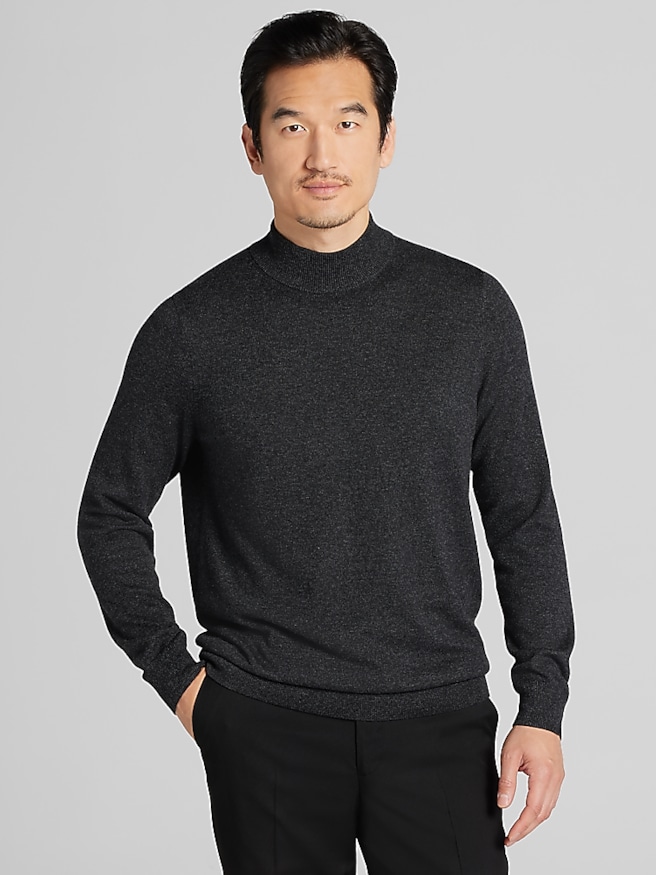
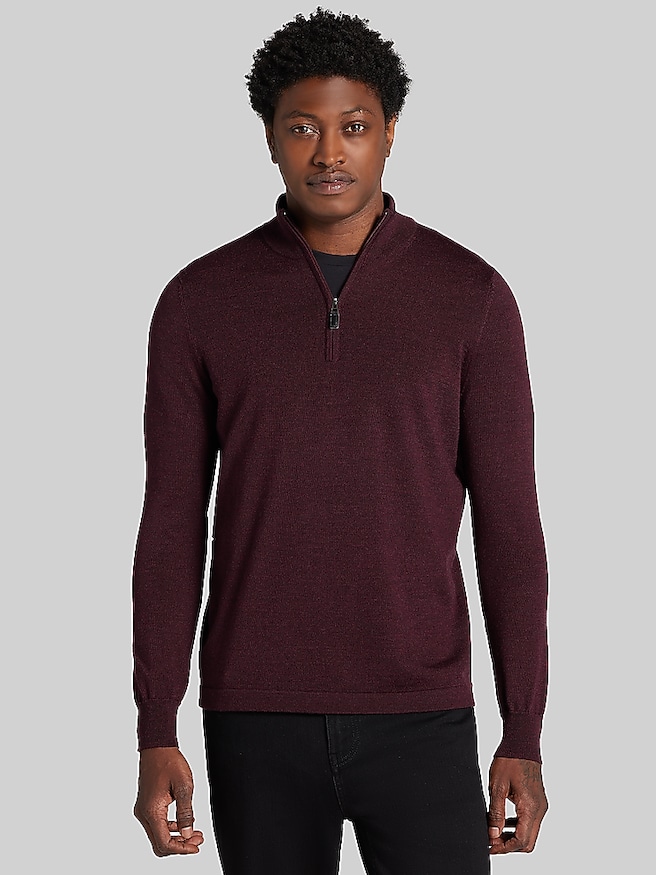
Affordable sweaters bring texture, comfort, and flexibility to a wardrobe, with shapes that work for office days, casual dinners, and time spent with family and friends. Their usefulness comes from the way a single knit layer can change the character of an outfit: a smooth crewneck makes chinos and sneakers look more put together, while a V-neck leaves room for a shirt collar and adds definition beneath a sport coat. Cardigans offer an open-front alternative that is easy to take off without disturbing a shirt underneath, and quarter-zip sweaters provide an adjustable neckline with a slightly more casual feel. Beyond the neckline, the fabric and knit structure influence how a sweater looks, feels, and wears. Cotton typically has a soft, breathable feel and works well for everyday outfits, although its weight and drape depend on the construction. Wool fibers have natural resilience and can help manage moisture, while merino wool is often used for finer knits with a smooth surface. Some people find wool comfortable against the skin; others prefer a shirt underneath. Synthetic fibers such as acrylic and polyester can contribute to easy-care blends, but the complete fiber content and care label matter more than any single material name. A blend may balance softness, shape retention, and maintenance needs, with results varying by the proportions and knitting method. Fine-gauge sweaters have smaller stitches and a relatively smooth appearance, making them useful when a neat silhouette matters. Cable knits, ribbed designs, and other raised patterns create visible texture and usually have more presence in an outfit. Heathered yarns add subtle variation without a bold pattern, while solid navy, charcoal, brown, and cream can coordinate with many familiar wardrobe staples. A textured sweater worn with simple trousers lets the knit stand out; a smoother sweater can sit comfortably alongside a patterned shirt. These distinctions make affordable sweaters relevant to a range of personal styles, from understated office dressing to relaxed weekend clothing, without requiring every outfit to have the same level of formality.
Fit determines whether a sweater feels like a natural part of an outfit or a layer that needs constant adjustment. In a conventional set-in sleeve, the shoulder seam generally sits near the shoulder’s edge, while raglan sleeves use a diagonal seam that creates a different shape through the upper body. Neither construction is automatically better; the important distinction is how comfortably the garment follows the wearer’s shoulders and arms. A closer fit can work neatly beneath a jacket, provided the knit does not pull across the chest or tighten when the arms move. A relaxed fit gives more room over a shirt, but extra fabric should not gather heavily at the waist or interfere with a jacket’s sleeves. Ribbed cuffs and hems help define the shape, and their tension affects whether the sweater sits smoothly or rides up. For an untucked look, a hem around the upper hip often creates a balanced proportion, though the best length also depends on torso length and trouser rise. Sitting at a desk, reaching for a bag, and bending to tie a shoe reveal more about comfort than standing still in front of a mirror. Layering adds another practical consideration. A substantial button-down shirt needs more space than a thin T-shirt, and a bulky knit may feel cramped under a closely fitted sport coat. A crewneck over an Oxford shirt creates a familiar office combination, with the collar sitting neatly above the neckline. A V-neck can frame a collared shirt without covering as much of its front, while a cardigan allows the shirt to remain visible through the center. With jeans, a sweater can replace a sweatshirt when a cleaner finish suits the occasion; with tailored trousers, it offers an alternative to wearing a jacket throughout the day. For complementary outer layers, Affordable Jackets provides a related category to explore. Keeping the sweater’s thickness and sleeve shape in mind helps make layered outfits comfortable rather than crowded.
Durability in knitwear depends on a combination of construction, use, and care, rather than on fabric weight alone. A lightweight sweater can hold up well with appropriate handling, while a heavier knit can still stretch if stored on a hanger. Even stitches, secure seams, and cuffs that recover after gentle stretching are useful details to notice. Friction also matters: backpack straps, rough bag surfaces, and repeated contact at the underarms can contribute to pilling. Those small fiber clusters do not necessarily mean a sweater is worn out, and a suitable fabric comb or sweater shaver may help tidy the surface when used carefully according to its instructions. Cleaning should follow the garment’s care label, since cotton, wool, and blended knits can require different treatment. Machine washing is appropriate only when the label permits it, and a gentle cycle or laundry bag may be helpful when consistent with those directions. Hand-washable sweaters benefit from gentle handling rather than twisting or wringing. Reshaping a damp knit and drying it flat, when instructed, helps protect its proportions; hanging a wet sweater can pull it out of shape. Storage deserves the same attention. Folding usually places less strain on the shoulders than hanging, and keeping knits clean before extended storage helps protect the fabric. Comfortable, well-maintained sweaters can serve many purposes, from a regular office layer to an easy choice for a restaurant dinner or a family gathering. They can also make thoughtful gifts for a father, brother, partner, or friend, particularly when the recipient’s usual size, preferred neckline, and care habits are known. Someone who favors simple outfits may appreciate a smooth, neutral knit, while a person who enjoys texture may gravitate toward ribbing or cable patterns. Sensitivity to fibers is worth considering, especially for a sweater likely to be worn directly against the skin. The most useful affordable sweaters fit the wearer’s routines as well as their measurements: comfortable enough for repeated wear, straightforward to coordinate, and suited to the amount of care they are likely to receive.