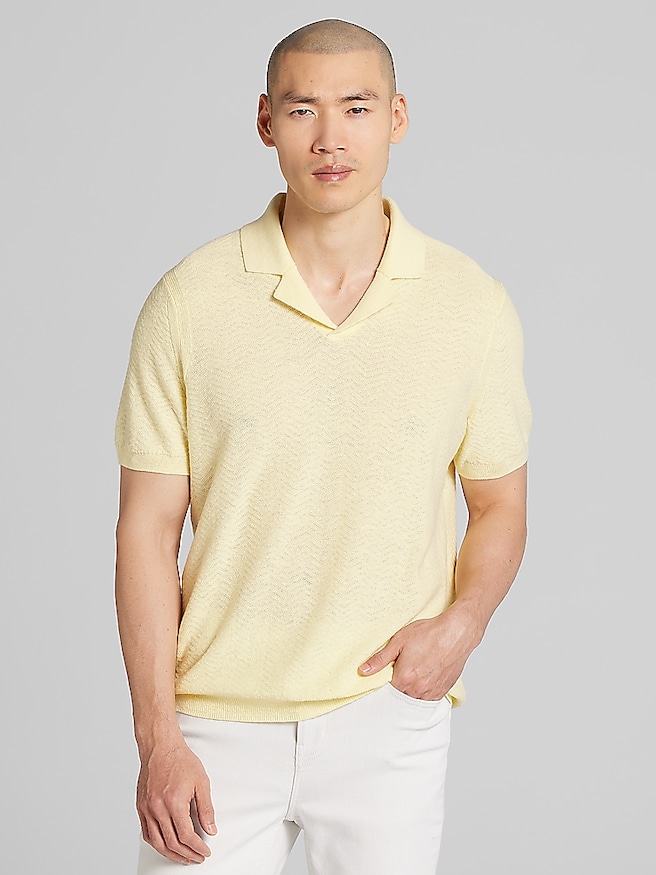
Mock neck pullovers bring a clean, elevated shape to everyday dressing, with a collar that stands above the base of the neck without the folded height of a traditional turtleneck. That small difference gives the neckline definition while keeping the overall look understated. The raised collar shared by mock neck pullovers and men's mock turtleneck sweaters creates a smooth frame for the face and an uncluttered line beneath a jacket. Without a shirt collar, tie, or row of buttons competing for attention, the knit itself becomes the focus: its texture, drape, and proportion do much of the styling work. A finely knitted pullover can sit neatly under a sport coat for an office that welcomes business-casual attire, while a more substantial knit pairs naturally with straight-leg jeans or casual trousers. For a dinner reservation, a dark mock neck with tailored pants offers a composed alternative to a button-down; for a relaxed weekend gathering, a textured version can make a simple outfit feel considered without looking formal. Smooth finishes tend to read as sharper, while ribbing and other visible knit patterns add depth and a more relaxed character. Color also changes the effect. Matching the pullover closely to the pants creates a continuous silhouette, while contrasting it with the jacket draws attention to the neckline and upper body. Neutral shades are easy to repeat across outfits, and richer colors can provide a focal point without requiring a pattern. The best pairing leaves enough room for each layer to hang naturally: jacket lapels should lie flat, sleeves should move freely, and the pullover’s collar should remain upright rather than bunch beneath the jacket collar. Worn on its own, a mock neck benefits from an intentional hem length and a comfortable shoulder fit, so the finished look feels complete even without an additional layer. Its appeal is less about dressing up every outfit than giving familiar combinations a distinct, tidy starting point.
Fabric and construction determine how a mock neck pullover feels against the skin, how it drapes, and how well it holds its shape through repeated wear. Cotton knits can offer a familiar hand and an easygoing appearance, though their weight and structure vary considerably with the yarn and stitch. Merino wool is often chosen for its fine fibers, breathability, and resilient character, while cashmere is associated with a softer hand that calls for attentive handling. Blended yarns may combine natural fibers with materials selected for strength, stretch, or shape retention; the fiber label is more useful than appearance alone when assessing what care a garment will need. Knit density matters, too. A compact, even surface generally slips beneath tailoring more smoothly than a bulky or highly textured fabric, and a ribbed structure can provide flexibility without relying entirely on added stretch fibers. At the neckline, look for a collar that feels comfortable when turning the head or sitting down. It should rest close enough to maintain its shape without pressing tightly against the throat. Shoulder seams on a traditionally set-in sleeve should sit near the shoulder edge, while intentionally relaxed or raglan constructions will have a different fit. Across the chest and upper arms, the fabric should skim rather than pull; stretched stitches, diagonal drag lines, or a hem that repeatedly rides up can indicate that more room is needed. A fit check also includes reaching forward, bending the elbows, and sitting in the pants planned for the outfit. Those movements reveal whether the cuffs bind, the body bunches, or the hem exposes more than intended. For untucked wear, a hem that reaches comfortably over the waistband usually provides a balanced line without excessive fabric at the hips. If wearing a mock neck beneath a blazer, try the layers together rather than judging either one separately. Smooth seams, secure cuffs, and a collar that recovers after gentle stretching are useful signs of thoughtful construction.
Consistent care helps preserve the features that make a mock neck pullover look polished: an even neckline, a smooth body, and cuffs that keep their shape. Always follow the sewn-in care label, since two similar-looking knits may require different treatment. Some fabrics can tolerate machine washing on a specified setting, while others need hand washing or professional cleaning. When washing is permitted, a gentle approach and a suitable detergent help reduce unnecessary friction; turning the garment inside out can also protect its visible surface. Avoid twisting a wet knit to remove water, which can distort the body and collar. Instead, handle it gently and dry it according to the label, reshaping the neckline, sleeves, and hem when appropriate. Many knitted garments benefit from drying flat on a clean surface rather than hanging under their own weight. Folding for storage can likewise help prevent stretched shoulders, especially with heavier or softer knits. Pilling may develop where fabric rubs against a bag strap, jacket lining, or seat belt, and it does not automatically mean the garment has reached the end of its useful life. A fabric comb or shaver appropriate for the knit can tidy the surface when used carefully, without pulling at the stitches. Small snags are best addressed promptly rather than cut, since clipping a loose loop can damage the surrounding structure. For frequent wear, consider how the pullover fits into an existing routine: a smooth knit that layers easily may suit someone who moves between desk work and evening plans, while a relaxed shape may feel more natural for casual outings. Mock neck pullovers can also make thoughtful gifts for someone who already enjoys understated knitwear or prefers an alternative to open-collar shirts. Familiarity with the recipient’s usual size, preferred fit, tolerance for close necklines, and willingness to follow fabric-specific care instructions makes the choice more personal. A well-chosen pullover complements the clothes already worn regularly, with enough comfort and versatility to become part of an established wardrobe rather than something saved for a rare occasion.