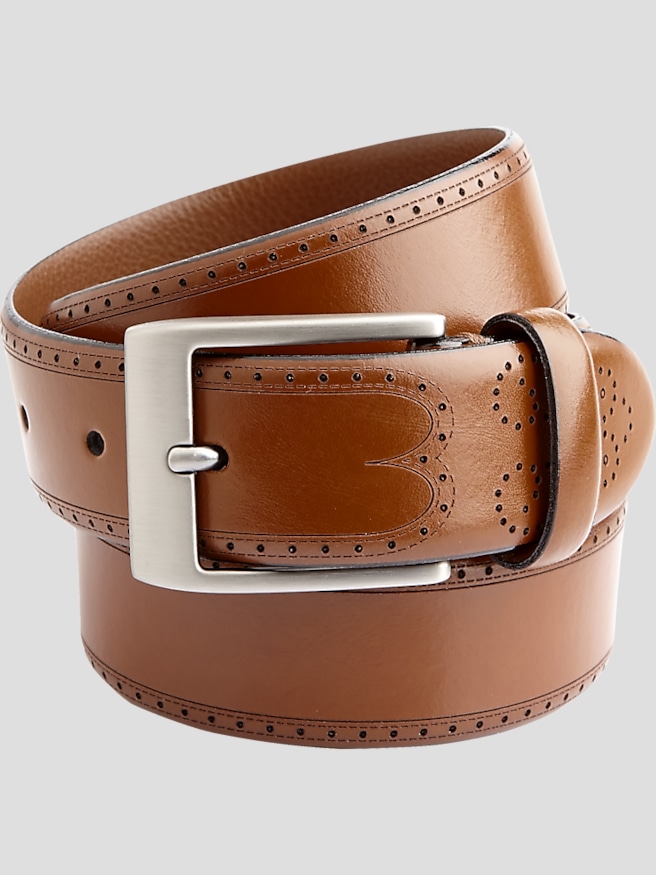
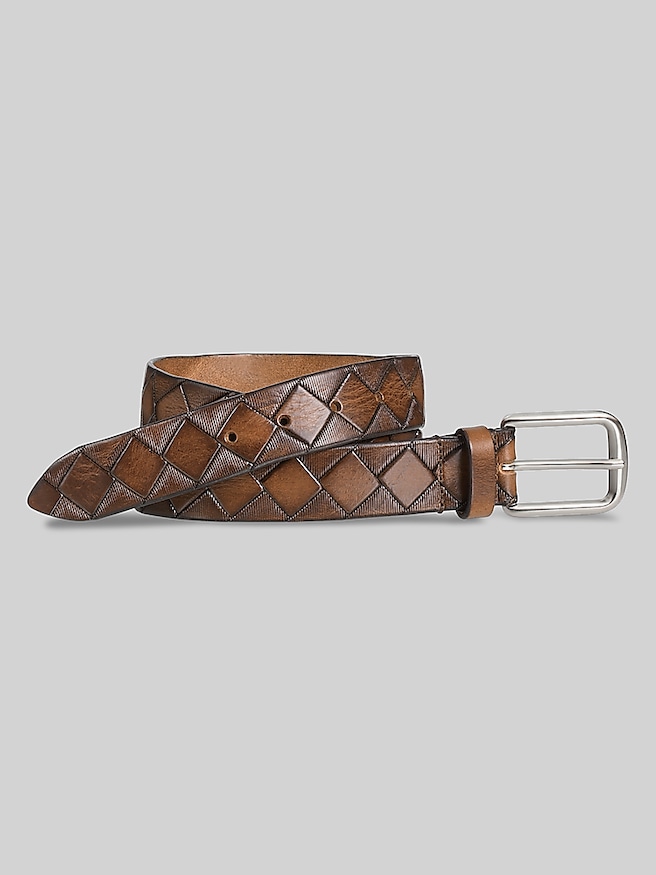
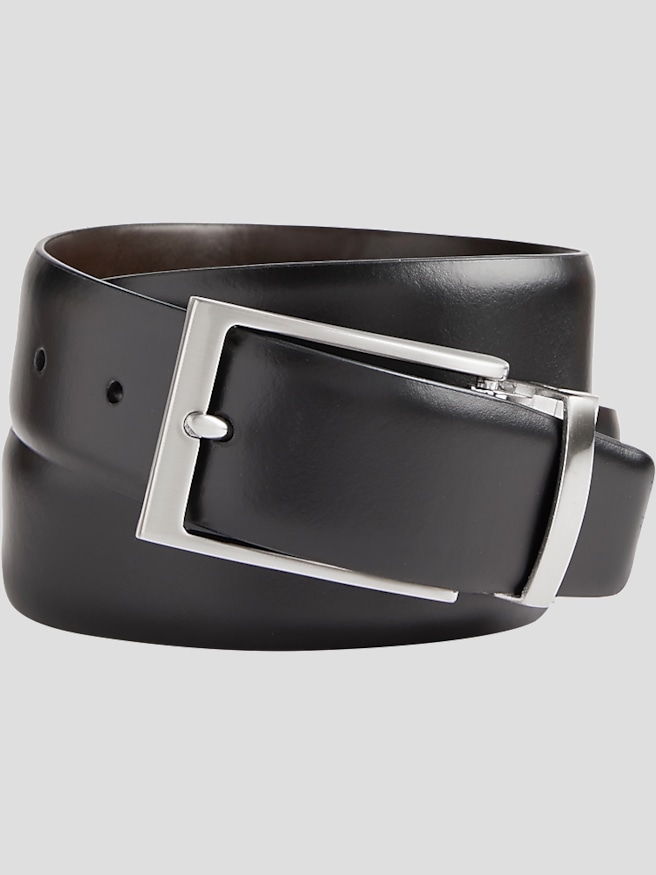
Minimalist belts are clean-lined accessories with restrained hardware, simple straps, and little or no visible decoration. Their appeal comes from proportion: a buckle that sits close to the body, a strap that lies flat, and a finish that complements the rest of an outfit instead of competing with it. Minimalism describes the appearance, not one particular fastening system. A conventional prong buckle can look just as understated as a concealed adjustable closure when its shape is compact and its detailing is subtle. For everyday dressing, these belts provide a practical finishing touch between a tucked shirt and a pair of trousers, keeping the waistband secure without creating a heavy focal point. Smooth black leather works naturally with black dress shoes and charcoal trousers, while brown leather introduces a softer contrast against navy, gray, or neutral chinos. Matching the general color and sheen of the belt to the shoes creates a cohesive look; an exact shade match is less important than keeping their formality consistent. A glossy dress shoe usually looks more balanced with a smooth, refined strap than with heavily textured leather. Brushed metal, satin finishes, and simple rectangular buckles can all support a pared-back look, although buckle size matters as much as surface finish. A broad plate or thick frame may stand out even when it has no ornamentation. Strap width changes the effect, too. Narrower proportions tend to look refined with tailored clothing, while a slightly wider profile can feel more at home with denim or substantial cotton trousers. For a closer look at streamlined leather proportions, Thin Leather Belts offer a related direction. The most versatile minimalist belt is not necessarily the narrowest or plainest option; it is the one whose scale suits the wearer’s clothing, belt loops, and usual occasions. In an office outfit, that might mean a discreet buckle beneath an open jacket. With a polo and chinos, it might mean a matte strap that adds definition without making the outfit feel overly formal.
Materials and construction determine how a minimalist belt feels through a full day and how its clean appearance holds up over time. Leather is a familiar choice because it can combine structure with flexibility, gradually developing character through repeated wear. Full-grain leather retains the natural grain surface and may show subtle variations, while top-grain leather has a more refined surface that can provide a uniform appearance. These descriptions explain aspects of the material, but they do not tell the whole story about durability. Strap construction, edge finishing, stitching, and the security of the buckle attachment also deserve attention. A neat edge should feel smooth rather than rough, and stitching, when present, should be even without loose ends. Layered straps rely on sound bonding and finishing to keep their edges together. Suede brings a softer, more textured character that suits relaxed tailoring, though its surface needs care suited to the nap. Nonleather materials can also support an understated look, with flexibility, surface texture, and cleaning needs varying by composition. Whatever the material, a strap should bend comfortably around the waist without feeling flimsy or excessively stiff. Fit becomes especially noticeable while sitting at a desk, driving, or moving between meetings. Belt sizing does not always correspond directly to trouser sizing, so the stated measurements and sizing guidance are more useful than assuming the same number will fit. Measuring a well-fitting belt from the point where the strap meets the buckle to the hole used most often provides a practical reference for many traditional designs. With a prong closure, fastening near the middle holes leaves adjustment room in both directions. With a track-based closure, the usable adjustment range matters more than hole placement. In either case, the tail should tuck neatly into a keeper or belt loop rather than extend far around the waist. A belt should steady trousers that already fit reasonably well; pulling a loose waistband into deep folds adds bulk and works against the smooth outline that makes minimalist styling appealing.
Daily habits help preserve the details that are most visible on a simple belt: its straight edges, smooth surface, and tidy shape. Pulling a strap sharply through tight loops can stress the edges and buckle area, while repeatedly folding it into a small space can leave pronounced creases. Hanging it straight or storing it in a loose coil gives the material room to rest without a hard bend. Smooth leather generally benefits from wiping with a soft, dry cloth and occasional treatment with a conditioner appropriate to its finish, following the care directions and testing an inconspicuous spot first. Suede calls for a suitable brush and suede-specific care rather than ordinary leather conditioner. Synthetic and textile straps should be cleaned according to their material instructions, since methods that suit leather may damage another surface. If a belt gets damp, allow it to dry naturally away from direct heat before storing it. Gentle handling matters for hardware as well: a soft cloth can remove fingerprints without the abrasion that may dull a plated finish. Giving a frequently worn belt a break between uses can also help limit repeated stress at the same fastening point. For someone building a compact wardrobe, understated belts make sense because they can connect several familiar outfits without introducing another strong pattern or decorative element. A simple leather strap can accompany a tucked dress shirt for a presentation, an Oxford shirt for dinner, or a fine-gauge knit with tailored trousers. The intended setting still matters; understated does not mean interchangeable across every dress code, and some formal trousers are designed for side adjusters or suspenders instead. As a gift for a birthday, graduation, or career milestone, a minimalist belt can be useful when the recipient’s measurements and preferences are known. Noticing the shoes, buckle finishes, and trouser styles already worn makes the choice more personal. Comfort, appropriate proportions, and careful construction ultimately do more for everyday wear than extra decoration.