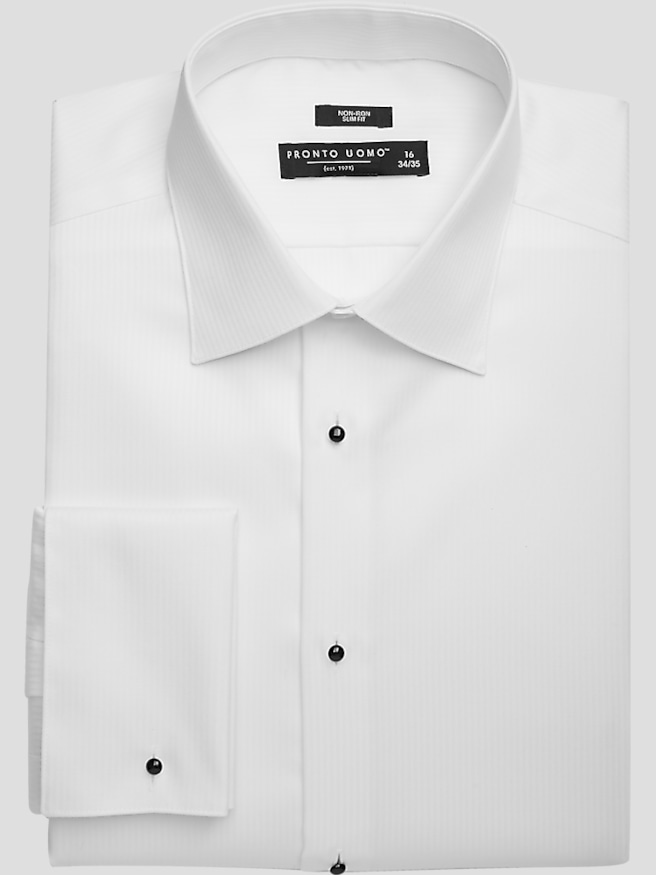
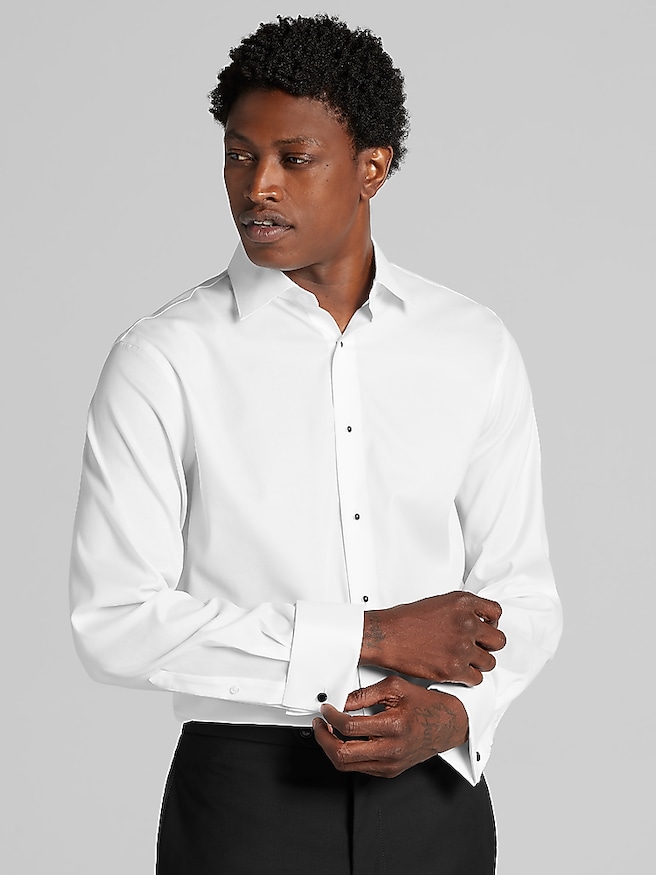
Men's white French cuff shirts are dress shirts with extended cuffs that fold back and fasten with cufflinks rather than standard cuff buttons. Also called double cuffs, French cuffs create a substantial, neatly finished edge at the wrist, giving a white shirt a more formal character without adding color or pattern. The folded fabric frames the cufflinks, usually with the inside edges of the cuff meeting in a “kissing” position. Against a navy or charcoal suit, that small detail adds distinction while keeping the overall look restrained. White provides a clean backdrop for patterned silk ties, dark jackets, and polished accessories, making these shirts useful for weddings, formal dinners, important presentations, and professional portraits. Their appeal lies in the balance between simplicity and detail: the shirt remains understated, while the cuffs give the outfit a deliberate finishing touch. French cuffs can also work with a tuxedo, although the cuff style alone does not make a shirt appropriate for every black-tie setting. The collar, shirt front, and fastening details matter, too; a plain business shirt and a formal shirt designed for a bow tie serve related but distinct purposes. A turndown collar can sit comfortably beneath a suit jacket, while its spread influences how a tie knot fills the space at the neck. The broader category of Mens White Dress Shirts encompasses several cuff treatments, with French cuffs offering a particularly dressy expression of this wardrobe staple. Simple silver-tone or gold-tone cufflinks keep the effect quiet enough for many professional settings, while engraved designs or dark stone accents can make the same white shirt feel more personal for a celebration. Matching the general tone of cufflinks to a watch or other visible metal details creates cohesion, though an exact match is not essential. The finished impression should come from the relationship among the shirt, tailoring, and accessories rather than from any single decorative element.
Fabric and fit determine how a white French cuff shirt feels over a full day and how cleanly it sits beneath a jacket. Cotton is valued for its breathability, absorbency, and familiar feel, while cotton blends can offer a balance of comfort, shape retention, and easier maintenance, depending on their composition and finish. Weave changes the surface as much as fiber content does. Poplin has a smooth, relatively flat appearance that suits crisp tailoring; twill has a subtle diagonal texture and often a softer drape. Pinpoint weaves introduce fine texture without creating a bold pattern, while tonal herringbone adds detail that becomes more noticeable at close range. White fabrics also vary in opacity. A very lightweight cloth may reveal an undershirt or show more contrast against the skin, whereas a denser construction can provide greater coverage without necessarily feeling heavy. A close-fitting undershirt in a shade near the wearer's skin tone is often less visible than a bright white one, particularly under smooth fabrics. Non-iron and wrinkle-resistant finishes can reduce routine pressing, but they do not eliminate the need to follow the garment's care instructions. Fit is equally important because French cuffs draw attention to sleeve length and wrist placement. A comfortable collar closes without pressing into the neck, and shoulder seams should sit near the natural edge of the shoulders. Through the chest and waist, the fabric should lie smoothly rather than pull across the buttons or collect in thick folds beneath a jacket. Slim fits generally follow the torso more closely, while classic fits provide more room; the names and measurements can vary by maker. Sleeves need enough length for reaching across a table or shaking hands without dragging the cuffs far up the forearm. With arms relaxed, a small band of shirt cuff showing beyond the jacket sleeve creates a clean transition. The folded cuff also needs sufficient room inside the jacket sleeve, especially when a watch is worn, so the layers rest together instead of catching or bunching.
The lasting value of a white French cuff shirt depends on both its construction and the care it receives between occasions. Even stitching, secure collar and sleeve seams, neatly finished buttonholes, and well-aligned cufflink openings contribute to a shirt that holds its shape through repeated wear. Longer cotton fibers can support a smoother surface, but fabric quality also depends on yarn, weave, and finishing rather than fiber description alone. The cuffs and collar deserve particular attention because they come into frequent contact with skin, grooming products, desks, and jacket linings. Removing cufflinks before laundering helps protect both the hardware and the fabric around the openings. Care labels should determine washing temperature, drying method, and whether professional cleaning is appropriate. Prompt attention to marks at the neck and wrists can help prevent buildup, while a suitable stain treatment is preferable to aggressive scrubbing that may roughen the cloth. Excessive heat can shrink some fabrics or shorten their useful life, and chlorine bleach is not appropriate for every white shirt or easy-care finish. When pressing is permitted, attention to the collar, placket, and unfolded cuffs helps restore the shirt's crisp lines. Letting the shirt dry fully before storing it on a supportive hanger also helps maintain a fresh, orderly appearance. For someone who dresses formally only a few times a year, a straightforward white French cuff shirt can provide a consistent foundation for milestone celebrations and dress-code occasions. For someone who regularly wears tailored clothing, it adds variety through texture, collar shape, and cufflink choice rather than a change in color. It can also make a thoughtful gift for a graduate entering a client-facing profession, a partner preparing for a wedding, or anyone who enjoys traditional tailoring. Accurate neck and sleeve measurements make that gift more practical, and an understated pair of cufflinks can complete the gesture without dictating an entire outfit. The result is a shirt defined by small, useful details: a comfortable collar, smooth fabric beneath a jacket, and folded cuffs that bring a polished finish to formal dressing.