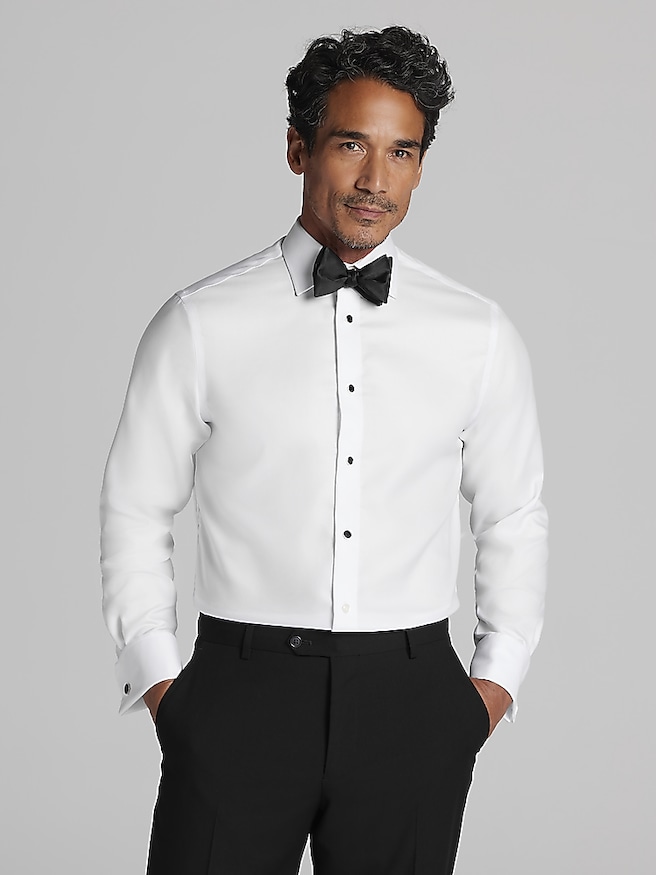
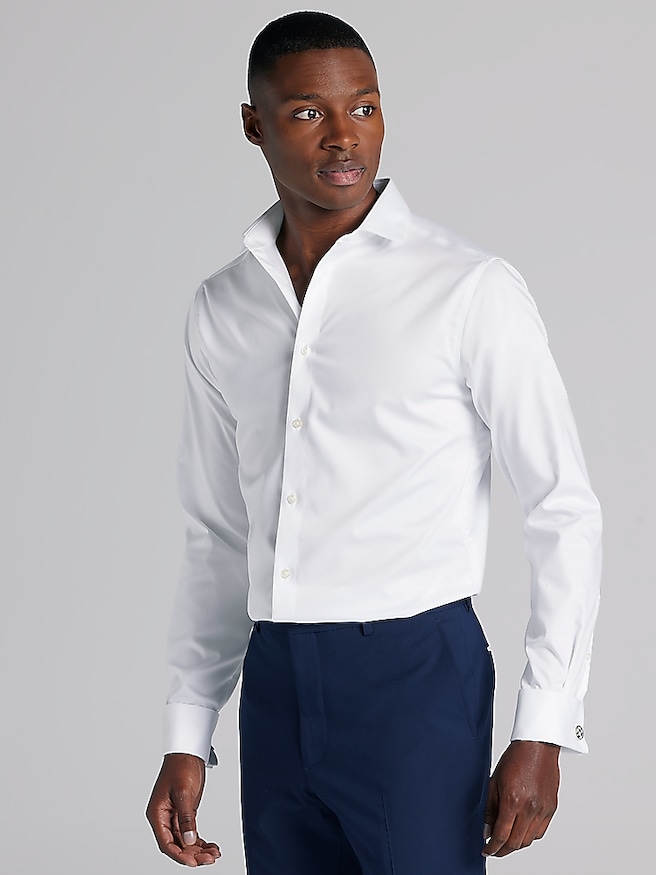
White French cuff shirts for men combine the versatility of a white dress shirt with a cuff designed for cufflinks. A French cuff, also called a double cuff, has an extended section of fabric that folds back over itself, with aligned holes secured by cufflinks rather than a standard button closure. That folded construction gives the wrist a more substantial finish and creates a place for a small, personal detail beneath a jacket sleeve. White provides a clean backdrop for dark tailoring, patterned ties, and polished accessories, making these shirts useful for business formal settings, weddings, and dressier evening occasions. Fabric and weave make a noticeable difference in how a shirt looks and feels throughout the day. Cotton offers breathability and a familiar, comfortable feel, while cotton blends may add stretch, wrinkle resistance, or easier maintenance, depending on their composition and finish. Poplin has a smooth surface and a relatively crisp appearance. Twill has a diagonal weave that can give the fabric a softer drape and subtle texture. Herringbone creates a repeating V-shaped pattern, adding visual interest without introducing another color. These distinctions are especially noticeable in a white shirt, where texture becomes part of the design rather than competing with a print. Opacity matters, too: a fine, lightweight fabric may reveal more beneath it than a closely woven, more substantial cloth, although weight alone does not determine coverage. An undershirt close to the wearer’s skin tone often creates a less visible outline beneath white fabric than a bright white undershirt. For a long ceremony followed by dinner and dancing, softness and freedom of movement deserve as much attention as a crisp collar. For a presentation or formal meeting, a smooth front and a cuff that holds its shape can help the whole outfit look composed. The best balance depends on the setting, the length of wear, and whether the shirt will usually sit beneath a suit jacket.
Fit gives a white French cuff dress shirt its finished appearance, particularly because the collar and cuffs remain visible when a jacket is on. Slim fits generally sit closer through the torso, classic fits allow more room, and tailored fits often fall between them, though the meaning of each label varies. Neck and sleeve measurements are more useful than relying on a familiar casual-shirt size. A buttoned collar should feel secure without pressing into the neck, and the shoulder seams should sit near the natural shoulder rather than slipping down the upper arm. Across the chest, the placket should lie flat without pulling between buttons. Enough room through the back and upper arms makes reaching across a table or lifting a glass feel natural. Sleeve length also affects how French cuffs sit: the folded cuff should rest around the wrist without dropping over the hand, while leaving room for comfortable movement. Beneath a properly fitted jacket, approximately a quarter to a half inch of shirt cuff is a common starting point, adjusted for personal preference and sleeve proportions. The jacket opening should accommodate the folded fabric and cufflink without catching or creating a bulge. A hem long enough to stay tucked helps preserve a smooth line when sitting, standing, or moving through an event. Collar shape completes the picture. A point collar creates a relatively narrow frame for a tie, while a spread collar leaves more space for a fuller knot. For black-tie dressing, the shirt front and collar should suit the tuxedo and bow tie; French cuffs alone do not make every white dress shirt equally appropriate for formal eveningwear. Coordinating French Cuff Shirts and Cufflinks also involves scale and finish. Understated metal designs work well with business tailoring, while an engraved or meaningful pair can add personality to wedding attire. Matching every accessory exactly is unnecessary, but keeping metal tones reasonably consistent creates a deliberate look. A cufflink should pass comfortably through the aligned holes and hold the folded cuff securely without pulling the fabric out of shape.
Care helps preserve the clean color, smooth surface, and structured cuffs that make these shirts distinctive. The garment’s care label should always determine the cleaning method, water temperature, drying approach, and ironing setting, since cotton, blended fabrics, and easy-care finishes do not all respond alike. Remove cufflinks and any removable collar stays before cleaning. When machine washing is permitted, separating white shirts from darker clothing helps reduce color transfer, and addressing collar or cuff marks promptly can prevent buildup from becoming harder to remove. A fabric-appropriate stain treatment is preferable to aggressive scrubbing, which can roughen the surface and weaken fibers. Chlorine bleach is not suitable for every white shirt, particularly when stretch fibers, special finishes, or care-label restrictions are involved. Excessive heat can contribute to shrinkage and unnecessary wear, so drying instructions deserve the same attention as washing instructions. If ironing is permitted, pressing the cuff flat before folding it back helps smooth the layers and keeps the edges aligned; working around buttons rather than pressing directly over them also protects those details. Wrinkle-resistant or non-iron fabric may reduce routine pressing, but it still benefits from proper washing, prompt removal from the dryer when allowed, and hanging with room to breathe. Durability depends on more than fabric thickness. Even stitching, secure buttons, neatly finished seams, and well-constructed collar and cuff edges all contribute to dependable wear. Repeated friction often shows first at the collar fold and cuff edges, so gentle handling in those areas is worthwhile. Between wears, letting the shirt air out and storing it on a supportive hanger helps maintain its shape. As a gift, a white French cuff shirt suits someone who regularly wears suits, attends formal events, or enjoys adding personal accessories to tailored clothing. Accurate neck and sleeve measurements, a preferred fit, and an understanding of care preferences make that gift more useful. Paired with meaningful cufflinks, it can mark a graduation, professional milestone, or wedding while remaining practical for occasions well beyond the celebration.