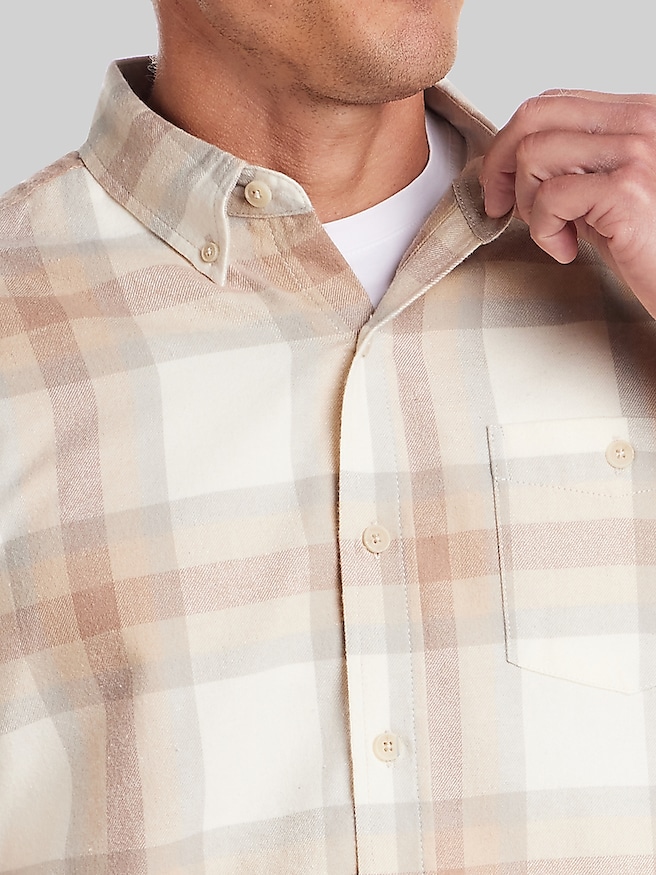
Men’s warm flannels bring together the familiar comfort of a brushed button-down with the practical warmth needed for cooler days. Unlike lightweight flannel shirts intended mainly for transitional weather, warmer styles are often made with substantial cotton, denser weaves, or soft inner linings that help hold in body heat. Double-brushed cotton is a popular choice because brushing lifts the fibers on both sides of the fabric, creating a soft hand feel and a little extra insulation without making the shirt difficult to layer. For a more substantial option, look for heavyweight cotton flannel or thick cotton twill with a higher fabric weight, often around 10 ounces or more. These shirts feel reassuringly sturdy when pulled on over a tee, yet they remain breathable enough for errands, casual offices, weekend drives, and gatherings around a fire. A warm flannel can be especially useful during the stretch of the year when mornings feel crisp, afternoons are manageable, and evenings call for another layer. The right fit depends on how the shirt will be worn: a regular fit leaves room for a base layer while maintaining a neat profile, while a relaxed or extended-size fit can offer added comfort over a sweater or sweatshirt. Pay attention to sleeve length, shoulder room, and the placement of the chest pockets, particularly if the shirt will be worn open as an overshirt. A straight hem can look natural untucked with jeans or chinos, while a slightly curved hem may provide a more traditional button-down appearance. For a dependable everyday wardrobe, look for cotton flannels in versatile checks, plaids, or subdued solid colors that coordinate easily with denim, corduroy, canvas, and casual trousers. The appeal is partly practical and partly emotional: there is a familiar ease in reaching for a warm flannel on a cool morning, fastening a few buttons, and heading out in a shirt that feels broken-in from the first wear. For additional seasonal styling, browse Men's Fall Flannel Shirts for more ways to build a comfortable layered wardrobe.
The warmest flannels can serve as more than shirts. A heavier regular-fit button-down can work as a shirt-jacket, especially when worn over a thermal top or lightweight knit. Fleece-lined and sherpa-lined versions add another level of coziness by pairing a brushed cotton exterior with a plush polyester interior. This combination is well suited to colder walks, outdoor chores, tailgates, travel, and evenings when a standard shirt does not provide enough coverage but a full winter coat feels excessive. The outer fabric helps create a structured, dependable layer, while the lining adds softness and warmth against the body. Consider the climate and your typical activity before choosing one. A cotton flannel may be the better everyday option for indoor-outdoor routines because it is breathable and easy to layer. A fleece- or sherpa-lined style is more useful when you expect to spend extended time outside or encounter wind and low temperatures. If mobility matters, check that the lining does not make the shoulders or arms feel restrictive, and consider a fit that leaves enough space for a base layer without pulling across the buttons. Button cuffs can help adjust the sleeve opening, while a sturdy front placket and durable buttons contribute to long-term wear. Warm flannels also make thoughtful gifts for fathers, sons, brothers, partners, coworkers, or friends because they are practical, easy to understand, and suited to many personal styles. They can become the shirt someone wears for a weekend cabin trip, a morning coffee run, or the familiar routine of splitting wood and coming back inside to warm up. When giving one as a gift, think about the recipient’s usual wardrobe and choose a color palette that fits what they already own. Earth tones, deep neutrals, and classic plaid combinations tend to pair with a wide range of clothing, while brighter patterns can bring more personality to a simple jeans-and-boots outfit. It is also worth considering care requirements. Many cotton flannels become softer with use, but following the garment’s care instructions helps preserve the fabric, shape, and color. Washing with similar colors, avoiding excessive heat, and allowing heavier shirts to dry thoroughly can help keep them ready for repeated wear throughout the cooler months.
For demanding outdoor conditions, some warm flannels include insulation or battery-powered heating technology. Insulated styles may use a lightweight liner, such as a 50-gram fill, to add warmth without the bulk of a heavy coat. Heated options go a step further with rechargeable battery systems and targeted heating zones, often positioned near the chest or back where extra warmth can feel most useful. Depending on the design and settings, a rechargeable system may provide several hours of heat, making it a practical choice for static outdoor work, early-morning commutes, sporting events, extended travel, or time spent outside in particularly cold conditions. When comparing heated garments, review the expected battery runtime, heat settings, charging method, and placement of the controls. A longer runtime can be valuable for a full day outdoors, while adjustable settings allow the wearer to conserve power or increase warmth as conditions change. Keep in mind that heated flannels still need to fit comfortably over a base layer and under any outer coat; a close but unrestricted fit helps the heating zones sit where intended. Regardless of construction, the best men’s warm flannel is one that matches the way it will be used. Choose breathable heavyweight cotton for adaptable layering, a fleece- or sherpa-lined design for light-jacket warmth and windier days, or an insulated and heated option for prolonged exposure to cold. Look for soft brushed surfaces, durable stitching, practical pockets, reliable closures, and a fit that allows natural movement. With those details in mind, a warm flannel can become one of the most dependable pieces in a cool-weather wardrobe, offering comfort at home, coverage on the go, and an easy layer to reach for whenever the air turns sharp.