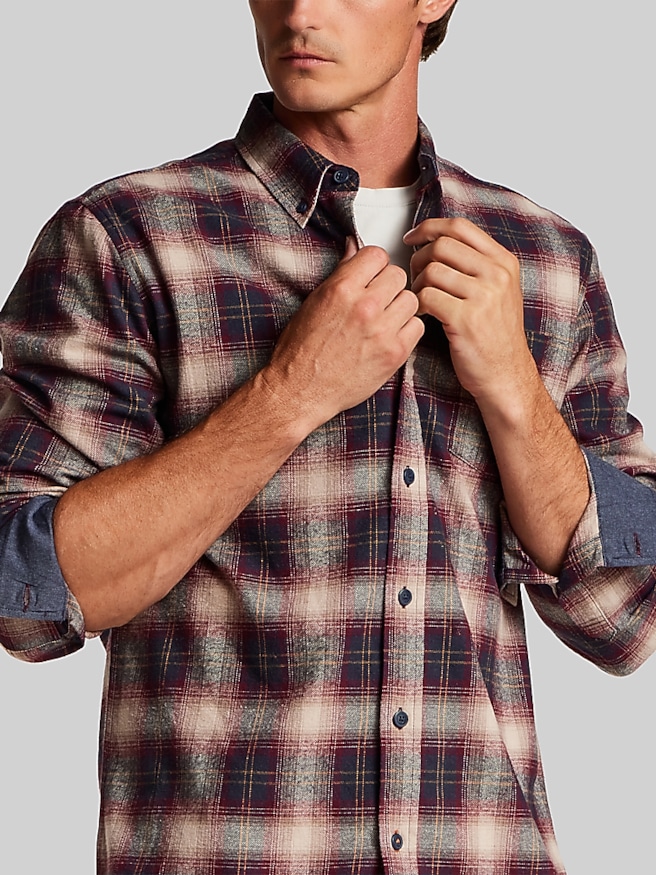
Men’s flannel shirts bring a soft, lived-in feel to everyday dressing, with enough structure to look put together beyond the weekend. Their appeal starts with the fabric: flannel is defined by its softly brushed surface, not by a particular plaid or check. That raised texture gives the cloth its familiar hand and adds depth to both patterned and solid designs. Cotton flannel is a common choice for its breathability and comfortable feel against the skin, while cotton blends can bring other qualities, such as added stretch or resistance to wrinkles, depending on their composition. Fabric weight matters just as much as fiber content. A lighter flannel tends to drape easily and sit neatly beneath another layer; a heavier version has a more substantial feel and can work well worn open over a T-shirt. Neither weight alone nor softness at first touch tells the whole story about quality. An even weave, secure buttons, tidy seams, and a collar that lies smoothly all contribute to a shirt that feels considered rather than merely casual. Pattern gives that foundation its personality. Broad checks have a bold, relaxed presence, while smaller plaids and muted colors can feel more understated with chinos or dark denim. Solid flannel lets the texture take the lead and offers an alternative for anyone who prefers less pattern. Color also changes how readily a shirt works with an existing wardrobe. Navy, gray, brown, and green pair easily with familiar casual staples, while brighter accents can pick up a color in a T-shirt or sneakers without requiring an exact match. For a versatile color direction, men’s blue flannel shirts complement denim, stone-colored chinos, and brown leather footwear. The result can be as simple as a favorite shirt and jeans, but the combination of texture, color, and proportion gives that simplicity a deliberate finish.
Fit determines whether a flannel shirt feels easy and natural or bulky and restrictive. A comfortable shoulder line, sleeves that allow the elbows to bend freely, and enough room through the chest help the shirt move with the wearer through a full day. For a conventional set-in sleeve, the shoulder seam generally sits near the edge of the shoulder rather than pulling inward or extending far down the arm. The front should lie relatively flat when buttoned, without gaps between buttons or diagonal tension across the chest. A closer fit can create a cleaner outline beneath a casual jacket, while a roomier cut leaves space for a T-shirt and suits an open, layered look. Stretch can help with movement, but it does not replace adequate room through the back, shoulders, and upper arms. The intended use is worth keeping in mind: a shirt worn at a desk, behind the wheel, and out to dinner should remain comfortable when seated, not just when standing in front of a mirror. Length is another practical detail. An untucked hem looks balanced when it covers the waistband without overwhelming the pants, while a longer shirttail can help a tucked shirt stay in place. Body proportions and personal preference matter more than a rigid rule. Cuffs should fasten comfortably at the wrist, with room for a watch if needed, and sleeves should not leave excess fabric bunched at the hands. These small considerations make styling feel less like an adjustment throughout the day. With straight-leg jeans and lace-up boots, flannel has a familiar, grounded character. With tapered chinos and clean sneakers, the same category of shirt can look sharper without losing its ease. In a relaxed workplace, a subdued pattern worn buttoned with neat pants may fit the dress code; for a family meal or a casual evening out, an open collar keeps the look approachable. Where a more polished impression matters, smooth fabric, a tidy collar, and well-proportioned layers do more than extra accessories.
The lasting value of a men’s flannel shirt comes from how well its fabric and construction hold up to repeated wear and appropriate care. Brushing creates softness by lifting fibers from the surface, so some change in texture over time is normal. Areas exposed to frequent rubbing, such as under the arms or along the sides beneath a bag strap, may develop pills; the amount depends on the fibers, weave, finishing, and use. A dense, even fabric and neatly finished seams are useful details to assess, although no single feature guarantees durability. Care begins with the garment label because flannel shirts can vary in fiber content, finishes, and construction. When machine washing is permitted, cooler water and a gentle cycle can help limit unnecessary stress on the fabric. Washing with similar colors, avoiding an overloaded drum, and keeping rough hardware away from the brushed surface can also help preserve its appearance. Cotton may shrink, particularly with excess heat, so drying instructions deserve attention before a shirt goes into the dryer. If tumble drying is allowed, a lower heat setting may be appropriate; removing the shirt promptly and smoothing the collar, placket, and cuffs can reduce creasing. Any ironing should follow the labeled temperature guidance. Between wears, hanging a shirt neatly gives it a chance to air out and helps prevent the crushed folds that come from leaving it in a pile. Those habits support a wardrobe staple that can move comfortably between errands, informal gatherings, and unhurried days at home. Flannel can also make a thoughtful gift for a dad, brother, partner, or friend who already enjoys casual button-front shirts. A familiar color palette, a preferred fit, and an easy-care fabric are often more useful than an unfamiliar statement pattern. Someone who usually wears shirts untucked may appreciate a balanced hem, while someone who layers over tees may prefer extra room. Attention to those everyday preferences makes a flannel shirt feel personal, practical, and ready to become part of a regular rotation.