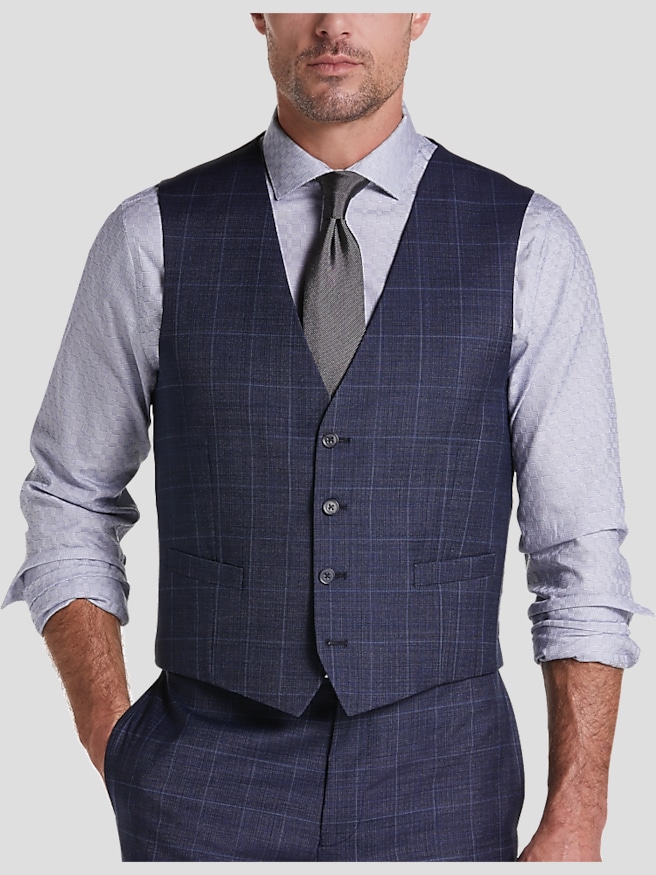
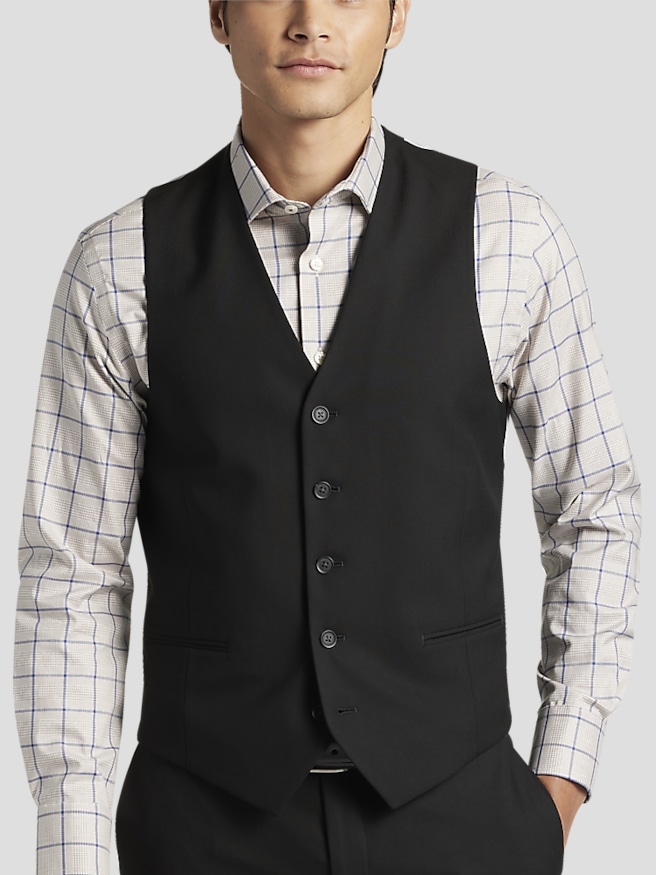
Men’s vest styles range from tailored waistcoats and low-cut tuxedo vests to knitted sweater vests, quilted layers, and practical utility designs. Each brings a different shape, texture, and level of formality to an outfit. A suit vest, also called a waistcoat, is a fitted, sleeveless garment with a button front, usually worn over a dress shirt and beneath a suit jacket. In a three-piece suit, matching fabric creates a continuous line from the shoulders to the trousers; worn separately, a contrasting vest makes the outfit feel more individual. Single-breasted styles have one column of buttons and a relatively clean front, while double-breasted styles overlap across the torso for a more pronounced tailored appearance. Neckline depth, lapels, pocket placement, and the shape of the hem all influence the finished look. A higher neckline shows more vest above a closed jacket, while a deeper opening leaves more room for the shirt and tie. Tuxedo vests generally have a lower neckline designed to display the formal shirt front and bow tie while covering the trouser waistband. They suit black-tie weddings, galas, and other occasions that call for formal evening attire. Wool is valued in tailored vests for its drape and ability to recover from ordinary creasing, while wool blends can bring different textures and handling characteristics depending on their composition. Cotton and linen create a less formal impression, with linen’s visible texture and tendency to crease becoming part of its character. A smooth lining helps the garment move over a shirt, and an adjustable back strap can refine the waist without changing the overall size. Good fit is visible in the details: the front lies flat, the buttons close without pulling, and the armholes follow the body without cutting into it. The hem should cover the trouser waistband rather than leave a strip of shirt exposed. On many traditional single-breasted waistcoats, the lowest button is left undone, though the garment’s cut and the occasion can influence how it is worn.
Casual vest styles offer a different kind of versatility, using knit structure, padding, or rugged fabrics rather than tailoring alone to define the silhouette. A sweater vest is a sleeveless knit with a ribbed neckline, armholes, and hem; V-neck versions frame a shirt collar, while crewneck versions create a simpler, more enclosed line. Fine-gauge knits sit neatly beneath a jacket, and chunkier textures give an outfit more visual weight. Cotton knits can feel smooth and substantial, wool offers natural resilience, and blended yarns vary in softness, stretch, and care requirements. Over an Oxford shirt, a sweater vest can work for an office with a relaxed dress code; over a plain T-shirt, the same category reads more casually. Quilted vests use stitched sections to hold padding in place, while puffer vests usually have a fuller, loftier profile. Down and synthetic fill are common insulation choices, but the amount of fill and the shell construction also affect bulk, weight, and how easily the vest layers. Fleece vests have a soft, brushed texture and suit everyday layering, travel, and outdoor activities where unrestricted arm movement is useful. Utility vests place greater emphasis on accessible pockets, secure closures, and room for essentials, making them relevant to photography, walking, and hands-on pursuits. Denim vests bring the familiar structure of woven cotton and can develop a softer feel with repeated wear. Leather vests have a more pronounced surface character, with grain, finish, and panel construction shaping their appearance. Across these styles, fit depends on the intended layer underneath. A vest worn over a thin shirt needs less room than one worn over a sweatshirt, but neither should balloon away from the torso. Shoulder seams should sit close to the natural shoulder line, and the opening around each arm should allow movement without excessive gaps. For a cleaner silhouette, the fabric beneath the vest should lie smoothly rather than bunch at the sides or spill out heavily below the hem.
Color, proportion, and care help determine how well a vest fits into an everyday wardrobe. Navy, charcoal, black, and muted brown are straightforward starting points because they work with many shirt and trouser combinations, while checks, textured weaves, and deeper accent colors bring more personality. A patterned vest often looks most balanced against a quieter shirt; when both pieces have patterns, differences in scale keep them from competing. Personal expression is part of the appeal of Cool Men's Vests, whether that means a subtle knit texture for dinner or a sharply defined waistcoat for a wedding reception. For someone who frequently removes a suit jacket at a desk or during an event, a tailored vest keeps the outfit composed without relying on the jacket alone. For travel, a casual vest can add useful pockets, though heavily filled pockets may distort its shape. Durability depends on more than fabric thickness: secure buttons, even stitching, reinforced stress points, and neatly finished armholes all contribute to how a garment holds up. Care should follow the label, since a tailored wool vest, cotton knit, insulated vest, and leather vest can require very different treatment. Tailored pieces benefit from airing between wears and hanging on a suitable hanger; knit vests are generally better stored folded to avoid stretched shoulders. Washable garments need the specified cycle and drying method, and insulated designs may have particular instructions for maintaining their fill. Leather requires products appropriate to its finish rather than ordinary laundry treatment. Prompt attention to spills and gentle handling of snags help preserve appearance without unnecessary cleaning. As a gift for a father, partner, graduate, or someone starting a new role, a vest is most thoughtful when its size and formality match the recipient’s habits. A familiar shirt style, preferred colors, and the occasions already on the calendar offer useful clues. The most wearable choice feels comfortable sitting, standing, and reaching, with enough room to move and a shape that still looks intentional.