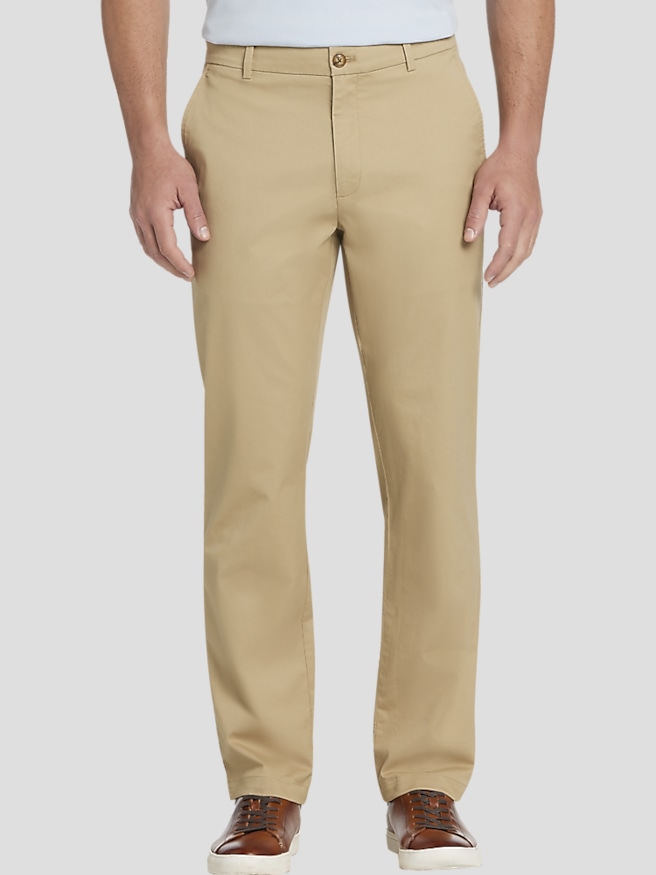
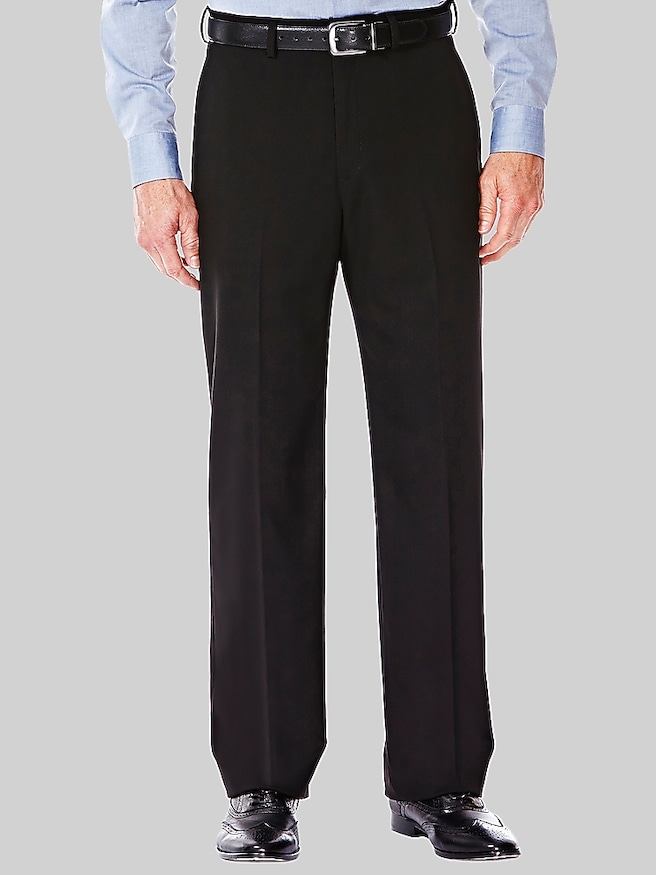
Men’s trousers include dress pants, chinos, tailored suit pants, and relaxed or performance-focused styles, giving this wardrobe staple a place in everything from a regular office rotation to a wedding outfit. The distinction between these categories often comes down to fabric, construction, and finish. Dress trousers typically have a smooth appearance, discreet pockets, and a clean line through the leg, while chinos use cotton twill for a more casual texture. Suit trousers are designed to coordinate with a matching jacket; a similar color alone does not necessarily create a matching suit, since the weave, shade, and finish also need to align. Separately styled trousers work well with sport coats, sweaters, and button-down shirts when a coordinated outfit is more appropriate than a full suit. Materials play a substantial role in how pants feel and hold their shape. Wool is valued for its drape, breathability, and ability to recover from light wrinkling, making it useful for tailored trousers worn through meetings, presentations, and evening events. Wool blends can combine that refined surface with other fibers that influence softness, strength, or ease of care. Cotton provides a familiar feel and a less formal appearance, with twill construction contributing texture and resilience. Linen has a distinctive, textured surface and develops visible creases that are part of its character rather than a sign of poor quality. Synthetic blends may offer wrinkle resistance, while a modest amount of stretch can make sitting, walking, and bending more comfortable. Performance trousers may also incorporate moisture management or shape-retention features, though those qualities depend on the fabric and construction rather than the category name alone. A soft, fluid fabric produces a different silhouette from a crisp, structured cloth, even when both pairs share the same size. That relationship between material and shape helps explain why one pair feels natural with a knit polo and leather sneakers, while another carries the sharper lines needed for a dress shirt and polished lace-ups.
Fit determines whether trousers look composed and remain comfortable throughout the day. Slim-fit trousers generally follow the body more closely through the seat and thigh, often with a narrower leg opening; straight-fit trousers maintain a more consistent line toward the hem. Relaxed and wide-leg shapes provide additional room and a fuller silhouette without necessarily looking informal, especially when the fabric drapes cleanly and the length is controlled. These labels describe the intended shape, but the waistband, rise, thigh room, and inseam still need to work together. The rise is the distance between the crotch seam and the top of the waistband, and it affects where the pants sit on the body. A higher rise can create a longer-looking leg line and pair neatly with a tucked shirt, while a lower rise sits closer to the hips. A comfortable waistband rests securely without pinching, and pockets should lie reasonably flat rather than pull open under tension. Enough room through the seat and thigh matters for the person who spends hours at a desk, steps onto a train, or moves between appointments. Stretch can support that movement, but it does not replace an appropriate cut. Flat-front trousers offer a smooth front, while pleated trousers introduce folds that can provide additional space and shape. Pleats can look crisp and tailored when the waist and seat fit well, rather than appearing bulky. At the hem, the break describes the fold where the fabric meets the shoe. Little or no break creates a cleaner, shorter line, while a slight break gives a traditional finish. Excess length can gather around the ankle and obscure the intended silhouette. The shoe’s shape also affects how the hem falls, so tailoring is most accurate when the trousers are assessed with the footwear intended for them. Alterations to length or waist can refine the result, although the underlying rise and overall cut still need to suit the wearer.
Color, texture, and care help determine how easily men’s trousers become part of an everyday wardrobe. Navy, charcoal, gray, and tan offer useful starting points because they coordinate with a broad range of shirts and jackets. Darker dress trousers can anchor a business outfit or an evening look, while cotton chinos bring a more relaxed finish to a polo, an Oxford shirt, or an unstructured jacket. Subtle checks, textured weaves, and a fuller leg can add personality without requiring a loud pattern. The silhouettes associated with men's fashionable trousers can be worn in understated ways: a clean waistband, a neatly tucked shirt, and shoes with enough visual weight to balance the leg shape often make the proportions feel intentional. For interviews, client meetings, ceremonies, and dinners with a stated dress code, the level of formality matters more than novelty. Formal trousers should coordinate with the rest of the outfit rather than be treated as interchangeable with everyday pants. Durability also depends on details that are easy to overlook, including secure seams, reinforced stress points, sturdy pocket construction, and a fastening that closes comfortably without strain. Following the care label protects those details and the fabric itself. Some trousers are machine washable, while others require professional cleaning; fiber content alone is not enough to determine the correct method. Excessive heat can affect stretch fibers or cause shrinkage, and pressing temperatures should match the material. A defined crease suits many dress trousers, but it is not necessary for every casual style. Hanging pants neatly, allowing them to air between wears, and addressing marks promptly can help preserve their appearance. As a gift for a graduate, a new professional, or someone refining an established wardrobe, trousers are most practical when the recipient’s waist, inseam, preferred rise, and usual fit are known. Familiar proportions and appropriate care requirements make them easier to wear repeatedly, whether the day calls for a full suit, a sport coat, or a simple shirt.