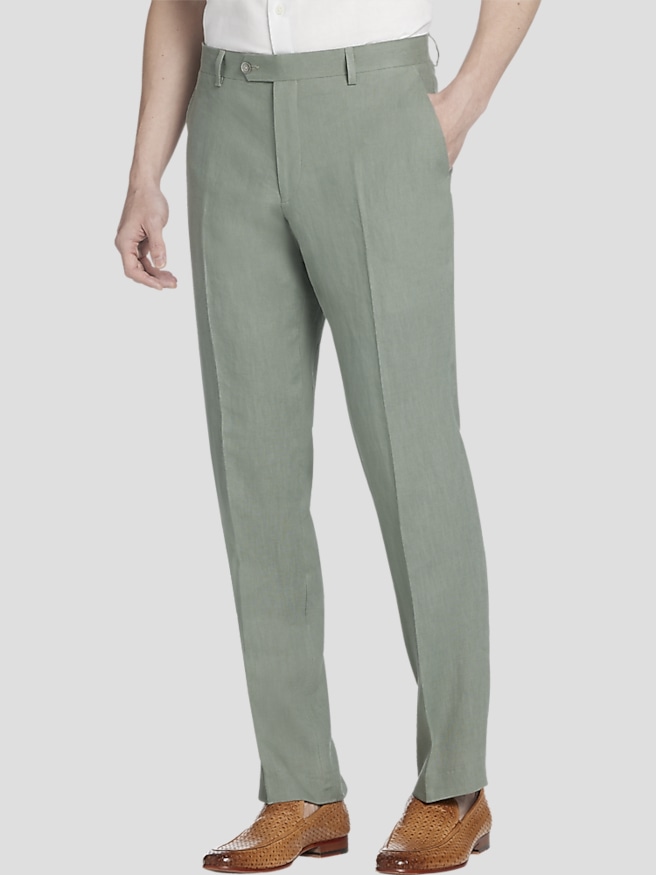
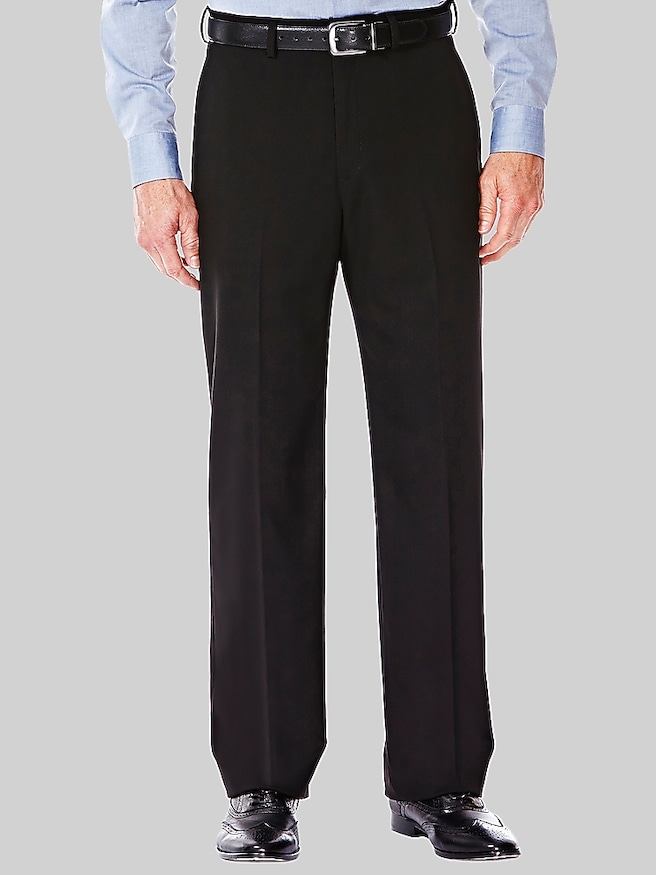
Green men's trousers bring a distinctive color to a wardrobe without requiring an entirely new approach to getting dressed. The range runs from muted sage and earthy olive to deep forest green, with each shade creating a slightly different impression. Olive sits comfortably alongside navy, charcoal, cream, and brown, making it especially easy to work into familiar combinations. Sage offers a softer contrast with a white shirt or a light gray knit, while darker greens can feel more understated with a navy blazer and polished leather shoes. Color depth matters as much as the name of the shade: a dusty green with a matte finish generally reads more casually than a rich green in a smooth, tailored fabric. Green trousers can give a standard office outfit some character, soften the formality of a jacket, or anchor a relaxed dinner look without relying on bold patterns. A pale blue button-down and olive trousers, for example, create an approachable combination for a workplace with a business-casual dress code. A cream knit and dark green trousers offer a clean alternative for a restaurant reservation or a family celebration. Brown leather tends to emphasize green's earthy qualities, while black footwear gives deeper shades a sharper finish. Navy and burgundy accents can also complement green without competing for attention, particularly when the rest of the outfit stays simple. Texture adds another layer: a subtle weave can make a solid color feel more substantial, while a smoother surface creates a cleaner visual line. The broader category of Men's Green Pants reflects how easily this color moves between relaxed and more polished settings. For trousers in particular, the most convincing combinations balance the shade with the fabric, silhouette, and occasion. Green does not automatically make an outfit casual, and a tailored cut does not make every pair appropriate for a formal dress code. The complete outfit sets that tone, from the shirt collar to the finish of the shoes.
The feel and structure of green trousers depend heavily on their materials. Cotton twill has a recognizable diagonal weave and a grounded, everyday appearance that pairs naturally with button-down shirts, polos, and knitwear. Wool and wool-blend fabrics can provide a more fluid drape and a refined surface, making them well suited to tailored combinations. Blended fabrics may balance softness, shape retention, and ease of care, although those qualities depend on the actual fiber content and construction. A small amount of stretch can add flexibility through the seat and knees, but it does not replace a properly proportioned fit. Linen and linen blends have a textured character and often develop visible creasing, which suits an intentionally relaxed look rather than a consistently crisp finish. Fabric weight also influences how trousers hang: a substantial cloth may hold its shape more distinctly, while a lighter fabric can fall closer to the body. The waist, rise, seat, thigh, and leg opening all contribute to comfort and appearance. A waistband that rests securely without digging in creates a cleaner foundation for a tucked shirt. Through the seat and thighs, sufficient room allows comfortable sitting and walking without pronounced pulling across the fabric. Slim silhouettes create a closer line, straight cuts provide a more even shape from thigh to hem, and roomier fits offer additional space with a less body-conscious profile. Pleats can contribute useful room through the upper leg, while a flat front creates a simpler surface; neither detail determines the entire fit on its own. Length changes the finished impression, too. A slight break over the shoe feels familiar and polished, while little or no break creates a more defined hemline. Excess fabric gathering at the ankle can interrupt an otherwise clean silhouette. Pockets, closures, belt loops, and seam finishing deserve attention alongside the overall shape, since those everyday details affect how trousers function through a full day of meetings, errands, seated travel, or an evening event.
Care habits help preserve both the green color and the shape that makes trousers look finished. The care label is the best reference because similar-looking fabrics may require different treatment, particularly when blends, linings, or tailored construction are involved. For washable trousers, turning them inside out and following the recommended water temperature can help limit unnecessary abrasion and color fading. Washing with similar colors also reduces the chance of unwanted color transfer. High dryer heat may affect dimensions or stretch fibers, so the labeled drying method matters just as much as the washing instructions. Trousers that require professional cleaning benefit from care suited to their fabric rather than a routine intended for casual cotton clothing. Pressing should likewise follow the material's requirements; too much heat or pressure can leave shine on some fabrics. A defined crease gives tailored trousers a crisp line, while an uncreased finish may better suit a relaxed cut. Between cleanings, removing surface lint, allowing trousers to air after wear, and storing them neatly can help maintain their appearance. A suitable hanger supports the garment without crowding it into deep folds. Durability is influenced by the weave, seam construction, and how the trousers fit through areas exposed to repeated movement. Constant strain at the seat, pockets, or knees can place unnecessary stress on the fabric, which makes comfortable proportions a practical consideration as well as a visual one. Green trousers can be useful for someone building a business-casual wardrobe, adding variety to familiar neutral outfits, or seeking a polished option for social occasions where a full suit is not expected. They can also make a thoughtful gift for a recipient who already enjoys olive, forest, or other earth-toned clothing. Knowing the preferred waist measurement, inseam, rise, and silhouette helps make that choice more personal. A familiar fit in an expressive but versatile color often feels more wearable than a dramatic change in both shape and shade. The lasting appeal comes from that balance: enough character to make an outfit distinctive, with the comfort, construction, and versatility to become part of an established routine.