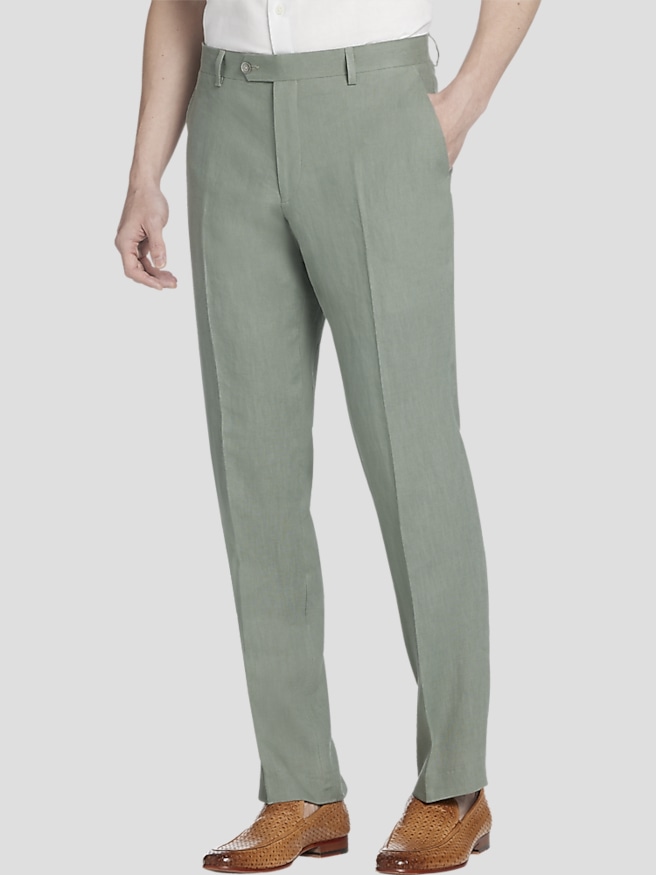
Green dress trousers bring color to tailored clothing without losing the clean, composed look expected of dress pants. Shades from muted olive to deep forest green offer a useful alternative to navy, charcoal, and black, with enough depth to complement familiar shirts, jackets, and shoes. Olive has an earthy character that sits comfortably beside beige, cream, brown, and navy, while darker greens create a more understated impression with white, pale blue, or light gray. A crisp white shirt and forest green trousers make a polished combination for an office presentation or a restaurant dinner; a navy sport coat adds definition without requiring a matching suit. Burgundy and soft pink can also work well against green, especially when the rest of the outfit stays simple. The shade matters as much as the color name: a gray-leaning olive tends to look restrained, while a clearer, brighter green draws more attention. Fabric texture shapes that impression, too. A smooth surface and a pressed crease emphasize the dressier side of green pants, whereas a subtle weave gives the same color a softer, more relaxed appearance. For business-casual workplaces, graduation celebrations, date nights, and weddings where separates suit the dress code, green dress trousers offer room for personal style without demanding an elaborate outfit. They are not a substitute for formal evening attire when an invitation specifically calls for it, but they can be a strong choice for occasions that welcome a tailored jacket and open-collar shirt. Brown leather shoes reinforce olive’s earthy tones, black shoes give deep green a sharper finish, and burgundy footwear can introduce a rich accent. Keeping the belt close to the shoe color helps the whole combination feel considered. For a broader look at green beyond tailored dress styles, Trendy Green Pants provides a related direction for a wardrobe built around this adaptable color.
Material and construction influence how green dress trousers hang, feel, and hold their shape through regular wear. Wool is valued in tailored clothing for its drape, natural resilience, and ability to take a crisp press, though the weight and weave determine much of the finished fabric’s character. Fine, smooth wool creates clean lines with a dress shirt and jacket; more visibly textured cloth gives tailored separates a less uniform appearance. Wool blends can combine those qualities with other fibers, so the full composition matters more than a single material name. Polyester may contribute strength and wrinkle resistance, while a small amount of elastane can add give for sitting, walking, and moving through a busy day. Stretch does not replace proper fit, but it can make a close-cut silhouette more comfortable. Cotton dress trousers usually have a more matte appearance and may develop visible creasing with wear, which suits some business-casual settings better than occasions that call for a consistently crisp finish. Details inside the trousers deserve attention as well: a neatly finished waistband, secure pocket openings, and smooth seams affect comfort even when they are not visible. Partial lining can help fabric move over the thighs, depending on the design. For someone moving from a commute to a desk and then to dinner, comfort at the waistband and knees matters just as much as how the trousers look standing in front of a mirror. Durability depends on the cloth, stitching, fit, and treatment over time; no fiber alone guarantees a long service life. Fabric pulled tight across the seat or thighs faces unnecessary stress, and overfilled pockets can distort an otherwise clean silhouette. Deep pockets may be practical, but dress trousers generally look best when a phone, keys, and wallet do not create bulky outlines. The most useful pair balances a pleasing drape with enough structure to remain neat throughout its intended routine.
Fit gives green dress trousers their finished appearance, whether the preferred silhouette is slim, straight, or fuller through the leg. A slim cut follows the body without gripping it, a straight leg creates a consistent line, and a roomier cut allows more space through the seat and thighs. Those labels are only a starting point because proportions vary by design. The waistband should sit securely without a belt having to gather excess fabric, and the front pockets should lie flat rather than pull open. Sitting down should not create sharp pressure across the waist or strain at the fly. Rise, the distance between the crotch seam and waistband, affects both comfort and the way a tucked shirt looks: a higher rise can create a longer visual leg line, while a lower rise places the waistband closer to the hips. Pleats add room and visual depth at the front; a flat front offers a simpler surface. Neither detail belongs to just one body type, and both depend on enough room for the fabric to fall naturally. Hem length should work with the shoes most often worn. A slight break creates a small fold where the trouser leg meets the shoe, while little or no break gives a cleaner, shorter finish. Excess fabric pooling over the laces can distract from an otherwise polished outfit, and a tailor can assess length along with waist and seat adjustments. For gifting, green dress trousers are a thoughtful option for someone who already enjoys tailored clothing, especially when their preferred measurements, rise, and leg shape are known. Care is equally personal to the fabric: follow the sewn-in label rather than assuming every dress trouser can be washed or requires dry cleaning. Prompt attention to marks, careful pressing at the recommended setting, and hanging trousers neatly between wears help preserve their appearance. Avoid excessive heat, which can damage some fibers or leave shine on the surface, and use a pressing cloth when appropriate. With the right fit and fabric, green dress trousers can become a dependable part of a working wardrobe, just as natural with a tucked button-down and leather lace-ups as with a fine-gauge knit polo and loafers.