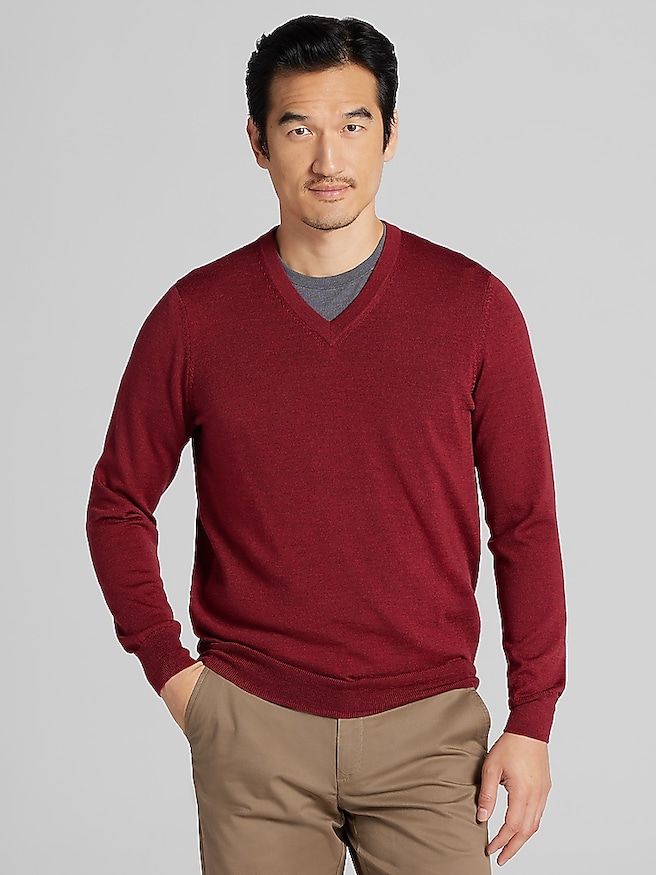
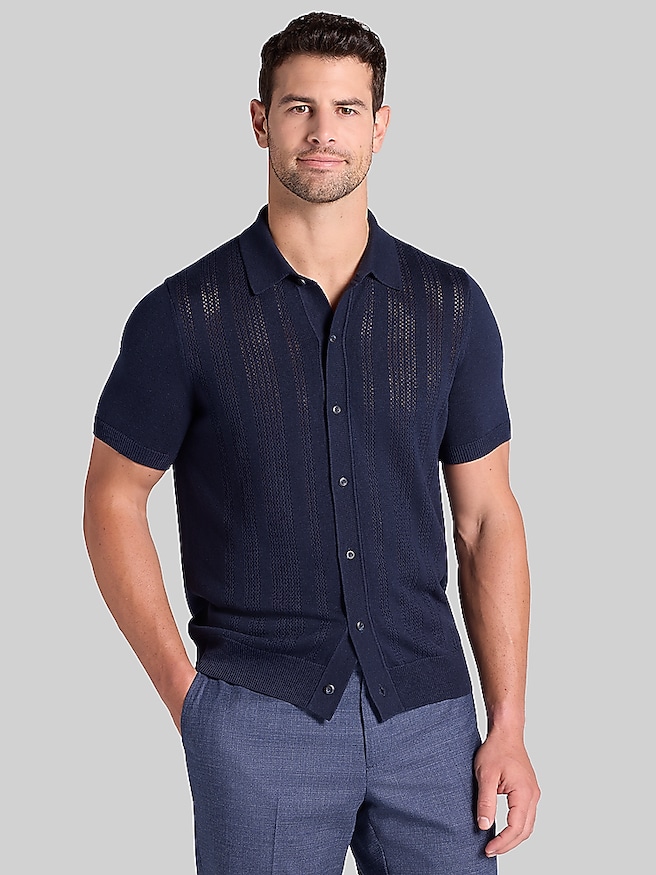
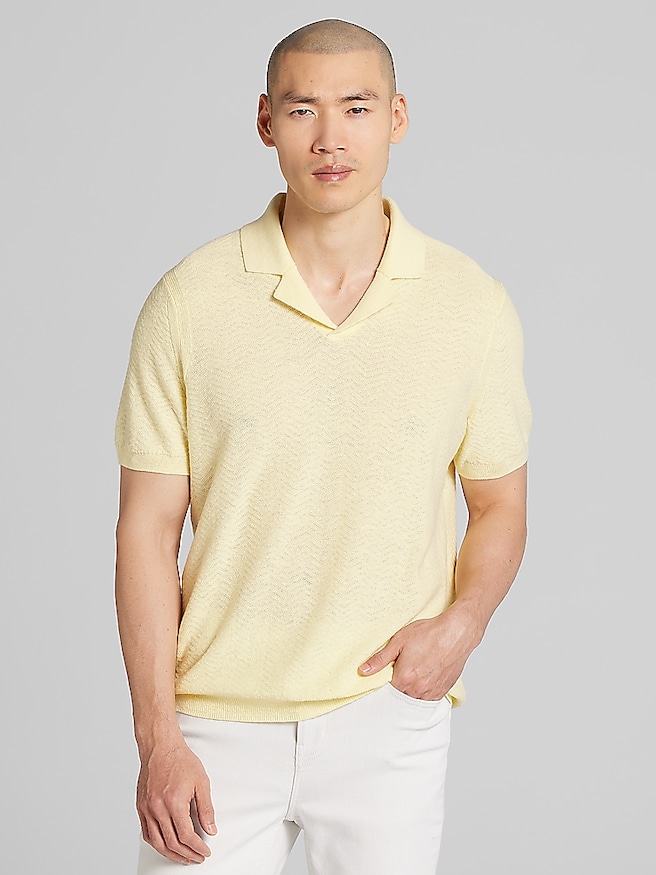
Men’s summer-weight sweaters are lightweight knit layers designed for warm weather, cool breezes, and air-conditioned spaces. Cotton, linen, and cotton-linen blends are common choices because they can provide breathable coverage without the bulk of a heavier sweater. A light knit makes sense for a morning commute, a shaded patio lunch, or an office where the thermostat calls for an extra layer even when the sidewalk feels hot. Summer weight describes the overall feel and construction of the garment, not a single fiber or stitch. A finely knit cotton sweater can feel smooth and compact, while a more open linen blend may have visible texture and allow more airflow. Neither needs to look sheer or feel insubstantial to work as a warm-weather layer. Cotton has a soft, familiar hand that suits everyday wear, and men’s summer cotton sweaters offer an easy way to bring knit texture into a casual or business-casual wardrobe. Linen often contributes a drier feel and a subtly irregular surface, with small variations in the yarn adding character rather than a perfectly uniform finish. Cotton-linen blends can balance that texture with softness, though the exact feel depends on the proportions and construction. Fine merino wool can also work in lightweight knits, offering natural moisture management without necessarily feeling like a heavy winter layer. Fiber content alone does not determine comfort: a dense knit may feel warmer than a more open construction made from the same material. Smooth seams, manageable fabric weight, and a neckline that feels comfortable against the skin matter just as much during a full day of wear. Pale neutrals, washed blues, and earthy shades can give these sweaters an understated summer character, while navy, charcoal, and black create a sharper contrast with light trousers. The result is a category built around useful coverage, varied texture, and a lighter feel rather than thick insulation.
Fit gives a summer-weight sweater its shape and determines how easily it moves between settings. A close fit can look neat under an unstructured jacket, but lightweight fabric should not pull across the chest or cling tightly around the waist. Shoulder seams generally sit near the natural shoulder, with enough room through the upper arm to reach for a bag or work comfortably at a desk. A relaxed silhouette offers more space for airflow and casual layering, especially over a thin T-shirt, although excess fabric can bunch beneath a jacket. For everyday wear, a hem that settles around the hip usually creates a balanced line with chinos, jeans, or tailored shorts. Ribbing should rest comfortably rather than gripping so firmly that the sweater rides up whenever the wearer sits down. Crew necks provide a clean frame for a simple T-shirt, while V-necks leave more room for the collar of a button-front shirt. Knit polos bring a collar into the design without requiring another layer underneath, making them useful for dinners, casual office days, and travel. A lightweight cardigan offers adjustable coverage when moving between an outdoor courtyard and a chilly dining room. These distinctions make summer sweaters useful for people whose days include several settings rather than one consistent temperature. A smooth, solid knit can sit comfortably beside pressed trousers and loafers; a textured knit looks more relaxed with broken-in denim or flat-front shorts. The proportions work best when the layers stay light, so a bulky undershirt or heavy overshirt may defeat the purpose. For a summer gathering with a relaxed dress code, a neatly fitted sweater can feel more finished than a basic tee without the structure of a full jacket. At a desk, on a flight, or over an evening meal, the appeal is similar: an extra layer with enough shape to look intentional and enough flexibility to remain comfortable.
Care and construction play a large part in how a lightweight sweater looks after repeated wear. Fine yarns can produce an elegant surface, but they may also catch on rough furniture, watchbands, or bag hardware. Even stitching, secure seams, and ribbed edges that recover after a gentle stretch are useful signs of thoughtful construction, although no knit is completely resistant to snagging or stretching. Cotton can absorb moisture and become heavier while wet, and linen may develop relaxed creases that are part of its appearance. Wool and blended yarns have their own care needs, so the garment’s care label should determine the cleaning method rather than a general assumption about sweaters. When machine washing is permitted, a gentle cycle and a mesh laundry bag can help reduce friction. Some knits require hand washing or professional cleaning, and heat can cause shrinkage or alter the fit. Drying flat, when directed, helps support the garment’s shape instead of allowing wet fabric to stretch from a hanger. Folding a clean, fully dry sweater for storage also helps prevent pronounced shoulder marks. Lightweight does not mean disposable: suitable care, careful handling, and time to air between wears can help preserve the fabric’s appearance. A small snag is often better assessed before the loose yarn is pulled or cut, since either action can worsen the damage. For travel, a folded sweater takes relatively little space and provides an extra layer for a plane cabin, hotel lobby, or breezy waterfront dinner. For gifting, this category suits someone who appreciates understated clothing, spends time in air-conditioned workplaces, or prefers a soft knit to a structured outer layer. Familiar colors and a silhouette close to the recipient’s usual fit make the choice more personal and practical. Whether worn with relaxed weekend clothing or more tailored separates, a well-chosen summer-weight sweater earns its place through breathable construction, comfortable proportions, and the ability to add coverage without unnecessary bulk.