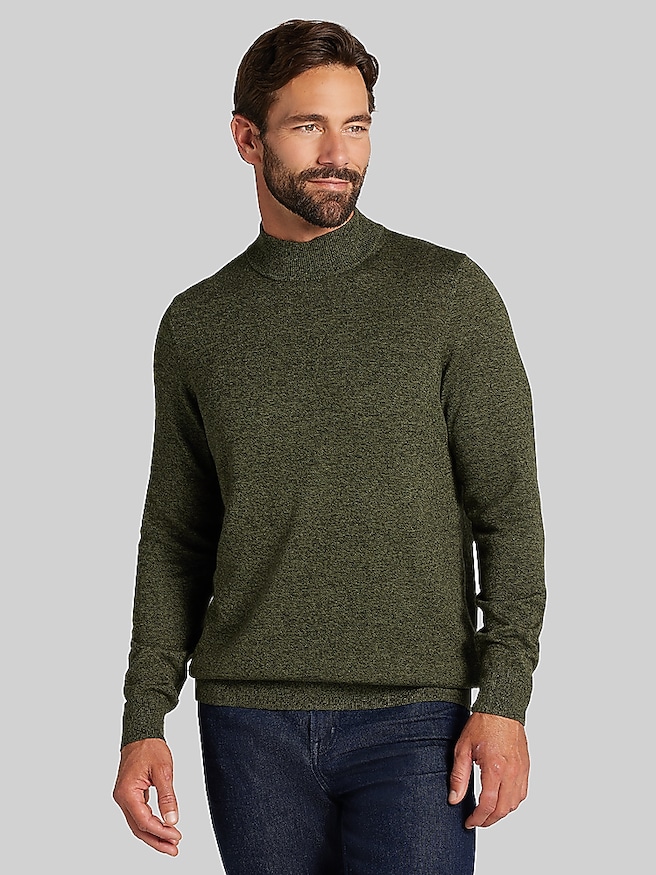
Men’s lightweight sweaters bring the texture and softness of knitwear to outfits that need a polished finish without a bulky layer. Their defining feature is a relatively light fabric weight, often paired with a fine knit that sits comfortably over a T-shirt or button-down and beneath a jacket. Lightweight does not necessarily mean sheer or delicate: yarn thickness, stitch density, fiber content, and construction all influence how a sweater feels and holds its shape. A smooth, closely knitted sweater can have a clean, substantial appearance while remaining easy to layer. Cotton is a familiar choice for its soft feel and breathability, with a matte finish that works naturally alongside chinos, denim, and casual tailoring. Cotton-linen blends may have a subtly textured surface and a less uniform appearance, giving simple outfits a little more character. Fine merino wool offers natural elasticity and moisture management, along with a refined drape that suits office clothing and dressier separates. Cashmere can contribute a particularly soft hand, though the feel and durability of any knit depend on more than its fiber name alone. Blends may combine the comfort of natural fibers with added resilience or shape retention, depending on their composition. Fabric weight and texture deserve equal attention: a fine jersey knit creates a smooth surface, while restrained ribbing adds dimension without the volume of a chunky cable pattern. For someone who spends the day moving between a desk, appointments, and dinner plans, these details help a sweater feel appropriate in several settings. The most versatile lightweight knits have enough body to skim the torso rather than cling, with cuffs and hems that recover after gentle stretching. They offer an alternative to both a plain shirt and a heavier knit, giving everyday clothing a more finished appearance while leaving room for comfortable movement.
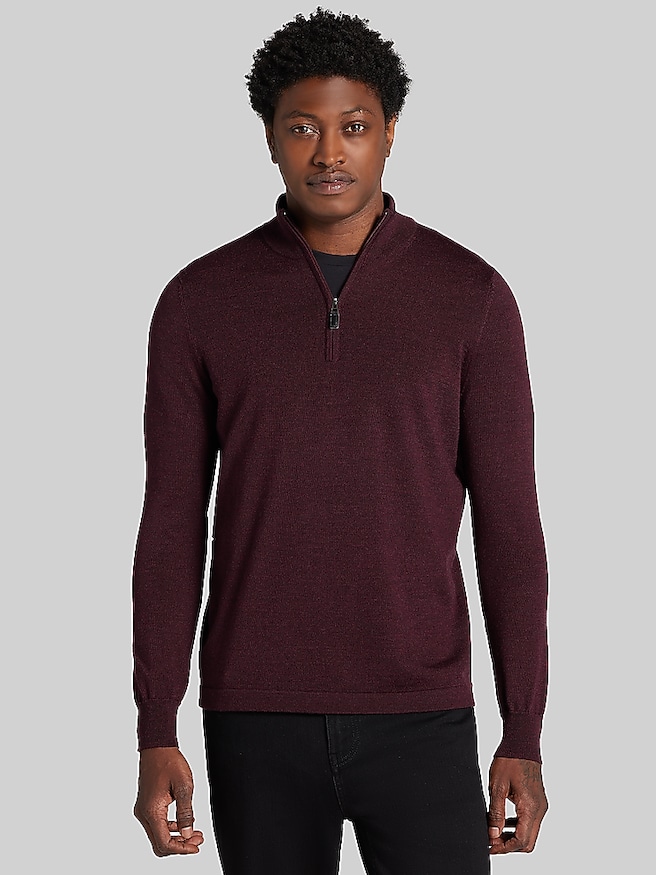
Neckline and silhouette give men’s lightweight sweaters much of their personality. A crewneck creates a simple frame around the face and works over a close-fitting T-shirt for an uncluttered look. Over a collared shirt, it leaves a small portion of the collar visible, adding structure without making the outfit feel overly formal. A V-neck opens up more space at the neck, making it a useful companion for a button-down or a tie when the setting calls for one. The depth of the opening matters: a modest V keeps the proportions restrained and lets the shirt remain part of the outfit rather than its focal point. A lightweight cardigan adds an adjustable front and a relaxed line through the body, particularly when worn open over a tucked-in shirt. A quarter-zip offers another approach, with a collar that can stand neatly or lie open depending on the layer underneath. Each shape can work for business-casual offices, weekend lunches, travel days, or casual dinners, with the rest of the clothing setting the level of formality. A navy crewneck over a pale blue shirt and gray trousers feels composed for a meeting; a textured knit with dark denim and leather sneakers reads more casually without looking unfinished. Fit keeps either combination comfortable. Shoulder seams should generally sit near the edge of the shoulder, and sleeves should reach the wrist without collecting in thick folds. Through the chest and waist, a little ease allows a shirt to lie flat underneath rather than pulling into visible ridges. The hem typically works best around the upper hip, with enough length to cover the waistband during ordinary movement. For layering under a blazer, smooth sleeves and restrained armhole volume help prevent bunching. For wearing on its own, an opaque knit and a neckline that lies flat make a noticeable difference. Sitting, reaching forward, and bending the elbows can reveal whether a seemingly trim fit actually allows everyday movement.
Color, finishing, and care influence how easily a lightweight sweater earns a regular place in a wardrobe. Navy, charcoal, gray, and black coordinate readily with familiar pants and jackets, while cream, muted green, or burgundy can add contrast without requiring a completely new set of clothes. A solid fine-knit sweater leaves room for a patterned shirt; a marled or subtly textured knit can supply visual interest when the other pieces are plain. Ribbed cuffs, an even hem, and tidy neckline stitching give these understated designs their definition. Because the fabric has less bulk, small construction details are easy to notice, including how smoothly the seams lie and whether the edges retain their shape. Durability depends on the yarn, knitting, finishing, fit, and handling together, so a lightweight feel alone does not indicate how long a sweater will last. Friction from bag straps, desk edges, and repeated contact at the underarms can contribute to pilling, particularly with softer fibers. Occasional surface pills are not necessarily evidence that the entire garment is wearing out, and careful removal with a tool appropriate for the fabric can help maintain a neat appearance. The care label should guide washing and drying: some cotton and blended knits permit machine washing, while other fabrics need hand washing or professional cleaning. Gentle handling matters either way. Reshaping a sweater and drying it flat when directed helps preserve its proportions, and folded storage avoids the shoulder bumps that hangers can leave in stretchy knits. For travel, a lightweight sweater folds compactly and can complete several outfits without taking up much space in a bag. It can also make a thoughtful birthday or graduation gift for someone building a work wardrobe, especially when the fit and neckline reflect what that person already enjoys wearing. For similarly streamlined layering options, consider Mens Summer Weight Sweaters. Across these styles, the appeal remains practical: comfortable texture, manageable volume, and a clean finish that works with clothing already in regular rotation.