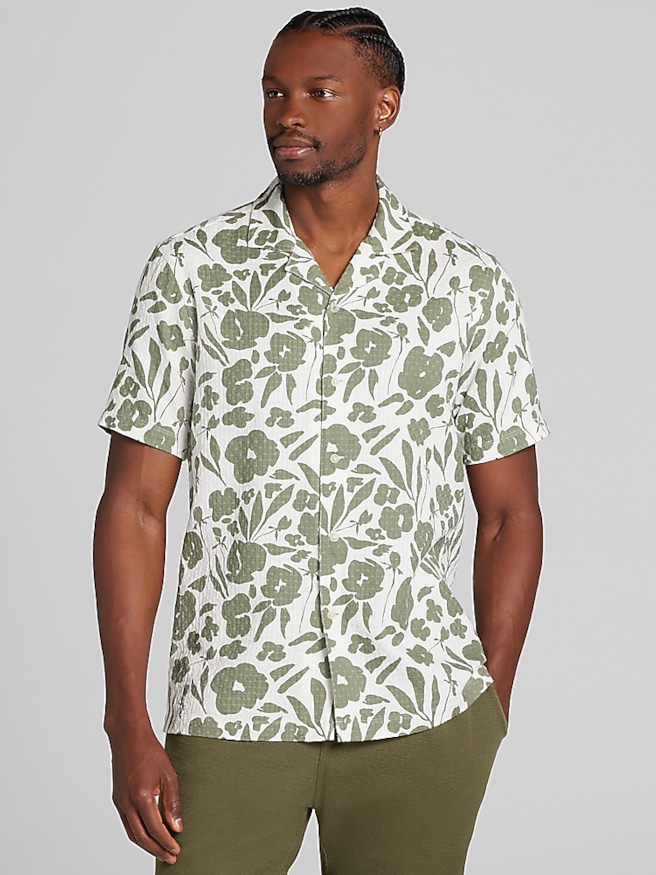
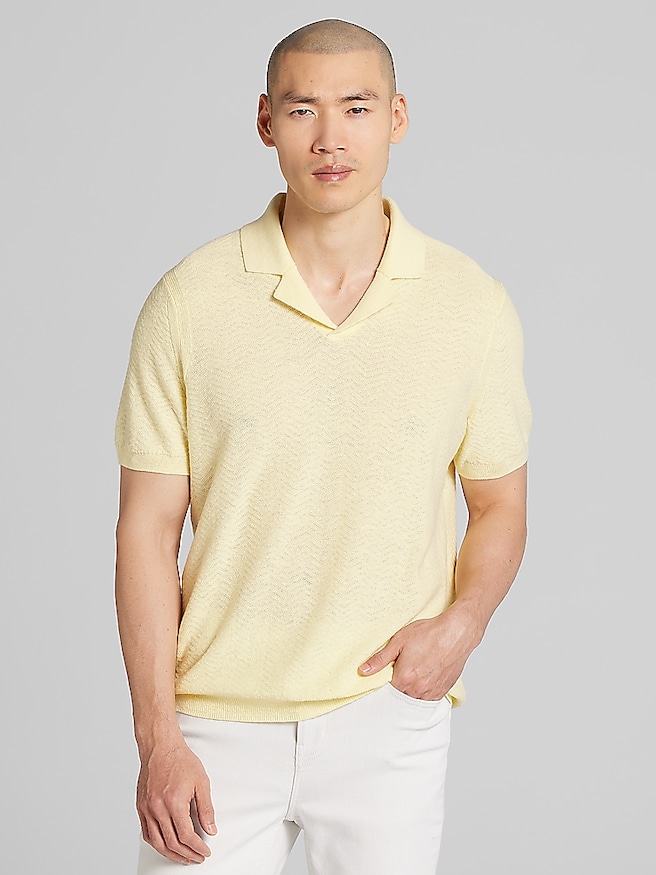
Men’s summer cotton sweaters bring the texture of knitwear to lightweight layers made for breezy evenings, air-conditioned offices, and casual days near the water. Their appeal starts with cotton’s soft feel and breathable structure, but fiber content alone does not determine how comfortable a sweater feels in warm conditions. Yarn thickness, stitch density, and the overall weight of the fabric matter just as much. A fine-gauge cotton knit generally has a smooth surface that sits neatly under a jacket, while an open-stitch construction leaves more space for air to circulate. Short-sleeve sweater polos offer an easy middle ground between a T-shirt and a button-front shirt, with a collar that adds definition without requiring another layer. Lightweight crewnecks keep the neckline simple, and V-necks leave room for a shirt collar or a small glimpse of a plain tee. Cotton cardigans offer another practical option when the day includes both outdoor time and strongly air-conditioned interiors. Pure cotton provides a familiar, soft hand, while cotton blends can introduce stretch, help a garment hold its shape, or change its texture, depending on the additional fibers. Combed cotton typically feels smoother because shorter fibers have been removed before spinning. Organic cotton describes how the cotton was grown rather than guaranteeing a particular weight, softness, or level of breathability. For summer use, a substantial cable knit and a thin, open-knit sweater will feel quite distinct even if both are made entirely from cotton. Lighter knits suit evenings on a shaded patio or a walk along a breezy boardwalk; heavier constructions provide more insulation than those settings may call for. Cotton also absorbs moisture and may dry more slowly than performance fabrics, making these sweaters better suited to everyday dressing than strenuous outdoor activity. The most useful summer cotton sweater balances coverage with lightness, adding enough structure for a finished outfit without the bulk associated with heavier knitwear.
Fit gives a lightweight cotton sweater much of its character. A close, clean silhouette can work well with tailored trousers, but the fabric should not pull across the chest, catch at the upper arms, or cling through the waist. A little ease allows movement and keeps an underlying T-shirt from showing every fold. For a conventional set-in sleeve, the shoulder seam should sit close to the edge of the shoulder; deliberately relaxed shapes may place it lower. Long sleeves should finish around the wrist rather than bunching over the hands, and a short sleeve should leave enough room to bend the arm comfortably. Hem length matters, too. A sweater that reaches around the upper hip usually looks balanced worn untucked, while an overly long body can overwhelm shorts or slim trousers. Ribbed hems deserve attention because a snug band may cause an otherwise roomy sweater to blouse above the waist. Necklines help set the tone: a crewneck feels understated with chinos, a V-neck frames a collared shirt, and a sweater polo lends texture to an outfit that would otherwise rely on a standard casual shirt. An open collar looks relaxed at a backyard gathering, while a neatly shaped collar can feel appropriate for a casual workplace. Open-stitch fabrics may reveal the layer underneath, so a plain, lightweight tee in a similar shade creates a quieter look than a strong contrast. For collared layers and other warm-weather combinations, men’s cotton summer shirts complement the same easygoing wardrobe. Keep the underlying shirt light enough that its sleeves and seams do not create ridges beneath the knit. Cream, pale blue, and sandy neutrals pair naturally with linen trousers and light chinos, while navy or charcoal brings definition to lighter bottoms. Texture can carry the outfit without a bold pattern: a subtle rib or an airy stitch gives a solid color depth. For a coastal dinner, a cotton sweater with tailored shorts and loafers looks considered without becoming formal. For an office with a relaxed dress code, a fine-gauge knit over a lightweight shirt pairs comfortably with chinos and simple leather shoes.
Care and construction determine how well summer cotton sweaters keep their appearance through repeated wear. Even a lightweight knit should have secure seams, a neckline that lies smoothly, and cuffs or hems that recover after gentle stretching. Surface texture should look intentional rather than uneven, and the fabric should drape without obvious twisting. Open stitches can catch on jewelry, rough furniture, or bag hardware, so these airy constructions benefit from a little extra attention in everyday use. Friction from a shoulder strap or repeated contact at the underarms can create pilling, including on cotton; any loose pills should be removed gently with a tool appropriate for the knit rather than pulled by hand. Always follow the garment’s care label, since a cotton blend, textured stitch, or decorative trim may require a distinct approach. When machine washing is permitted, a gentle cycle, cool water, and a mesh laundry bag can help limit agitation. Excessive heat can contribute to shrinkage, and hanging a wet sweater may stretch the shoulders or lengthen the body. Reshaping it carefully and drying it flat, when directed by the label, helps preserve its proportions. Fold dry sweaters instead of leaving them on narrow hangers, and store them where the knit will not snag against exposed fasteners. For travel, a softly folded lightweight sweater fits easily alongside shirts and trousers, ready for a chilly airplane cabin or an evening meal outdoors. A cotton knit can also make a thoughtful gift for someone who prefers understated clothing with practical uses, whether that means a frequent traveler, a college student, or someone building a casual office wardrobe. Familiar colors, comfortable necklines, and a fit similar to sweaters the recipient already wears make the choice more personal. With suitable care and a weight matched to its intended use, a summer cotton sweater becomes a dependable layer for occasions that call for something more textured than a tee and less structured than a jacket.