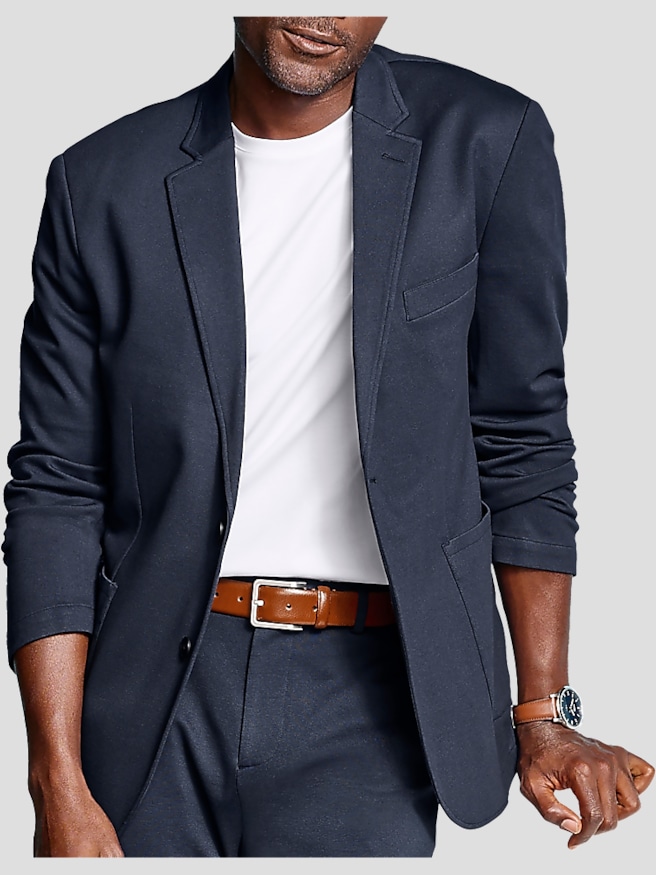
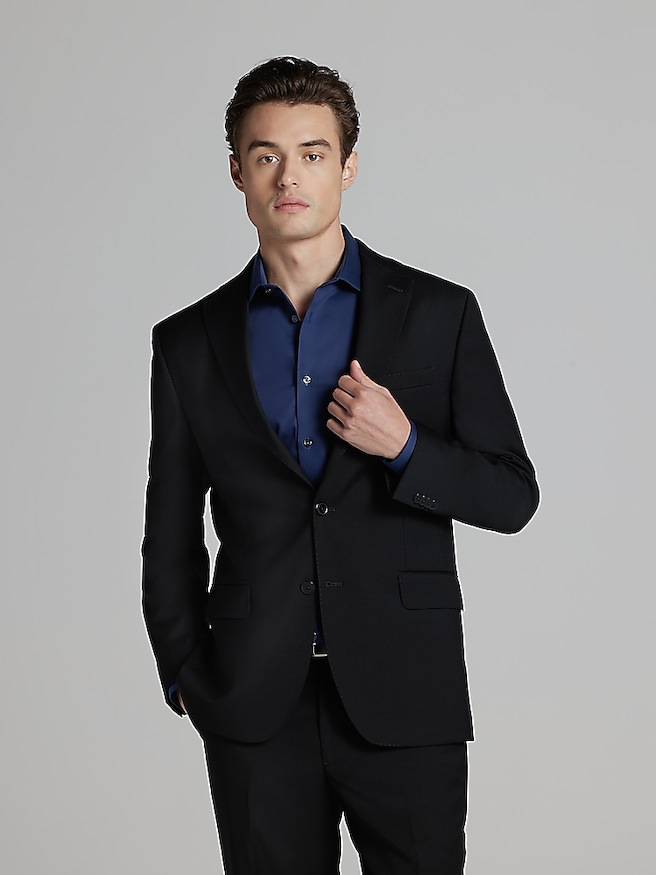
Men’s suits and jackets bring structure and purpose to a wardrobe, whether the occasion calls for a complete matching suit or a tailored jacket worn with separate pants. A suit creates a coordinated appearance through matching fabric, color, and construction, making it a natural choice for weddings, interviews, presentations, and celebrations where the dress code leans formal. A blazer or sport coat offers a different kind of flexibility: it can add polish to a button-down shirt and chinos, or lend definition to a fine-gauge knit and dress pants. The fabric makes a noticeable difference in how each piece looks, moves, and holds its shape. Wool is valued for its natural resilience, comfortable drape, and ability to recover from everyday creasing. Worsted wool generally has a smooth surface and a clean finish, while more textured weaves give a jacket visual depth without relying on a bold pattern. Wool blends can combine those qualities with added strength or stretch, depending on the fibers and construction. Cotton tailoring often has a crisper, more relaxed character, and linen brings a distinctive texture with natural creasing that becomes part of its appearance. Stretch fabrics can make sitting, reaching, and moving between appointments more comfortable, although flexibility works best alongside a properly proportioned cut. The interior construction matters as well. Lining helps a jacket slide over a shirt, while support through the chest and lapels influences the shape of the front. A more structured shoulder creates a defined outline; softer construction follows the body more closely and often feels less formal. Smooth fabrics and subtle patterns tend to suit business settings, while visible texture can make a separate jacket feel at home at a dinner or family gathering. These differences allow suits and jackets to serve distinct roles rather than simply acting as interchangeable dress clothes, with the right balance depending on the wearer’s routine, comfort preferences, and usual occasions.
Fit is what turns those fabric and construction choices into a suit or jacket that feels natural to wear. The shoulders are a useful starting point because they establish the outline of the entire jacket: the seam should sit near the edge of the shoulder without extending into a pronounced ridge or pulling across the upper back. A collar that rests neatly against the shirt and lapels that lie flat help the front look composed, whether the wearer is standing for photographs or seated across a conference table. Through the chest and waist, enough room for comfortable movement is just as important as a clean silhouette. A jacket that strains at the button can create pulling lines, while excess fabric can hide the shape the tailoring is meant to provide. Slim, modern, and classic fit descriptions offer a starting point, but proportions vary, so the relationship between the garment and the body matters more than the label alone. Sleeve length should leave the hands clear and can allow a small amount of shirt cuff to show. Jacket length also affects balance, particularly when paired with pants that have a higher or lower rise. For suit pants, the waist should feel secure without being restrictive, and the seat and thighs should allow comfortable sitting without pronounced pulling. The hem can meet the shoe with a slight break or finish more cleanly, depending on the cut and the desired appearance. Color and pattern help shape the outfit’s intended use. Navy and charcoal provide adaptable foundations for professional settings and formal gatherings, while lighter neutrals and textured fabrics can feel more relaxed. Pinstripes, checks, and subtle woven patterns add character, especially when balanced with a quieter shirt and accessories. At a wedding, that might mean a matching suit with a crisp dress shirt and restrained tie; for a client dinner, a textured jacket with solid dress pants can provide polish without the formality of a full suit.
Long-term wear depends on thoughtful care as much as fabric choice. A suit worn for frequent meetings experiences different demands from a jacket reserved for milestone celebrations, but both benefit from proper support and storage. A broad, shaped hanger helps maintain the shoulders, and pants hung neatly along their crease or from suitable clips are less likely to develop unwanted folds. Giving tailoring space between wears allows the fabric to relax, while a soft garment brush can help remove surface dust when appropriate for the material. Care labels should guide cleaning and pressing, since blends, linings, and internal construction can require different treatment. Professional cleaning may be appropriate when a garment needs it, but unnecessary cleaning can place added stress on fabric and finishes. Pressing also deserves care: excessive heat or pressure can leave shine on some materials, and lapels should retain their intended shape rather than being flattened indiscriminately. For travel, minimizing tight folds and unpacking promptly can help a suit arrive looking composed. Durability also shows up in quieter details, such as secure buttons, tidy seams, and pocket openings that remain flat with use. Keeping heavy objects out of jacket pockets helps preserve the front’s drape, while attending to a loose button or small seam issue early can prevent a more noticeable problem. Complementary layers in Men's Coats and Jackets should provide enough room for tailoring underneath, especially through the shoulders and upper arms, so the suit jacket is not compressed or bunched. Suits and jackets can also make meaningful gifts for a graduation, a new professional role, or an important family occasion, particularly when the recipient’s measurements and preferred fit are known. Personal style matters alongside size: someone who dresses formally every day may value understated versatility, while an occasional wearer may appreciate a straightforward look that feels comfortable and familiar. Considered together, fit, fabric, construction, and care give tailoring its lasting usefulness, helping each piece feel appropriate to the occasion without distracting from the person wearing it.