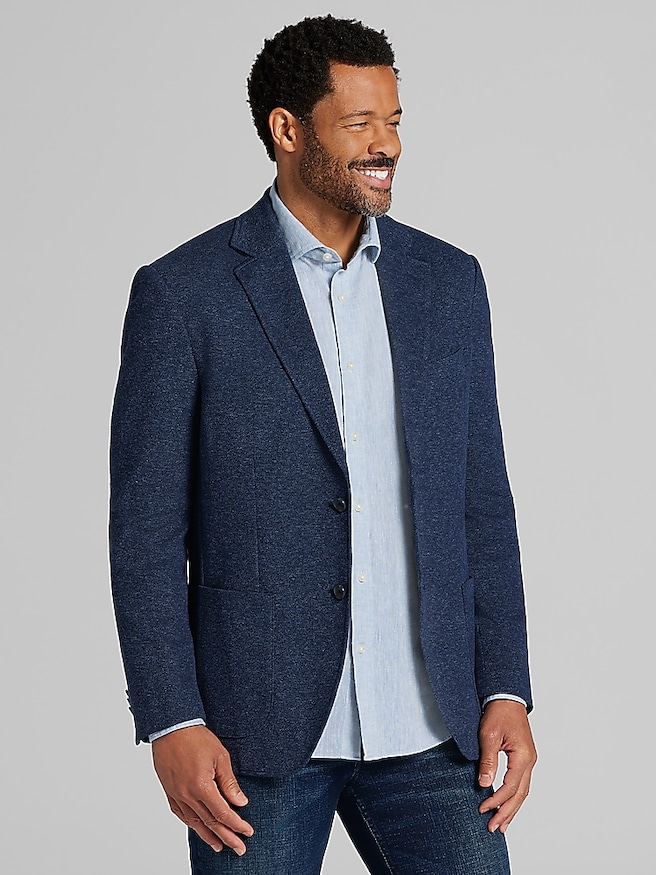
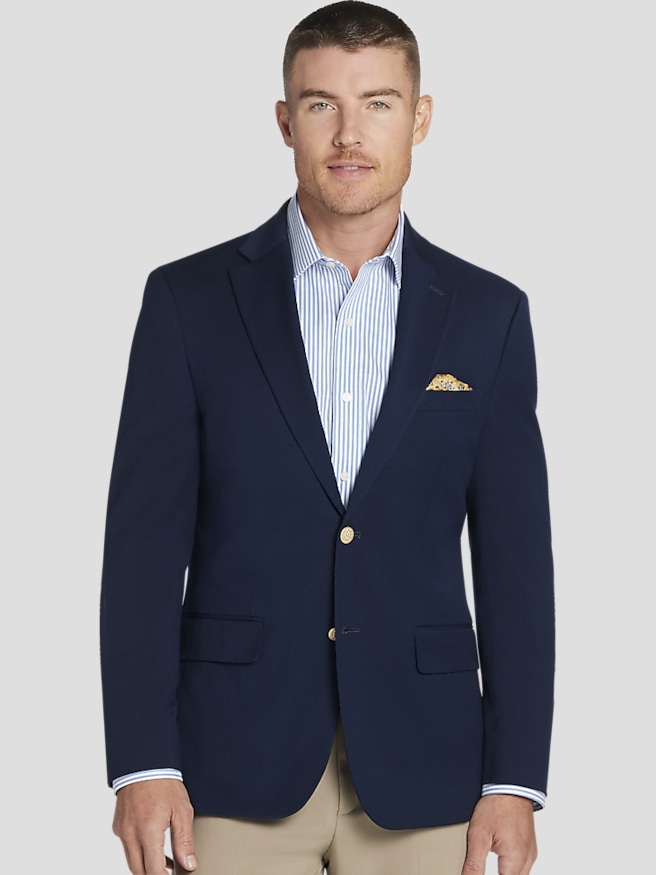
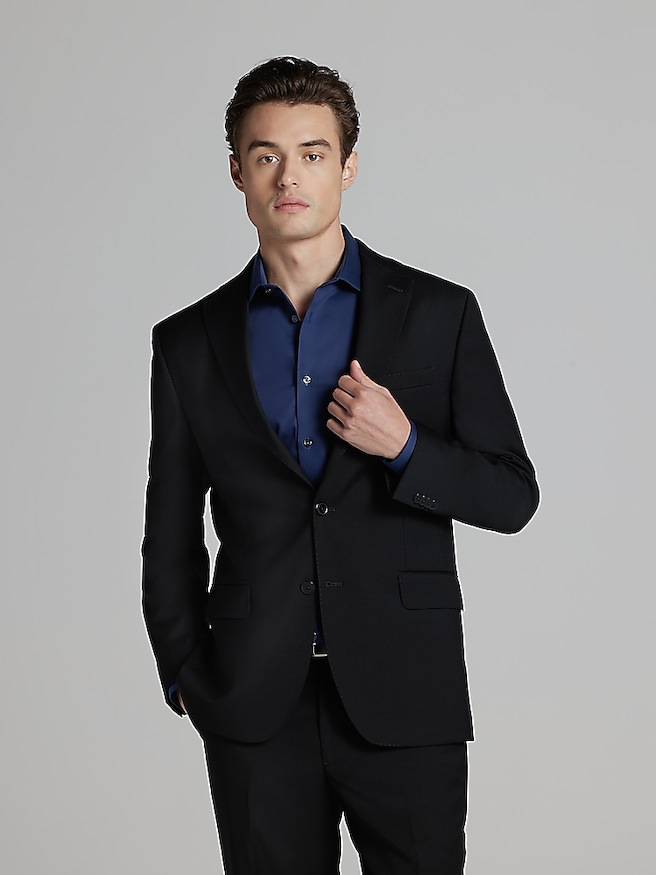
Men's blazers and jackets add definition to an outfit without requiring a matching suit. A blazer is traditionally a solid-colored tailored jacket, often distinguished by metal buttons, although modern versions may use understated buttons and softer construction. A sport coat serves a similar purpose but commonly features texture or pattern, such as a subtle check, herringbone, or a small-scale plaid. Both are designed to work with separate trousers. A suit jacket, by contrast, belongs to a coordinated set made from matching fabric; wearing those pieces together helps preserve a consistent appearance as they age. These distinctions make blazers and sport coats especially useful for business-casual offices, dinner reservations, presentations, and weddings where the dress code allows separates. The fabric and construction influence how polished or relaxed a jacket feels. Wool offers a natural drape and resilience, with smooth weaves creating a refined surface and textured weaves bringing more visual depth. Cotton has a familiar, often more casual character, while linen lends visible texture and a relaxed finish that includes natural creasing. Blended fabrics can combine qualities such as softness, shape retention, and stretch, though their performance depends on the fibers and how the fabric is made. A lining helps a jacket slide comfortably over a shirt, while partial lining leaves more of the interior construction exposed and can reduce bulk. Shoulder padding, chest construction, and lapel shape also affect the overall impression: a structured shoulder creates a defined outline, while a softer shoulder follows the body more closely. For someone who moves between a desk, client meetings, and an evening gathering, a restrained solid or fine texture offers considerable flexibility. A more noticeable pattern can become the focal point of an otherwise simple outfit. Neither approach needs elaborate styling; the appeal often comes from the contrast between a thoughtfully shaped jacket and familiar pieces already in a wardrobe. That balance gives tailored separates a place in both professional settings and occasions that call for something more considered than a shirt alone.
Fit determines whether that versatility translates into comfort. A well-fitting blazer sits cleanly across the shoulders, with the shoulder seam near the natural edge rather than extending noticeably beyond it. The collar should rest against the shirt collar instead of standing away from the neck, and the lapels should lie smoothly when the jacket is buttoned. Pulling around the closure, deep folds across the back, or sleeves that restrict an easy reach can indicate that the proportions need attention. Slim fits generally follow the torso more closely, while classic fits allow additional room through the chest and waist; these labels are starting points rather than guarantees, since cuts vary. An athletic build may need space through the shoulders with shaping at the waist, while a fuller midsection may feel more comfortable in a straighter cut. Jacket length matters alongside width: a balanced hem usually covers the seat, although contemporary designs may be shorter. Sleeve length should leave a modest glimpse of shirt cuff, and sitting, walking, or reaching for a briefcase should not require constant adjustment. The appeal of Men's Contemporary Blazers lies in clean lines and updated proportions that suit a streamlined wardrobe. The intended outfit also affects fit. A jacket worn over a fine-gauge sweater needs enough space to accommodate that layer without distorting the shoulders or chest. With a dress shirt, smooth trousers, and leather lace-ups, the same category of jacket can feel more formal. Paired with chinos, a knit polo, and loafers, it takes on a relaxed business-casual character. Dark, clean-finished denim can work for settings that welcome a casual interpretation of tailoring. Navy and charcoal are easy foundations because they complement many shirt and trouser colors, while brown, olive, and textured gray introduce depth without demanding bold accessories. A visible contrast between the jacket and trousers helps separates look intentional rather than like an incomplete suit. For a dinner after work, that might mean a navy blazer over a light blue shirt with gray trousers, creating a composed outfit without an exact fabric match.
Long-term wear depends on both construction and care. Secure buttons, tidy seams, a lining that sits smoothly, and fabric suited to the intended routine all contribute to a jacket that remains useful beyond a single occasion. A tightly woven cloth may tolerate repeated use better than a delicate open weave, but fiber quality, construction, and handling matter as well. Stretch can make movement easier, though extra give does not replace a proper fit. Care instructions on the garment label should take priority, particularly for tailored pieces whose outer fabric, lining, and internal structure may respond differently to moisture or heat. Many blazers and sport coats require professional cleaning rather than machine washing. Cleaning when needed, instead of automatically after every wear, can help limit unnecessary treatment. Between wears, a broad, shaped hanger supports the shoulders, and empty pockets help prevent the front from sagging. A gentle fabric brush can remove surface dust from suitable fabrics; stains need attention appropriate to the material rather than vigorous rubbing. Pressing and steaming also require care, since excessive heat or pressure can flatten texture, create shine, or affect internal components. For travel, folding along natural seams and unpacking promptly can reduce deep creases, while a garment bag helps protect the jacket during transport. Rotating frequently worn jackets gives each piece time to recover its shape and makes routine upkeep easier. These practical considerations are especially relevant for people who wear tailored clothing for regular meetings, public-facing work, networking events, or performances. A blazer can also be a thoughtful gift for a graduate building a professional wardrobe, a father who enjoys dressing for dinner, or a partner preparing for a new role. Knowing the recipient's measurements, preferred fit, and usual dress code is more useful than choosing by size alone. Someone who favors subtle clothing may appreciate a quiet texture, while someone comfortable with expressive outfits may enjoy a distinctive check. The most useful jacket feels natural in the wearer's daily life: comfortable through a conversation, polished in a photograph, and easy to coordinate for the next occasion.