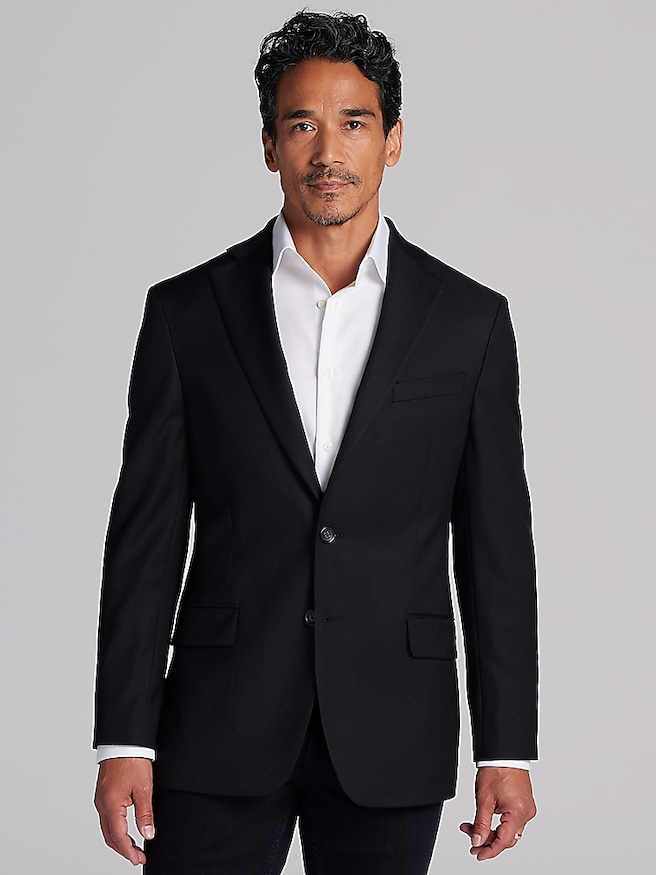
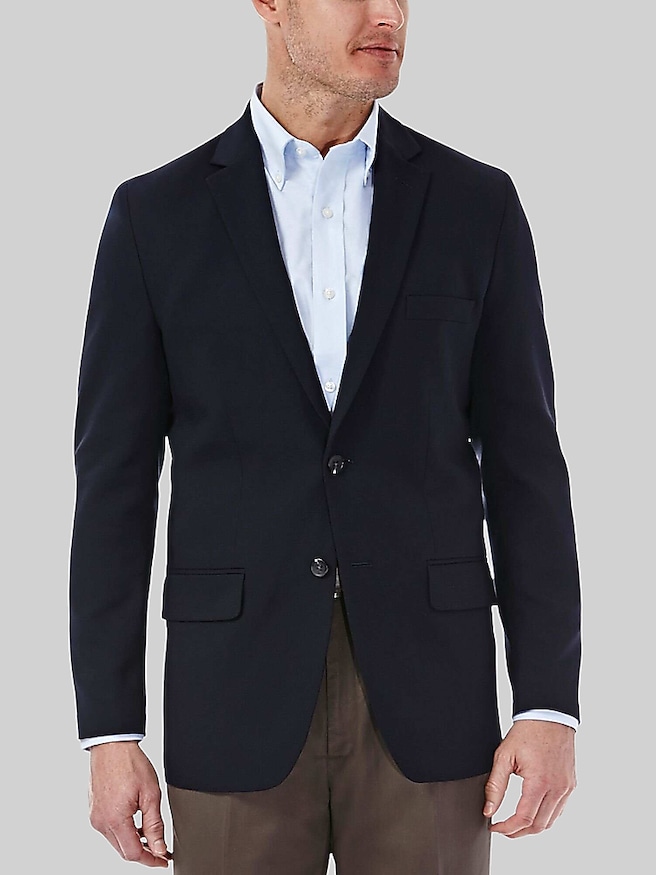
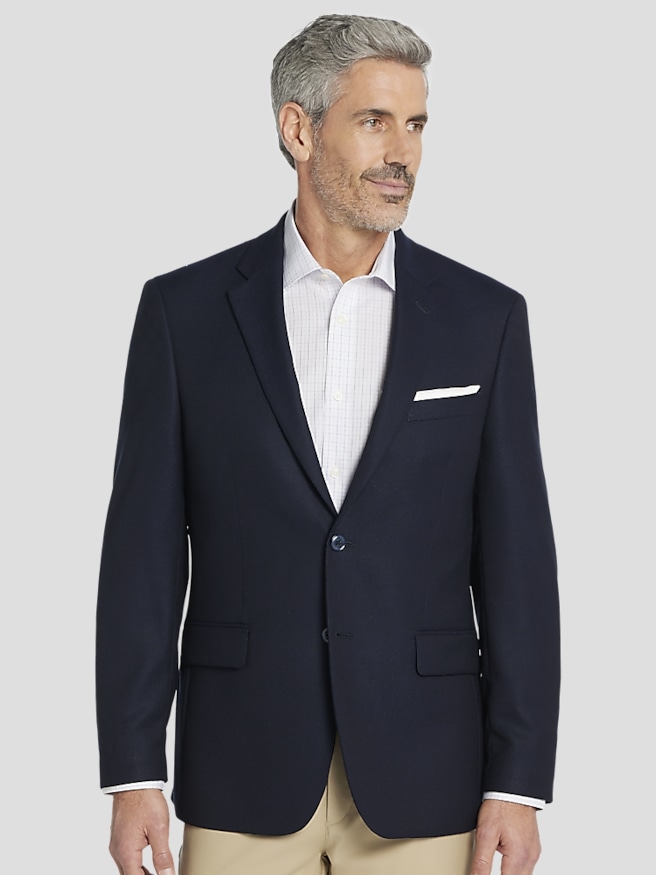
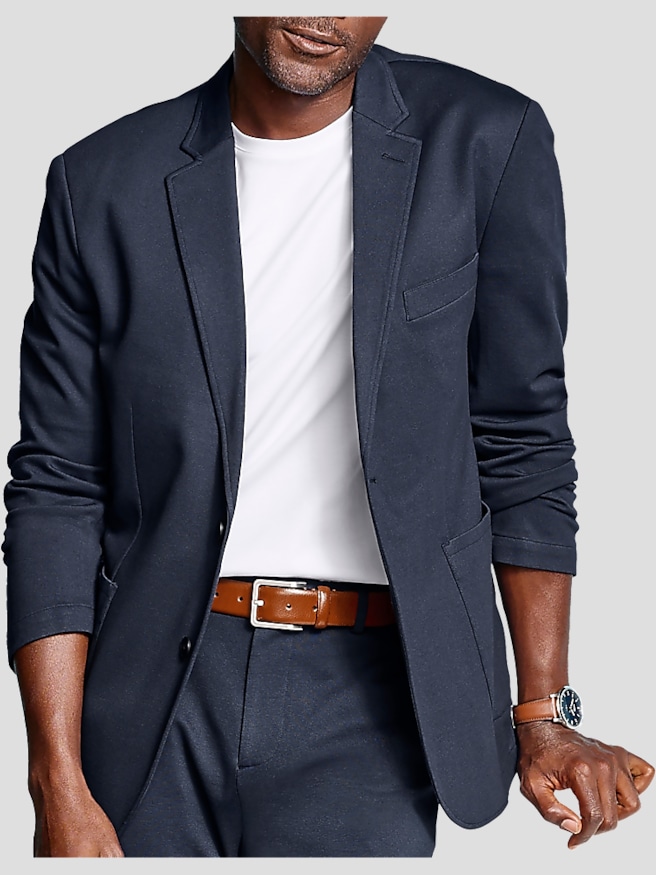
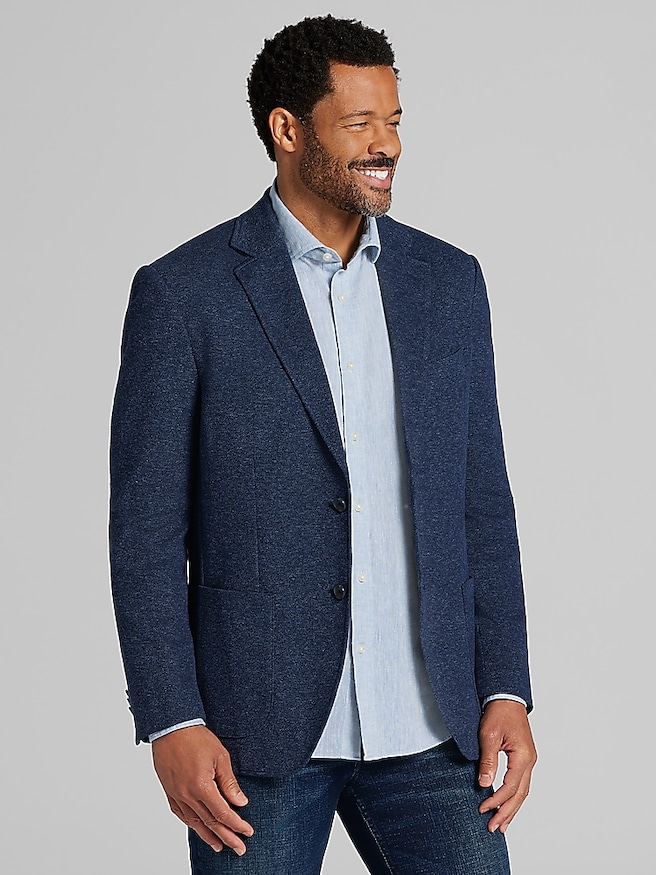
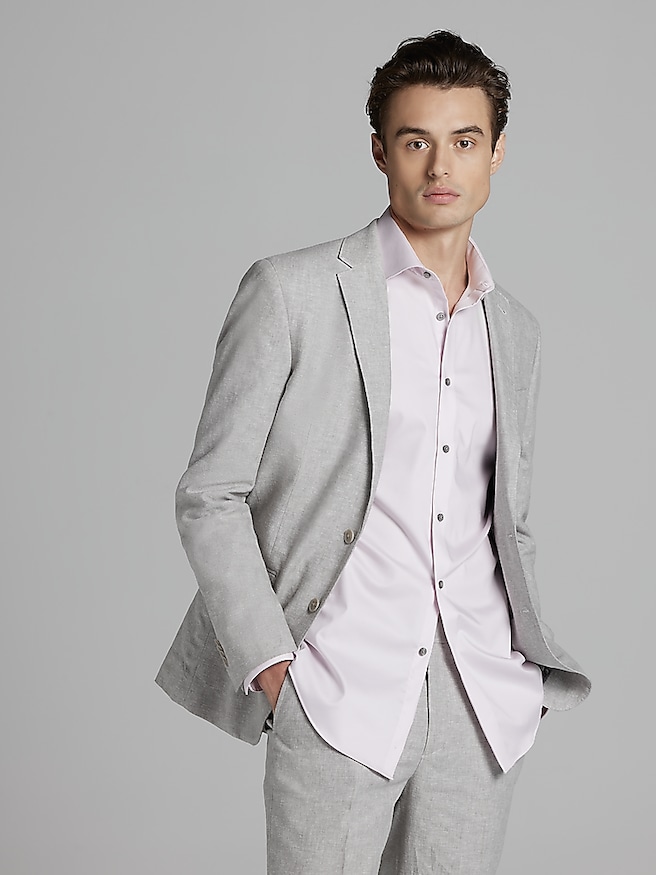
Men’s contemporary blazers combine clean, tailored lines with fabrics and construction that suit business-casual offices, dinners, celebrations, and everyday plans that call for a polished appearance. Unlike a matching suit jacket, a blazer is intended to work as a separate, giving it a place alongside dress trousers, chinos, and dark denim. Contemporary styling often means a closer, more defined silhouette, though it does not have to mean a tight fit or an especially short jacket. The appeal is a balanced shape: shoulders that look composed, a waist that follows the body, and enough freedom to sit through a meeting or reach across a dinner table comfortably. Materials help establish both the look and the feel. Wool can provide a smooth drape and natural resilience, while cotton offers a more casual surface and a familiar, substantial feel. Fabric blends may combine these qualities with added stretch or easier maintenance, depending on their composition. Knit constructions can introduce flexibility and a softer profile, while certain technical fabrics are designed to support movement without losing a tailored appearance. Lightweight construction is another consideration, especially for someone who prefers a jacket that feels less substantial during a full day of wear. A finely woven fabric generally creates a cleaner, dressier impression; visible texture, such as a subtle basket weave, adds dimension without requiring a bold pattern. Navy, charcoal, and other understated shades make versatile foundations because they coordinate easily with several trouser colors. A restrained check or textured neutral can bring personality to an otherwise simple outfit. Lapel width, pocket shape, and button placement also influence the overall effect. Flap pockets tend to look more tailored, while patch pockets often lend a relaxed character. Together, these details give contemporary blazers their range, from a crisp finishing layer for a client presentation to a softer jacket worn over a fine-gauge knit for an evening out. The most useful choice reflects the settings it will actually be worn in, rather than relying on a single definition of dressed up.
Fit determines how successfully a contemporary blazer delivers that versatility. A trim profile should still allow the front to close without pulling into an X around the button, and the lapels should lie smoothly rather than bowing away from the chest. The shoulder seam generally sits near the edge of the shoulder, with the sleeve falling cleanly below it. Excess fabric can make the upper body look less defined, while insufficient room may create tension across the back or restrict movement. Jacket length matters just as much as width: a balanced hem complements the wearer’s proportions and avoids the cropped effect that can make an otherwise polished outfit feel undersized. Sleeve length should work with the shirts normally worn underneath, often allowing a small amount of shirt cuff to show. Body shape, posture, and personal preference all affect the result, so labels such as slim and modern are starting points rather than guarantees of a particular fit. Trying a blazer with the intended shirt or knit layer gives a more realistic sense of comfort than assessing it over something much thinner. Someone who spends long stretches seated may especially appreciate room through the chest and upper arms, along with vents that allow the jacket to move naturally. Construction contributes to that experience. More structured shoulders create a sharper outline, while softer shoulders and reduced internal padding can produce an easier, less formal look. Full lining provides a smooth interior that slides over a shirt; partial lining can reduce bulk and expose more of the jacket’s construction. Stretch can support movement, but it cannot correct shoulders or a chest that are too small. For durability, useful details include secure buttons, tidy seams, neatly finished buttonholes, and fabric that returns to shape after ordinary movement. Minor tailoring adjustments can refine sleeve length or waist definition, but a sound fit through the shoulders and chest remains the strongest foundation. A well-proportioned blazer looks intentional whether the wearer is standing to give a presentation, settling into a restaurant booth, or walking into a reception.
Styling a contemporary blazer is often a matter of keeping the surrounding pieces equally considered. With dress trousers, a collared shirt, and leather lace-ups, it can provide a professional appearance in workplaces where a full suit would feel more formal than necessary. With chinos and a polo, the same category offers a comfortable middle ground for a dinner reservation or a gathering with friends. Dark, clean-finished denim and understated footwear create a more relaxed combination, provided the jacket’s fabric and construction share that casual character. Contrast helps separates look deliberate: navy with gray trousers, charcoal with a lighter neutral, or a textured jacket over a solid shirt. A patterned blazer usually benefits from quieter accompanying pieces, allowing the cloth to supply the visual interest. For weddings and other celebrations, the invitation’s dress code remains important; a blazer can suit some settings, but it does not replace formal attire when that is requested. The broader range of Men's Blazers and Jackets reflects how varied these separate layers can be in shape, texture, and level of formality. Care helps preserve those qualities over repeated wear. The garment’s care label should determine whether professional cleaning or another method is appropriate, since fabric content, lining, and internal construction can require different treatment. A shaped hanger supports the shoulders, and space in the closet helps prevent crushed lapels and unnecessary creasing. Emptying the pockets before hanging the jacket keeps weight from distorting its shape. Gentle brushing, when suitable for the fabric, can remove surface dust; stains deserve attention based on the care instructions rather than aggressive rubbing. Frequent professional cleaning is not always necessary, and resting a jacket between wears can help it recover its drape. These practical considerations also matter when a blazer is chosen as a gift for a graduate, a partner, or someone beginning a new professional role. Familiarity with the recipient’s measurements, preferred silhouette, and usual dress expectations makes the gift more personal and more likely to become part of a regular wardrobe.