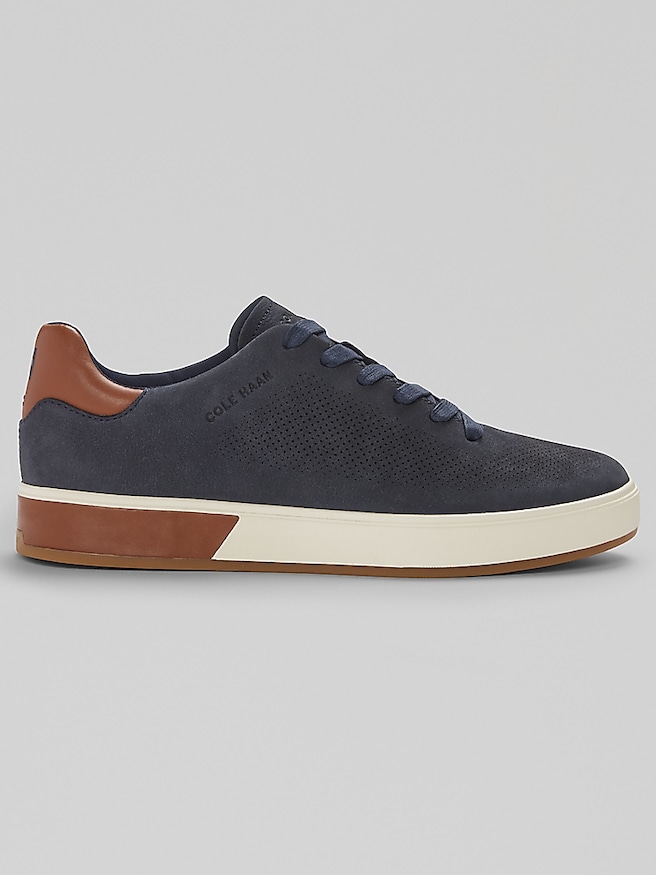
Men’s suede sneakers bring the soft texture of suede to the familiar shape of casual lace-up footwear, creating a look that sits between sporty and polished. Their defining feature is the nap: the fine, raised fibers that give the surface its velvety feel and subtle shifts in color as the material catches the light. Compared with smooth leather, suede has a more muted finish that works especially well with denim, chinos, corduroy, and wool trousers. A streamlined low-top can feel understated beneath straight-leg pants, while a retro running-inspired shape adds a sportier note through layered panels and a more substantial sole. Neither approach needs an elaborate outfit. Dark jeans, an Oxford shirt, and a lightweight jacket give suede sneakers an easy setting for dinner out; tapered chinos and a fine-gauge sweater make a similarly useful combination for a relaxed office where sneakers fit the dress code. Neutral shades such as brown, tan, gray, and navy are easy to repeat across a wardrobe, though the effect varies with the sole and trim. A light-colored sole creates contrast and emphasizes the sneaker shape, while a darker sole keeps the overall look quieter. During the cooler months, the brushed surface complements flannel shirts, knitwear, and textured outerwear without looking as substantial as a boot. Pant length matters here: a hem that rests lightly near the top of the shoe lets the shape show, rather than gathering over the laces. For occasions that call for tailoring, a clean, low-profile silhouette can work with an unstructured jacket and casual trousers, provided the setting welcomes relaxed footwear. Suede sneakers remain casual shoes, not a substitute for formal footwear at black-tie events or traditional business occasions. Within the broader family of men’s suede shoes, sneakers offer a particularly approachable balance of texture, everyday practicality, and easy styling for casual workplaces, weekend plans, and informal gatherings.
Material and construction influence how suede sneakers feel as much as how they look. Genuine suede is leather with a napped surface, commonly made from the underside of the hide or a split layer; synthetic suede aims to reproduce that appearance using manufactured fibers. The two can have distinct care requirements, so the material description matters more than appearance alone. Some sneaker constructions combine suede with smooth leather, fabric, or mesh, which can change flexibility, ventilation, and the amount of structure around the foot. A supple upper may feel forgiving across the forefoot, while firmer panels can help hold the shoe’s shape. Inside, lining materials, seams, cushioning, and footbed contours all contribute to comfort. A thick-looking sole does not necessarily provide better support, and an especially soft insole is not automatically the best choice for a long afternoon on foot. For everyday wear, a secure heel, comfortable width, and enough room for the toes to move are more useful benchmarks than softness alone. Trying footwear with the socks intended for regular use helps reveal pressure across the instep or rubbing at the heel. Feet can swell through the day, making an afternoon fitting helpful, and both shoes deserve a short walk on a clean indoor surface. Suede may soften with wear, but shoes that pinch or compress the toes should not be expected to stretch into the right fit. Lace adjustment can refine the hold across the top of the foot; it cannot correct a shoe that is too short or narrow. For anyone who uses orthotics, a removable footbed and sufficient interior depth may be important considerations. Intended use matters, too. Casual suede sneakers can suit errands, commuting, and social plans, but a running-inspired appearance does not establish suitability for distance running or gym training. Outsole pattern, flexibility, and cushioning should match the activity, with separate performance footwear reserved for activities that need specialized support or traction.
Suede’s textured finish rewards a little routine attention, particularly when sidewalks are damp or road salt appears during the cooler months. It is best suited to mostly dry conditions unless the footwear is specifically described as having protective features, and even treated suede should not be assumed waterproof. Moisture can leave marks or flatten the nap, while mud and salt can require more careful cleaning than ordinary surface dust. A suede brush used gently on dry material helps lift loose dirt and restore the surface; dried mud is generally easier to brush away than wet mud that can spread into the fibers. A suede eraser may help with small dry marks when used according to its directions. Any cleaner or protective spray should be labeled for the material and tested first on a discreet area, since some treatments can alter color or texture. Smooth-leather polish and heavy conditioning creams are not appropriate substitutes for suede care products. When sneakers become damp, blotting excess moisture and allowing them to dry naturally away from radiators or other direct heat helps limit damage. Plain white paper placed loosely inside can absorb moisture and support the shape during drying. Routine care also extends beyond the upper: clean laces and tidy sole edges make a noticeable difference to the overall appearance, especially with pale soles. Letting shoes air out between wears and alternating pairs gives the interior time to dry, while storage away from direct sunlight helps protect the color. Durability depends on the quality of the materials, construction, frequency of wear, and conditions underfoot—not simply how substantial the shoe looks. For someone whose week moves from a casual office to coffee stops and weekend dinners, suede sneakers can be a useful everyday option with the right fit and weather expectations. They can also make a thoughtful gift for someone who already enjoys casual footwear, especially when the choice reflects that person’s usual size, preferred silhouette, and most-worn clothing colors. The strongest match is a pair that feels comfortable, suits familiar outfits, and fits naturally into the wearer’s routine.