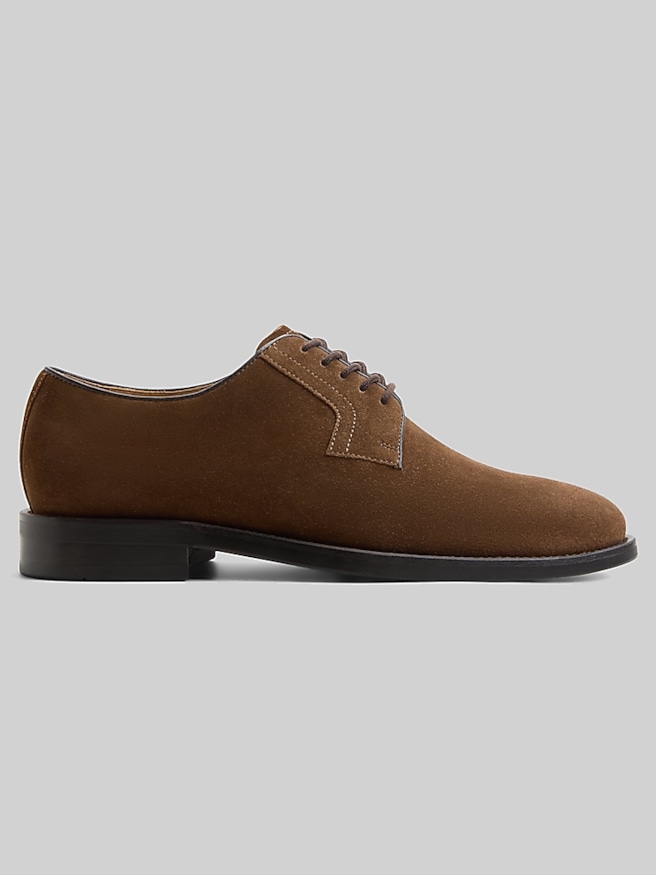
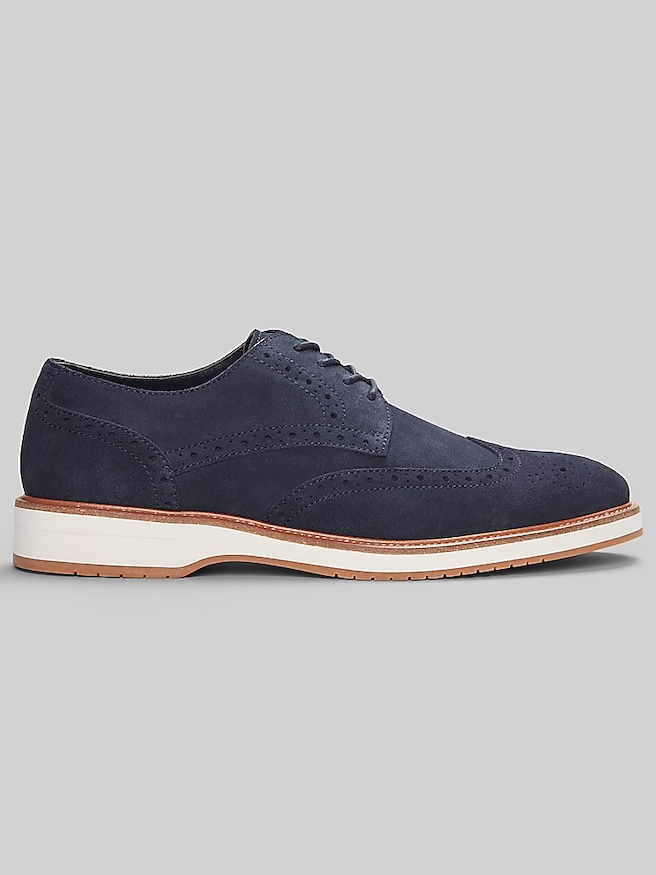
Men’s suede lace-up shoes bring a softer finish to dressed-up outfits without losing the structure that makes a good pair of shoes feel polished. Suede’s appeal starts with its nap: the fine, raised fibers that give the surface a velvety feel and create subtle variations in color as the fibers catch the light. Compared with smooth leather, that texture looks less glossy and often feels more relaxed, making suede a natural companion to tailored trousers, chinos, and dark denim. A clean, understated shape can sit comfortably beneath the hem of dress pants, while a rounded toe and a more substantial sole tend to suit casual combinations. Lace-up construction adds another useful distinction. An Oxford has closed lacing, with the lace-bearing sections joined beneath the front of the shoe for a neat profile; a Derby has open lacing, which allows those sections to spread more freely. Both can work with tailoring, though their overall character also depends on the toe shape, sole thickness, and detailing. The textured finish associated with Suede Men Dress Shoes works particularly well with fabrics that have some visual depth, such as a subtly patterned suit or a woven sport coat. Brown shades pair easily with navy, gray, olive, and cream, while darker suede creates a quieter transition beneath charcoal trousers or dark jeans. Matching every shade precisely is less important than keeping the outfit’s level of formality consistent. A simple leather belt in a related tone can pull the look together without making it feel overly coordinated. For an office day followed by dinner, suede lace-ups offer a useful middle ground between athletic footwear and highly polished dress shoes. They can also suit a wedding guest outfit or an anniversary dinner when the dress code allows some softness; occasions requiring traditional formal footwear call for a different finish.
Fit matters as much as appearance, especially with lace-up shoes intended for several hours of wear. The laces should help hold the foot securely through the instep rather than compensate for a shoe that is too long or too wide. A comfortable fit leaves room for the toes to lie naturally, keeps the ball of the foot aligned with the shoe’s flex point, and limits excessive movement at the heel. Suede can become more supple with wear, but that does not mean a tight toe box or uncomfortable pressure will resolve on its own. The upper may give slightly across its width; the shoe’s length and basic shape will not meaningfully change. Trying shoes with the type of socks intended for everyday wear helps make the fit assessment more useful, since a thin dress sock and a thicker casual sock take up different amounts of space. Foot shape also influences how the lacing sits. Open-laced designs can offer more adjustment over a higher instep, although the shoe’s underlying shape remains important. A few steps across a room can reveal whether the heel feels secure, whether the forefoot bends naturally, and whether an edge presses against the ankle. Comfort also comes from the less visible parts of the shoe. Linings, cushioning, internal seams, and support underfoot all affect the experience of standing at a reception or walking between appointments. Sole construction changes the feel, too: leather soles often create a slim dress profile, while rubber soles can provide cushioning and grip depending on their compound and tread. Neither material guarantees comfort by itself. Durability depends on the quality of the upper, the sole, the construction, and how the shoes are used. A well-proportioned suede lace-up should feel appropriate for its intended role, whether that means mostly seated office hours, frequent walking, or occasional dressed-up evenings.
Suede rewards consistent, gentle care rather than aggressive cleaning. Because its raised fibers can flatten or collect surface dust, a brush designed for suede helps maintain the texture and lift loose debris before it becomes embedded. Brushing with light pressure is generally more useful than scrubbing, which can leave the nap uneven. Protective treatments should be labeled for suede and tested on a discreet area first, since some formulas can alter the color or feel of the material. Protection does not make suede waterproof or stainproof, and prolonged contact with moisture can leave marks or affect the shoe’s structure. If liquid reaches the surface, blotting with a clean, absorbent cloth is preferable to rubbing it across a larger area. Shoes should dry naturally away from direct heat before the nap is brushed again. Oily marks, deeply set stains, and uncertain discoloration are better assessed by a footwear care specialist than treated with household cleaners. Everyday habits also make a difference to how men’s suede lace-up shoes hold their shape. A shoehorn reduces strain on the heel when putting them on, and loosening the laces before removing them helps protect the heel counter from being crushed. Properly sized shoe trees can support the shape between wears, while allowing shoes time to air out helps the interior dry. Breathable storage protects against dust without trapping moisture, and keeping pairs out of prolonged direct sunlight helps preserve their color. These details matter for shoes worn regularly as well as pairs reserved for special occasions. As a gift, suede lace-ups can be a thoughtful choice for someone who enjoys tailored clothing or wants a more refined alternative to sneakers. The most useful clues come from the recipient’s established preferences: the shape of shoes already worn comfortably, a familiar size and width, and colors that work with existing trousers and jackets. A sleek, understated pair suits a different wardrobe than a heavier, casual shape. Paying attention to those preferences keeps the focus on shoes that feel personal, practical, and comfortable enough to become part of a regular rotation.