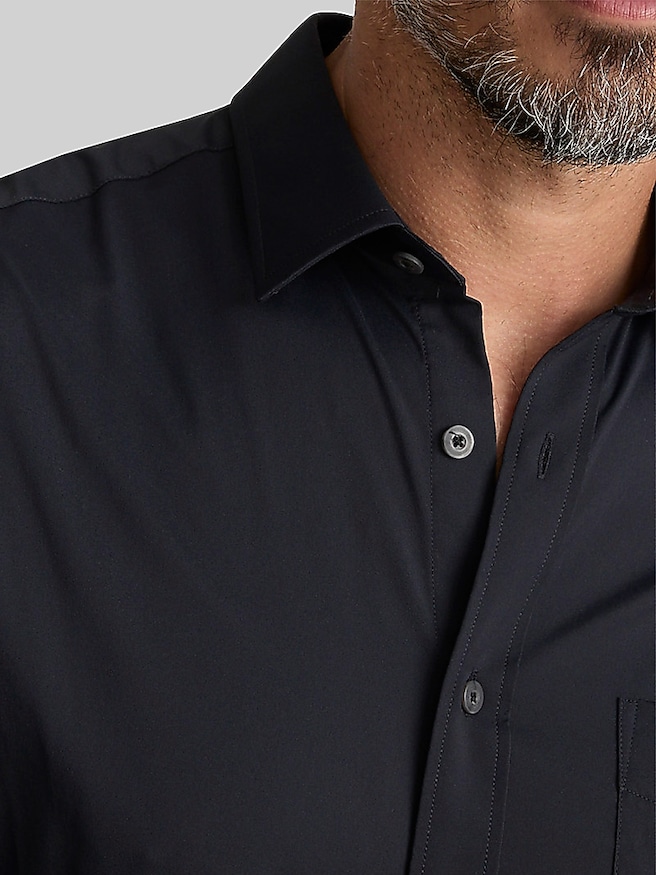
Men’s straight hem casual shirts have a flat, even bottom edge rather than the extended, curved tails commonly found on dress shirts. That clean finish makes them a natural choice for wearing untucked, with a defined line across the hips that looks deliberate over jeans, chinos, or casual trousers. The hem shape is only part of the equation, though: body length determines whether a shirt sits neatly or hangs too far below the waist. Many untucked styles have a shorter body, but a straight hem alone does not guarantee a shorter cut. A balanced length generally covers the waistband without concealing most of the pants fly or extending well down the thighs. The right placement depends on torso length, rise of the pants, and personal preference. For someone who spends the day moving between a desk, a lunch spot, and an evening gathering, enough room to sit and reach comfortably matters as much as the standing silhouette. Shoulder seams should sit close to the shoulder edge in a conventional fit, while the chest should close smoothly without pulling the button placket apart. A slim fit follows the torso more closely; a classic or relaxed fit leaves additional space through the chest and waist. Neither needs to look oversized to feel comfortable. Small side vents can help the bottom edge move over the hips, especially when sitting, while a cleanly finished hem helps the shirt hang evenly. Sleeve proportions also affect the overall look. Short sleeves that skim the upper arm tend to create a neater outline than sleeves that flare widely, and long sleeves should allow easy elbow movement without excessive fabric gathering at the wrist. These details make straight hem shirts especially useful for men who like the structure of a button-front shirt but prefer the ease of leaving it untucked.
Fabric gives a straight hem casual shirt much of its character, from the way the collar rests to how the body falls over the waistband. Cotton is a familiar choice for its comfortable feel and range of textures. A smooth cotton poplin can create a crisp appearance, while an Oxford weave has a more noticeable grain that pairs naturally with denim and sturdy chinos. Twill has a diagonal weave and often a softer drape, although weight and finishing vary. Linen brings visible texture and a less rigid appearance, with natural creasing that becomes part of the look rather than something that must always be pressed away. Cotton-linen blends can balance those qualities, depending on the proportions and construction. Stretch blends may provide extra give across the shoulders or through the back, but fabric composition alone does not establish how a shirt will fit or perform. A little stretch cannot compensate for a chest that is too tight or a body that is too short. Likewise, wrinkle resistance, moisture management, and other functional properties should be judged by the garment’s stated features rather than assumed from its appearance. Construction deserves attention because an untucked hem stays visible throughout the day. Even stitching, flat seams, neatly secured buttons, and a bottom edge that does not twist all contribute to a finished look. Repeated wear also makes care habits important. The care label is the best starting point for washing, drying, and ironing, particularly with blends or textured fabrics. Separating similar colors, treating a small stain promptly, and avoiding more dryer heat than recommended can help preserve the shirt’s appearance. Removing a washable shirt promptly after drying may reduce unnecessary creasing. When pressing is appropriate, following the recommended setting helps protect the fabric, and smoothing the collar, button placket, and hem can be enough to restore a tidy finish without making a casual shirt look overly stiff.
The appeal of a straight hem is how easily it works with everyday clothes while still giving an outfit some definition. A solid shirt worn untucked over dark jeans and clean sneakers suits a casual dinner without requiring much adjustment between sitting at the table and standing at the counter. With chinos and loafers, the same general silhouette can feel more polished for a relaxed office, provided the workplace dress code allows untucked shirts. Casual shirts do not replace dress shirts when a suit, formal tie, or tucked-in appearance is expected; their strength is in settings where neatness and ease belong together. Collar shape helps set that tone. A conventional point or button-down collar gives the neckline more structure, while a camp collar creates an open, relaxed frame. A straight hem shirt can also be worn open over a simple T-shirt, as long as there is enough room through the body for the extra layer. Keeping the underlying T-shirt close in length prevents an accidental-looking band of fabric below the shirt. Patterns offer another way to adjust the mood: a small check adds detail without dominating an outfit, a stripe creates a clear visual line, and a larger print works best when the surrounding pieces stay relatively quiet. Solid navy, white, gray, and earth tones make straightforward partners for a range of pants, though the most useful color is often one that complements clothes already worn regularly. Related categories, including men’s spring casual shirts, provide another way to explore casual shirting with those same considerations in mind. As a birthday or graduation gift, a straight hem shirt can suit someone building a wardrobe for casual workdays, weekend plans, or travel. Knowing the recipient’s usual size, preferred fit, and care preferences makes the choice more personal. A shirt that feels comfortable through a long meal, hangs neatly after standing up, and works with familiar pants is likely to earn repeat wear.