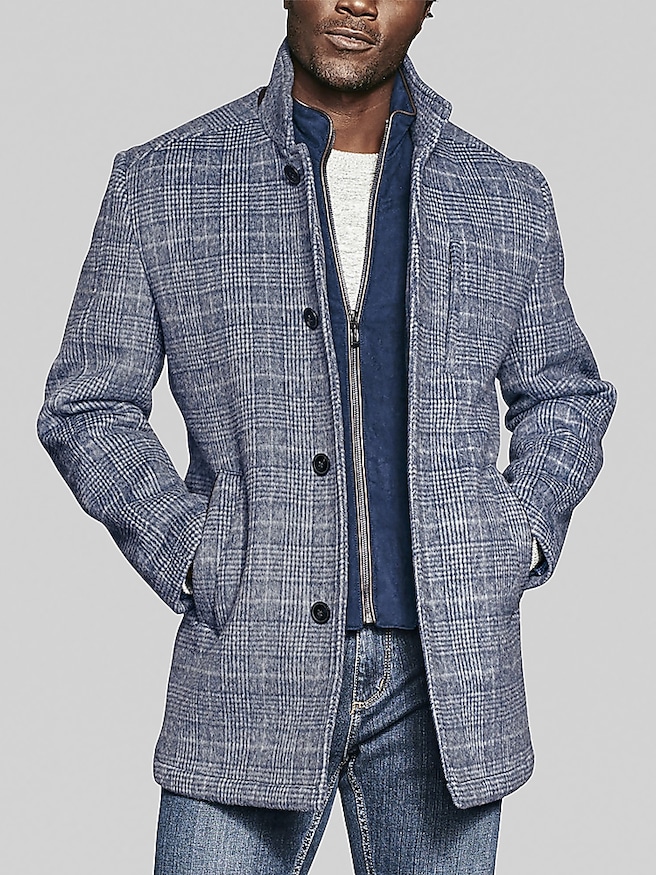
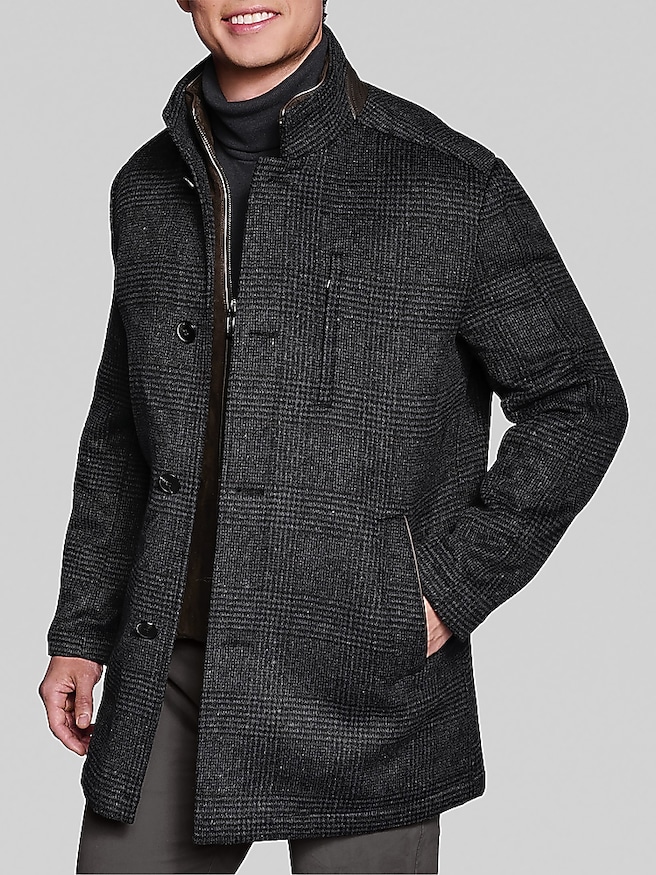
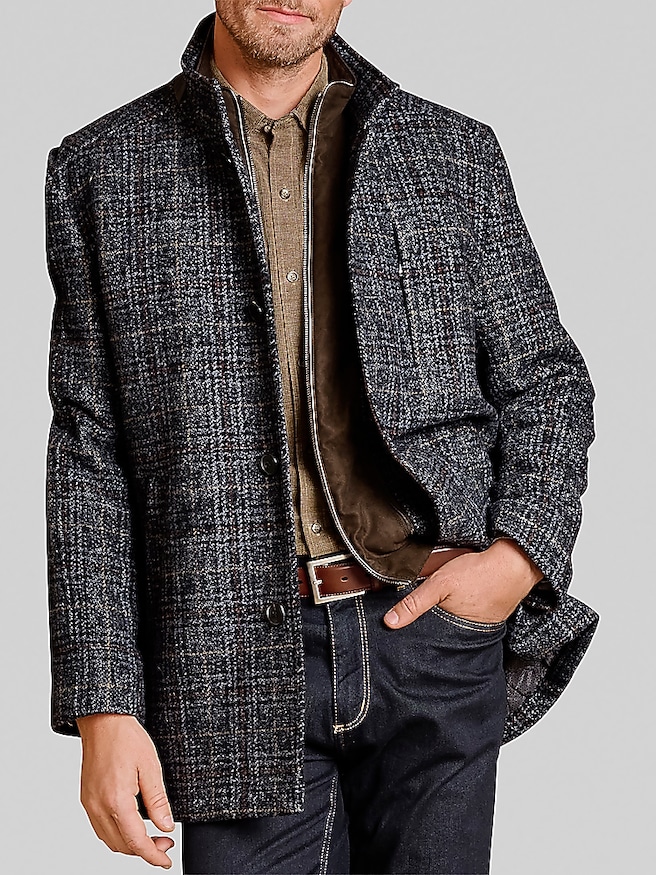
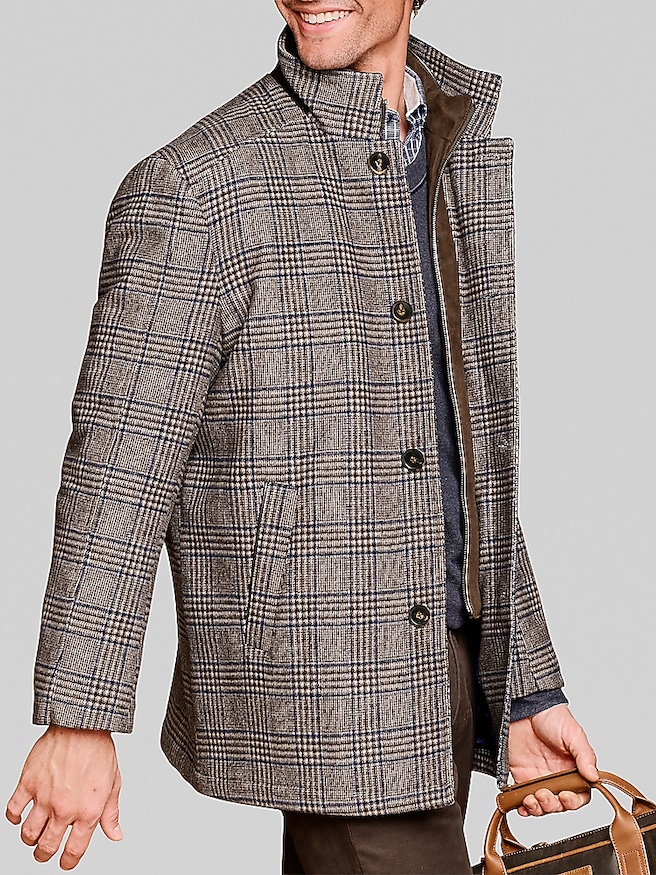
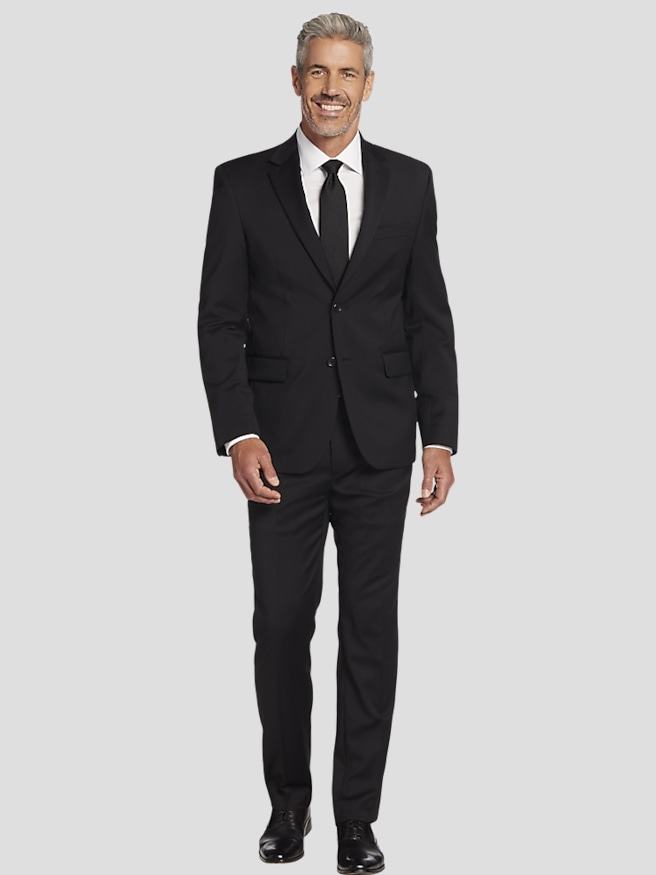
Men’s smart winter jackets combine a polished appearance with insulation and practical coverage for cold-weather wear. Clean lines, balanced proportions, and understated details help these jackets work with office clothing, dinner outfits, and everyday separates without looking overly technical or bulky. The appeal is especially clear on a commute: a jacket needs to look appropriate over tailored trousers while providing warmth on a station platform or a walk from the parking lot. Wool and wool-blend fabrics bring texture and structure to that combination. A dense weave can help limit airflow, while a smooth finish gives the jacket a dressier character. The fiber blend, fabric weight, lining, and construction all influence warmth; a wool label alone does not tell the whole story. Insulated designs offer another approach, using down or synthetic fill to hold warm air close to the body. Down can provide substantial warmth for its weight, while many synthetic fills retain more insulating ability when damp and may suit routines that involve occasional light precipitation. Neither insulation type makes a jacket waterproof on its own. Protection from rain or wet snow depends on the outer fabric, its treatment, and details such as seam construction and closures. A water-resistant finish can help shed brief moisture, but it is not equivalent to waterproof construction. For a smart appearance, restrained quilting, low-profile pockets, and matte fabrics can keep the outline neat. A stand collar creates a crisp frame around the neck, while a fold-down collar offers a familiar tailored finish. A covered front closure can also create a cleaner line and help reduce drafts. Navy, charcoal, black, and earthy neutrals are versatile foundations because they sit comfortably beside common suit and trouser colors. Texture adds interest without requiring a bold pattern: a subtle weave or softly brushed surface can give a simple winter outfit more depth while keeping the overall effect composed.
Fit determines whether a smart winter jacket feels as good in motion as it looks on a hanger. The shoulder area should sit smoothly, with enough room through the upper back and chest for the layers worn underneath. A jacket intended for a dress shirt and fine-gauge sweater may need a closer fit than one regularly worn over a suit jacket or substantial knitwear. Extra room is useful only when it supports movement; excess fabric around the waist or sleeves can make an otherwise tailored shape look heavy. Reaching forward, sitting down, and bending the elbows reveal tightness that may not be obvious while standing still. The front should close without pulling into pronounced horizontal lines, and the collar should remain comfortable when fastened. Sleeve length matters, too, particularly when reaching for a steering wheel or carrying a briefcase. Coverage should remain practical without allowing the cuffs to swallow the hands. Jacket length changes both the look and the intended use. A shorter hem works well with casual trousers and offers freedom of movement, while a longer silhouette provides more coverage and can complement tailored clothing. When layering over a suit or sport coat, enough length to cover the underlying jacket usually creates a more finished appearance. Proportion also comes from the layers beneath: a bulky sweater can crowd a narrow sleeve, whereas a lighter knit often preserves a clean outline. Smart winter jackets pair naturally with wool trousers, dark denim, leather boots, and simple scarves. For an office day followed by dinner, a restrained outer layer can bridge both settings without requiring a complete change of clothes. For travel, comfortable arm movement and accessible pockets become especially valuable when handling luggage or moving between indoor and outdoor spaces. Personal style can lean tailored, minimal, or subtly sporty without losing that sense of polish. Explore Men's Stylish Winter Jackets for a related approach to cold-weather dressing.
Durability is often found in the details that receive the least attention at first glance. Secure pocket attachments, even stitching, firmly fastened buttons, and a zipper that moves smoothly all contribute to a jacket’s usefulness over repeated wear. High-contact areas deserve particular consideration: cuffs brush against desks, pocket openings take the weight of hands and keys, and shoulder fabric may rub against a bag strap. A dense outer fabric can offer useful resilience, though no material is immune to abrasion or snagging. Practical storage also helps preserve the silhouette. Bulging pockets can distort a tailored front, so a phone, wallet, and gloves should fit without pulling the fabric out of shape. Interior pockets may keep small essentials close without interrupting the exterior line, while lined hand pockets add comfort during outdoor waits. Care requirements vary significantly by fabric, insulation, and construction, making the sewn-in care label the starting point for cleaning. Some wool-rich jackets require professional cleaning, while some insulated styles permit machine washing under specific conditions. Washing or drying contrary to those instructions can affect shape, surface finishes, or the distribution of fill. A soft clothing brush can lift surface dust from suitable wool fabrics, and prompt attention to spills can prevent a small mark from becoming harder to remove. Damp outerwear should dry fully in a ventilated space before being put away, away from direct heat that could damage the material. Structured jackets generally benefit from a broad, supportive hanger, while insulated outerwear should not remain tightly compressed for extended storage. These habits help a frequently worn jacket maintain its appearance through commutes, evening plans, and weekend outings. A smart winter jacket can also make a thoughtful gift for a father, partner, or friend whose routine calls for polished outerwear. Familiarity with the recipient’s usual size, preferred fit, typical layers, and care preferences makes the choice more personal. The strongest match balances warmth, ease of movement, and a look that feels natural with clothing already in the closet.