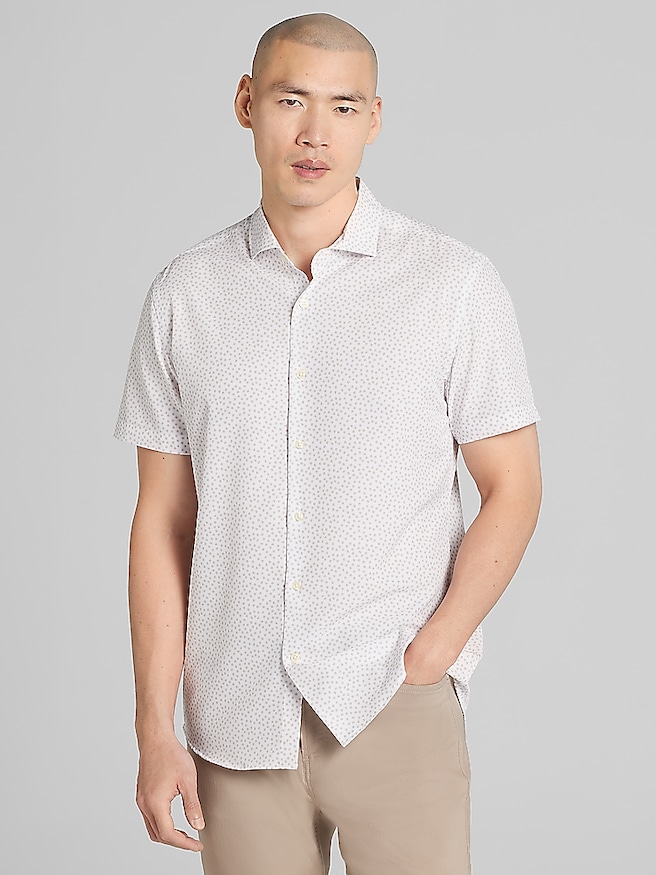
Men’s skinny fit shirts create a close, defined silhouette with less excess fabric through the chest, waist, and sleeves. Compared with a traditional fit, the shape follows the torso more closely, helping a shirt sit neatly beneath a fitted jacket or tuck into tailored pants without a bulky fold at the waistband. Skinny fit generally has a narrower cut than slim fit, although measurements and proportions vary by design. The distinction is about shape, not simply choosing a smaller size: a well-fitting shirt still leaves enough space to sit, reach forward, and bend an arm comfortably. Shoulder seams should sit near the outer edge of the shoulders, and the front placket should lie flat rather than pulling into gaps between the buttons. Long sleeves should reach the wrist without covering much of the hand, while a fastened collar should feel secure without pressing against the neck. These details matter as much at a desk as they do at a wedding reception, where a shirt needs to stay comfortable through conversation, dinner, and time on the dance floor. A close cut can suit a range of builds; the relationship between shoulder width, chest measurement, and waist shape is more useful than a body-type label. Someone with broader shoulders and a narrower waist may appreciate stretch and shaping that accommodate the chest without leaving fabric loose around the middle. Someone who prefers a little more room can explore men’s slim fit shirts for a related silhouette that is typically less close-fitting. For work, celebrations, and polished everyday dressing, skinny fit shirts bring definition to an outfit without requiring every other piece to fit tightly. Straight-leg trousers, neatly proportioned chinos, or dark denim can balance the narrow shirt shape, while a jacket with sufficient room across the shoulders allows the layers to move together. The result is a clean outline rather than a shirt stretched taut across the body.
Fabric gives a skinny fit shirt much of its character, influencing how it feels against the skin, how readily it moves, and how crisp or relaxed it looks. Cotton is a familiar choice for its softness and breathability, but the weave makes a noticeable difference. Cotton poplin has a smooth surface and a relatively light, crisp feel that works well with tailored clothing. Twill has a recognizable diagonal weave and often a more substantial hand, giving a shirt a different drape even when the fit is similarly close. Oxford cloth brings visible texture and a more casual character, particularly with a button-down collar and chinos. Cotton blends may add resilience or easier upkeep, while a small amount of elastane or spandex can help a narrow cut accommodate ordinary movement. Stretch does not replace adequate room in the shoulders and chest; it complements the fit rather than correcting a size that is too small. Wrinkle-resistant finishes can help maintain a neat appearance, though the degree of crease resistance and the care required depend on the fabric and finish. Color, pattern, and collar shape also influence intended use. A white or pale blue dress shirt provides a restrained backdrop for a tie and suit, while a fine stripe or small check adds detail without overwhelming the outfit. Deeper solid shades can look composed with tailored pants when a tie is not part of the plan. A spread collar leaves space for a fuller tie knot, a point collar creates a narrower frame, and a button-down collar stays anchored for a more relaxed look. With the top button open, the collar should settle neatly rather than disappear beneath the jacket lapels. Shirt length matters, too: a hem intended for tucking needs enough coverage to stay in place when the wearer sits or reaches, whereas a shorter casual hem can look balanced worn loose. These construction details help distinguish a shirt meant for a presentation or ceremony from one suited to dinner with friends.
Comfort and durability depend on more than the initial appearance in a mirror. Smooth seams, securely attached buttons, and well-finished cuffs are practical details in a shirt that will see regular use. A narrow sleeve should allow the elbow to bend without persistent tension, and the back should have enough ease for reaching across a table or holding a steering wheel. Constant pulling at seams and buttonholes can place unnecessary stress on the fabric, so a close fit should never rely on strain to create its shape. Care should follow the garment label, especially when a shirt includes stretch fibers, a special finish, or contrasting details. Where machine washing is permitted, the recommended water temperature and cycle help preserve the intended feel and dimensions. Excessive dryer heat can contribute to shrinkage in some fabrics and affect elastic fibers, making the drying instructions particularly important for a precisely fitted shirt. Prompt removal from the dryer, when tumble drying is allowed, can reduce settled-in creases; hanging a shirt with the collar and placket smoothed helps it keep a tidy shape between wears. Ironing or steaming should also match the fabric’s care directions rather than relying on one setting for every shirt. Collars and cuffs deserve attention because they are frequent contact points, and treating marks according to the care label can help prevent them from becoming harder to remove. For someone building a work wardrobe, a dependable skinny fit shirt can serve beneath a suit for an interview, with trousers for an office day, or under a blazer for a dinner reservation. It can also make a thoughtful gift for a graduate, partner, or friend who already enjoys a close-fitting silhouette, particularly when the recipient’s neck size, sleeve length, and fit preferences are known. The most useful choice reflects the way that person dresses and moves: neat enough for the occasion, comfortable through a full day, and straightforward to care for afterward.