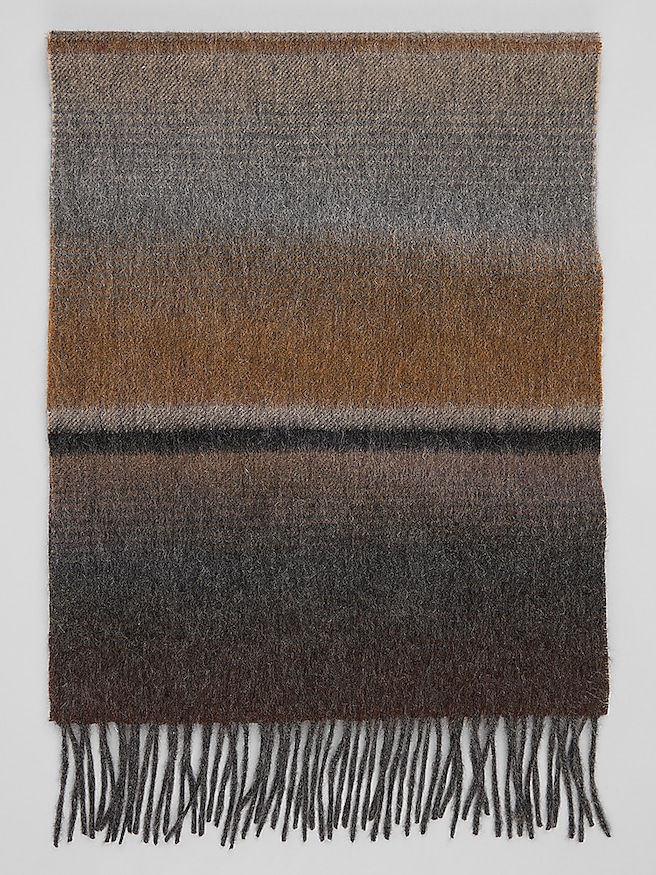
Men's scarves add texture, color, and a sense of finish without changing the character of an outfit. A softly brushed scarf tucked into a wool coat can look understated on the way to the office, while a patterned weave over a casual jacket gives a simple combination more personality. Their appeal is practical, too: coverage around the neck helps close the gap above a collar, and a flexible shape makes a scarf easy to adjust or remove indoors. Fabric has a large influence on that experience. Wool is valued for its insulating qualities and natural resilience, though softness varies with the fiber and construction. Finer wool can feel smoother against the neck, while a more substantial weave may have a firmer, textured hand. Cashmere is known for softness and warmth with relatively little weight, but it benefits from gentle handling. Blended fabrics can balance several qualities, including softness, shape retention, and ease of care; the fiber percentages and care label provide a clearer picture than appearance alone. Cotton tends to have a less lofty feel, making it useful when the emphasis is on a light layer and visual texture rather than substantial insulation. Synthetic fibers can contribute durability or help a scarf hold its shape, depending on the blend and how it is made. Construction matters alongside composition. A loose knit often looks relaxed and has more give, while a closely woven fabric generally drapes with a cleaner edge. Thickness is not the only measure of usefulness: a dense, relatively slim scarf may sit more comfortably beneath a tailored collar than a bulky knit. For someone who spends time walking between buildings or waiting outdoors, coverage and a secure wrap can matter most. For someone moving mainly between a car and an office, a lighter, smoother scarf may be easier to wear throughout the day. The best match is one that feels comfortable against the skin and suits the way it will actually be worn.
Proportion makes a noticeable difference in how a scarf works with the rest of a wardrobe. Length affects whether the ends hang neatly, allow a loose wrap, or create extra volume at the neck; width influences both coverage and the amount of fabric that sits beneath a coat. A longer scarf offers flexibility, but extra length can become cumbersome when paired with a shorter jacket or carried over an arm indoors. A broad scarf can spread comfortably across the upper chest, while a narrower shape tends to keep the silhouette more streamlined. Neither has to dominate the outfit. With a suit and an overcoat, a smooth drape or compact loop can preserve the line of the lapels and leave room for the collar to close without strain. With denim, boots, and a casual jacket, a more textured scarf can look at home with a relaxed wrap and slightly uneven ends. Color and pattern help connect those combinations. Charcoal, navy, brown, and muted gray often work easily with familiar outerwear, while burgundy, forest green, or a restrained check can introduce contrast without overwhelming it. A scarf does not need to match a coat exactly; repeating a tone from a sweater, shirt, or pair of trousers can make the combination feel cohesive without looking overly coordinated. Pattern scale also matters. A small check may read almost like texture from a distance, whereas a larger plaid becomes a more visible part of the outfit. When a jacket already has a distinct pattern, a quieter scarf can give the eye a place to rest. Texture can provide the same interest as color: a subtle rib, a soft brushed surface, or a visible woven structure adds depth even in a neutral shade. Fringe lends movement and a more relaxed finish, while a clean edge can feel more restrained. These details make scarves useful across everyday settings, from a commute in tailored clothing to a weekend lunch in a sweater and jacket.
Scarves also make thoughtful gifts because they offer room for personal taste without requiring the precise sizing of a shirt or suit. The most useful starting point is often the recipient's everyday coat: its color, collar shape, and overall formality suggest whether a smooth solid, a textured neutral, or a distinctive pattern will feel natural. Someone who wears mostly navy and gray may appreciate a rich accent color, while someone who favors patterned clothing might get more use from a simple, solid scarf. Sensitivity to texture deserves attention as well. A fabric that feels pleasantly substantial in the hand may feel quite different against the neck, particularly when worn for an extended commute. Softness, manageable weight, and straightforward care can be more meaningful than decorative detail for a person who values easy routines. That balance of personal style and practical comfort is part of the appeal of Men's Winter Scarf Gifts. For any scarf, ongoing care helps preserve the qualities that made it appealing in the first place. The care label should determine whether washing or professional cleaning is appropriate; fiber content alone does not account for every finish, trim, or construction detail. When hand washing is permitted, cool water, a suitable gentle detergent, and minimal agitation can help protect the fabric. Wringing can distort the shape, and hanging a wet knit may stretch it, so flat drying is often appropriate when directed by the label. Between cleanings, allowing a scarf to air out before storage can help keep it fresh without unnecessary washing. Snags deserve gentle attention rather than pulling, and surface pills are best handled cautiously with a tool suited to the fabric. Smooth outerwear closures and a little care around zippers, hook-and-loop fasteners, and rough bag straps can reduce abrasion. Once clean and fully dry, a scarf can be folded loosely rather than compressed into a tight space. Those simple habits help maintain an even drape, comfortable texture, and tidy edges through repeated wear.