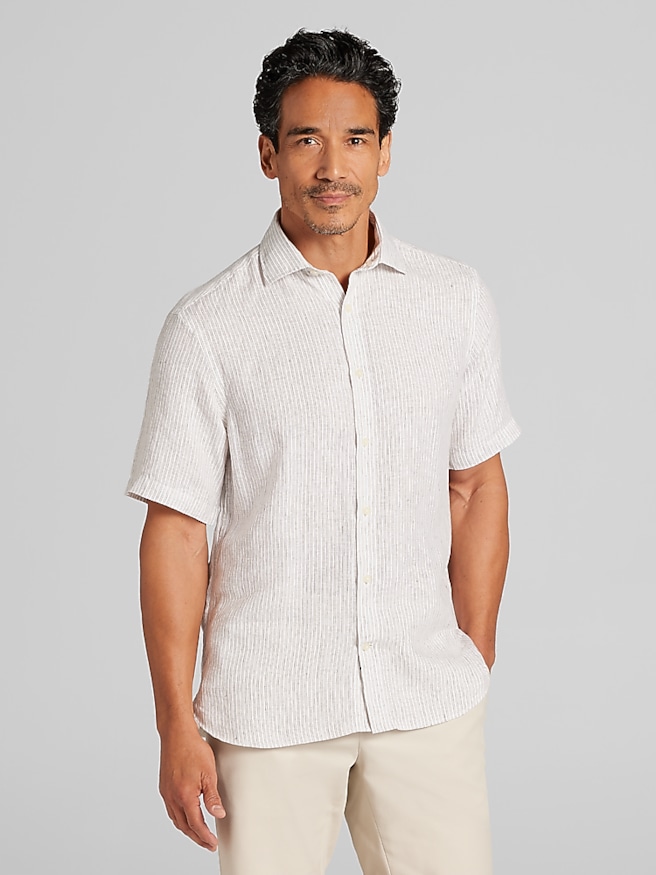
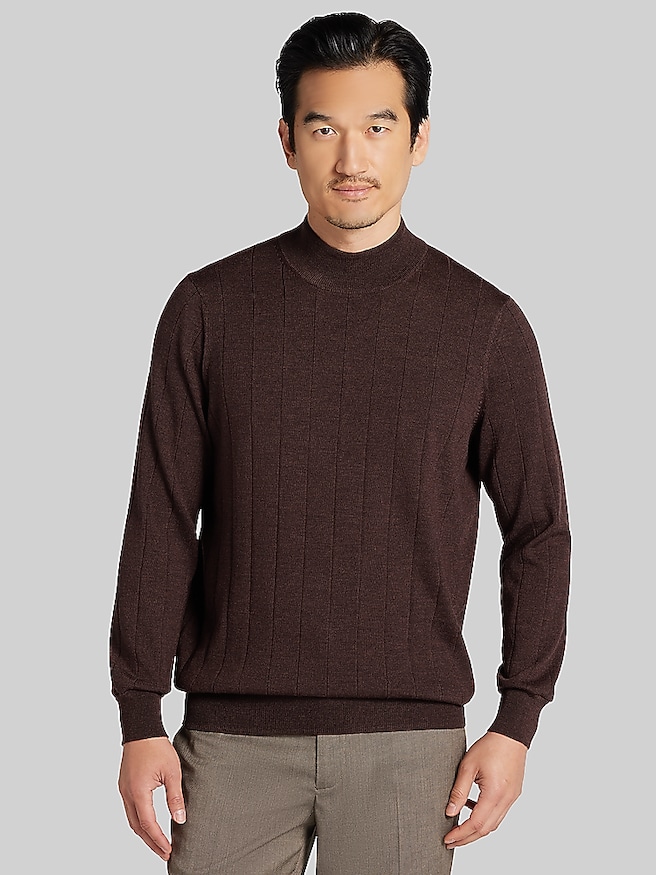
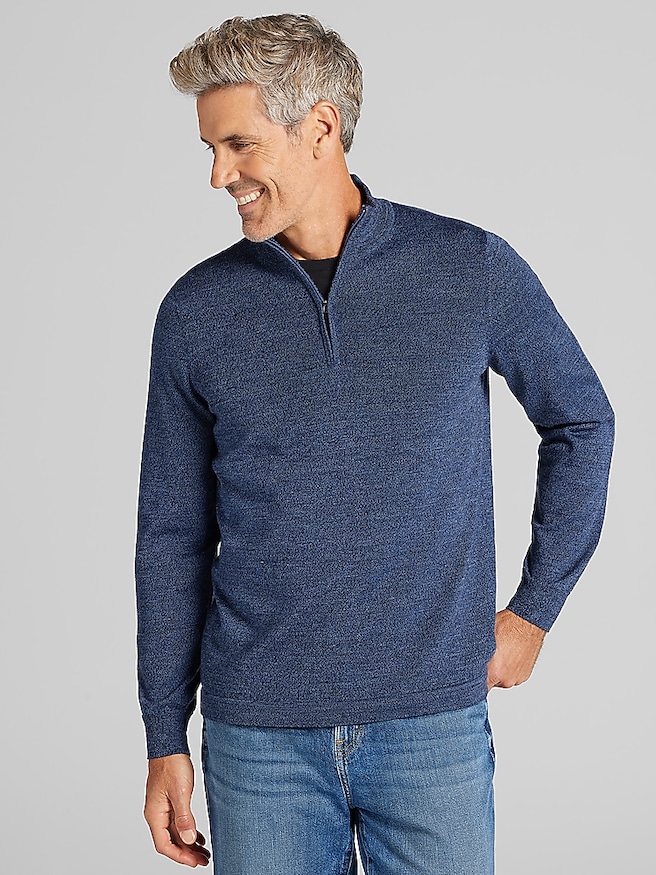
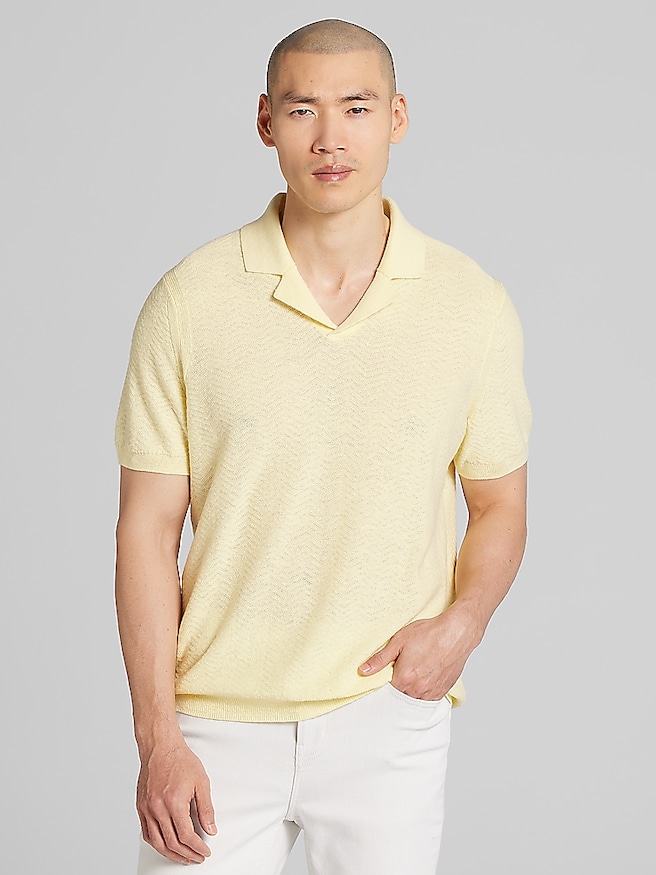
Men's patterned sweaters bring color, texture, and visual interest to everyday clothing without requiring a complicated outfit. Stripes, argyle diamonds, geometric repeats, and abstract motifs each create a distinct impression, from understated and tailored to relaxed and expressive. A small repeating design in closely related shades can read almost like a solid from across the room, with the pattern becoming clearer up close. Larger shapes and stronger contrasts make the sweater a focal point, especially when the rest of the outfit stays simple. Navy, gray, brown, and cream are easy colors to coordinate with familiar wardrobe staples, while burgundy, green, or blue accents can pick up a shade in a shirt or pair of trousers. Pattern scale matters as much as color: narrow stripes have a different presence from broad bands, and a fine geometric knit feels different from an oversized diamond design. With patterned knitwear, solid pants generally give the eye somewhere to rest. Dark denim creates an easy combination for dinner with friends, chinos keep things relaxed but put together, and tailored trousers give the same sweater a more refined setting. A shirt collar visible above a crewneck adds structure, while a plain T-shirt underneath keeps the neckline uncomplicated. When a patterned shirt joins the outfit, separating the scale of the two designs helps prevent them from competing; a small shirt check beneath a larger sweater motif is one example. Patterned knits can share the understated polish of Men's Classy Sweaters while adding a distinctive focal point. Their appeal extends beyond making an impression: a well-chosen pattern can connect several colors already present in a wardrobe, giving familiar shirts, pants, and shoes a fresh relationship. That makes men's patterned sweaters useful for office settings with a relaxed dress code, casual celebrations, restaurant outings, and everyday plans that call for something more considered than a basic tee. The overall effect depends on the balance of pattern, proportion, and accompanying pieces rather than on an elaborate combination of accessories.
Materials influence how a patterned sweater feels, drapes, and holds its appearance through repeated wear. Cotton knits often have a familiar, comfortable hand and can work well against the skin, although heavier cotton constructions may feel substantial and need careful drying to avoid stretching. Wool brings natural elasticity and resilience, while fine merino wool can create a smoother, less bulky knit than coarser wool fibers. Individual sensitivity varies, so the softness of the finished fabric matters more than assumptions based on the fiber name alone. Blended yarns combine characteristics from multiple fibers; depending on their composition and construction, they may support softness, shape retention, or easier care. Acrylic and polyester can contribute lightness or durability, but fiber content is only part of the picture. Knit density, yarn quality, seam construction, and finishing also affect how a sweater performs. Jacquard knitting can build contrasting colors directly into the fabric, and some multicolor techniques leave yarn strands across the inside. Those interior strands deserve gentle handling because jewelry, watch clasps, or rough edges can catch them. Ribbed cuffs, necklines, and hems help define the garment's shape, while seams that lie flat tend to feel more comfortable beneath a jacket. Care requirements vary, making the sewn-in label the authority for washing and drying. Some sweaters tolerate machine washing under specified settings; others require hand washing or professional cleaning. Heat and agitation can shrink or distort certain fibers, and a wet knit can stretch under its own weight. When the care label calls for flat drying, reshaping the garment on a clean, flat surface helps maintain its proportions. Folded storage generally places less stress on shoulders than hanging. Light pilling can occur where fabric rubs against a bag strap, desk edge, or outer layer, and careful treatment with a suitable fabric tool can refresh the surface without pulling at the knit. Attention to these details helps preserve both the sweater's structure and the clarity of its pattern.
Fit determines whether a patterned sweater feels easy and intentional or looks crowded by the clothing underneath. A comfortable fit leaves enough room through the chest and upper arms for normal movement without excessive fabric pooling at the waist. On a set-in sleeve, the shoulder seam generally sits close to the natural shoulder; raglan and deliberately dropped-shoulder designs follow different proportions. Sleeves should allow comfortable movement at the wrist, and the hem should sit where it works with the intended pants and layers. A shorter, neater silhouette can pair cleanly with tailored trousers, while a more relaxed shape suits denim and casual chinos. Pattern placement also changes the visual balance: a design concentrated across the chest draws attention upward, while an allover repeat creates a more continuous effect. Neither approach is inherently dressier, since contrast, texture, and fit all contribute to the finished look. Crewnecks offer a simple frame for the face and accommodate either a T-shirt or a shirt collar. V-necks leave more of the underlying shirt visible, and higher necklines create a more enclosed, streamlined shape. For someone who spends part of the day at a desk and part moving between appointments, room through the elbows and a comfortable neckline make a practical difference. A sweater worn beneath a sport coat needs enough ease for movement without bunching at the sleeves, while one worn on its own can carry more texture or a bolder motif. Patterned sweaters can also make thoughtful birthday, anniversary, or graduation gifts for a father, brother, partner, or friend who enjoys clothing with personality. Familiar colors, a preferred neckline, and an established fit make a gift feel personal without relying on an unusually bold design. For frequent wear, a manageable care routine and compatibility with existing pants and shirts often matter more than novelty. The strongest addition is a sweater whose pattern feels distinctive, whose fabric feels comfortable, and whose proportions suit the way its wearer actually dresses.