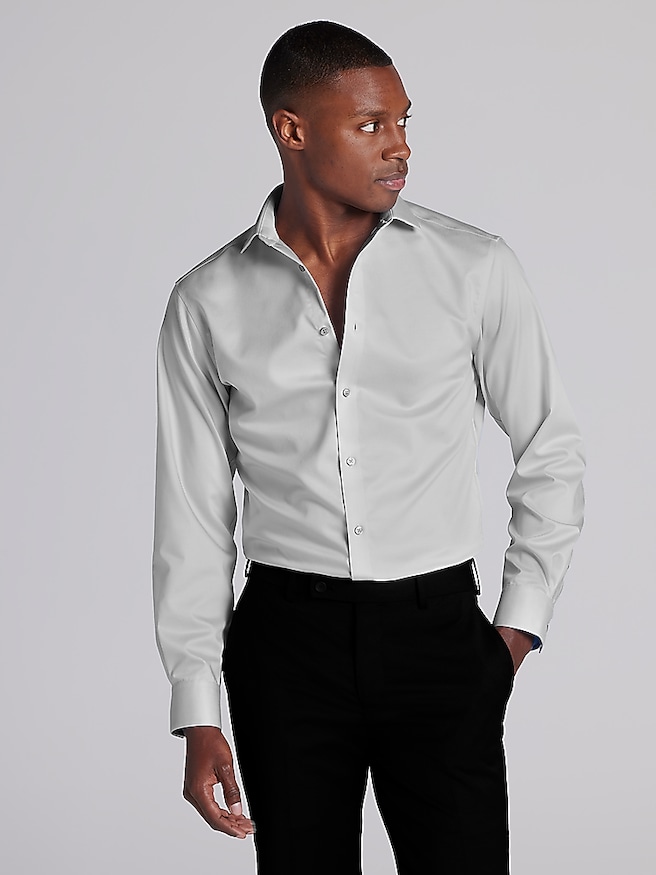
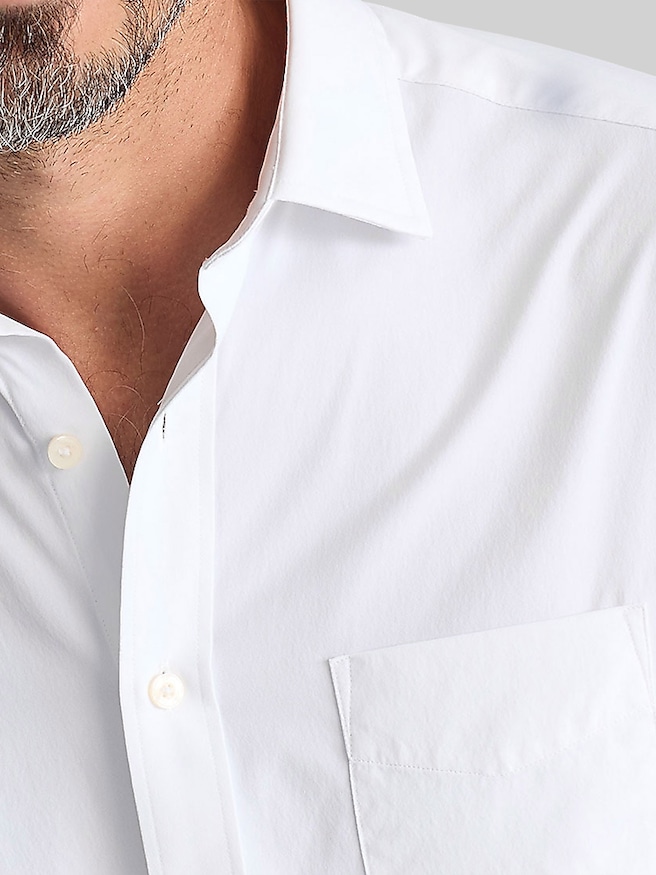
Men’s patterned shirts bring stripes, checks, plaids, florals, geometric designs, and abstract prints into everyday dressing, with options that range from subtle texture to a bold focal point. The pattern’s scale, spacing, and contrast often shape its character as much as the design itself. A fine blue stripe on a white background can look crisp beneath a suit jacket, while a large botanical print creates a more relaxed impression with chinos. Small repeating motifs offer a middle ground: enough visual interest to stand on their own without overwhelming a jacket or tie. Checks and plaids add structure through intersecting lines, while scattered prints create a less orderly, more expressive look. Woven patterns incorporate the design into the fabric’s construction; printed patterns apply color and imagery to the fabric’s surface. Neither method alone determines quality, so fabric composition, construction, and care requirements remain important considerations. Cotton is a familiar choice for its soft feel and breathability, with smooth poplin giving patterns a clean appearance and textured weaves adding depth. Oxford cloth has a more substantial, visibly textured character, while twill’s diagonal weave can lend a softer drape. Linen offers a distinctive texture and naturally relaxed appearance, including creases that become part of its character. Cotton blends may balance comfort with easier maintenance, and fabrics containing stretch fibers can provide additional flexibility through the shoulders and torso. A fluid fabric allows a larger print to move and drape, while a crisper fabric gives stripes and checks more definition. Color also affects versatility: navy, gray, white, and muted earth tones tend to coordinate easily with familiar trousers, while vivid colors make the shirt more prominent. For someone building a wardrobe around solid pants and jackets, a patterned shirt introduces variety without requiring an entirely new set of coordinating pieces. The most useful choice reflects both personal taste and the settings where the shirt will be worn, from a desk-bound workday to a dinner reservation or a casual gathering.
Fit gives a patterned shirt its shape and helps the design look intentional rather than distracting. Shoulder seams should generally sit near the edges of the shoulders, with enough room across the upper back to reach forward comfortably. A button-front shirt should close smoothly through the chest and waist without pulling into visible gaps, and the sleeves should allow comfortable movement at the elbows. Slim fits usually follow the torso more closely, while classic or relaxed fits leave additional room; the actual measurements matter more than the fit name alone. For long sleeves, a cuff that rests around the wrist looks neat beneath a jacket, while short sleeves generally look balanced when they sit comfortably around the upper arm without flaring widely. Shirt length matters, too. A longer, curved hem is usually better suited to staying tucked, while a shorter hem can create a cleaner untucked silhouette. Pattern placement can make these details more noticeable: straight stripes emphasize how the fabric hangs, and a check interrupted by pulling across the buttons quickly reveals a fit issue. Collar construction influences the overall mood. A structured collar pairs naturally with tailored clothing, a button-down collar bridges polished and casual outfits, and an open camp collar gives a printed shirt an easygoing character. For an office presentation, a small-scale pattern with solid trousers keeps the outfit focused without looking plain. For dinner with friends, an open collar and a more expressive print can carry the look without extra accessories. Patterned dress shirts can also work beneath suits for celebrations, provided the event’s dress expectations allow them. When adding a tie, varying the scale of the patterns helps each remain distinct; a small check beside a broader stripe often reads more clearly than two equally dense designs. With a strongly patterned shirt, solid pants and a simple jacket provide visual breathing room. Repeating one understated color from the shirt elsewhere in the outfit creates a connection without making every piece match.
A patterned shirt earns a lasting place in a wardrobe when its appearance is matched by practical construction and manageable care. Even stitching, securely attached buttons, neatly finished seams, and well-shaped collars and cuffs are useful details to examine. Alignment across the front, pocket, or side seams can contribute to a considered finish, although exact pattern matching varies with the design and construction. Areas that receive frequent friction, particularly collars and cuffs, deserve attention because wear often appears there first. Care should follow the garment’s label rather than assumptions based on the pattern or fabric name. Some shirts tolerate machine washing, while others require a gentler process or professional cleaning. Sorting by color, treating marks promptly with an appropriate method, and avoiding unnecessary heat can help protect both the fabric and its appearance. Turning a shirt inside out before washing may reduce surface abrasion, and removing it promptly after the cycle can limit deep creasing. Printed designs may need particular care when ironing, so checking the recommended setting and pressing from the reverse when appropriate can help protect the surface. Stretch fabrics also benefit from close attention to drying instructions. Between wears, a suitable hanger supports the shoulders and lets the shirt hang without being crowded tightly against other clothing. For travel, a forgiving fabric and a pattern that coordinates with several solid bottoms can make packing simpler, though no pattern substitutes for proper care. Patterned shirts also make thoughtful gifts for a partner, father, sibling, or friend when the recipient’s size and usual style are known. Someone who regularly wears understated clothing may appreciate a fine stripe or small check more than a dramatic print. For off-duty wardrobes, men's casual shirts provide another way to explore comfortable shapes and expressive designs. A pattern that feels personal, fits comfortably, and works with clothing already in rotation is more likely to become a familiar favorite than a shirt chosen for novelty alone.