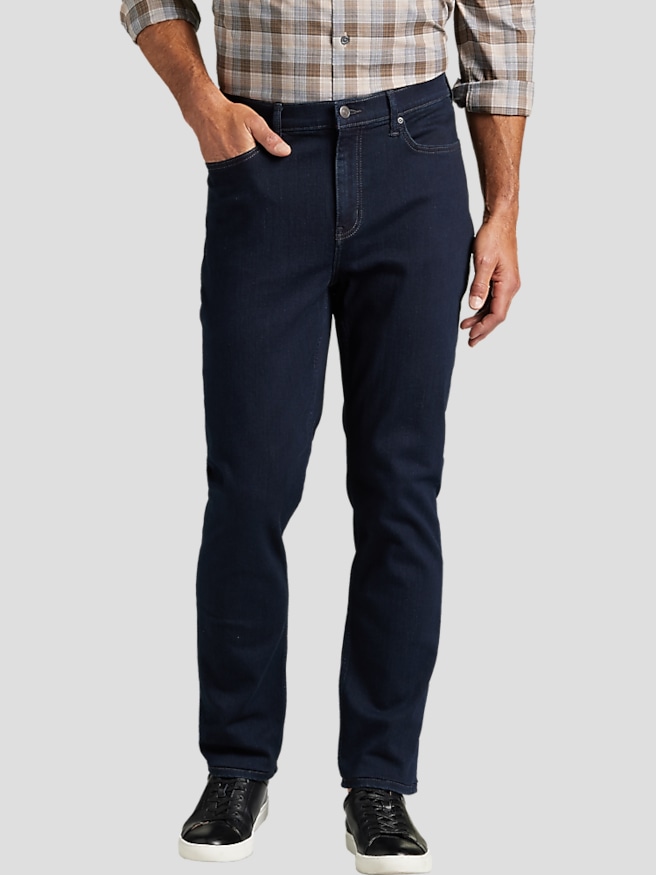
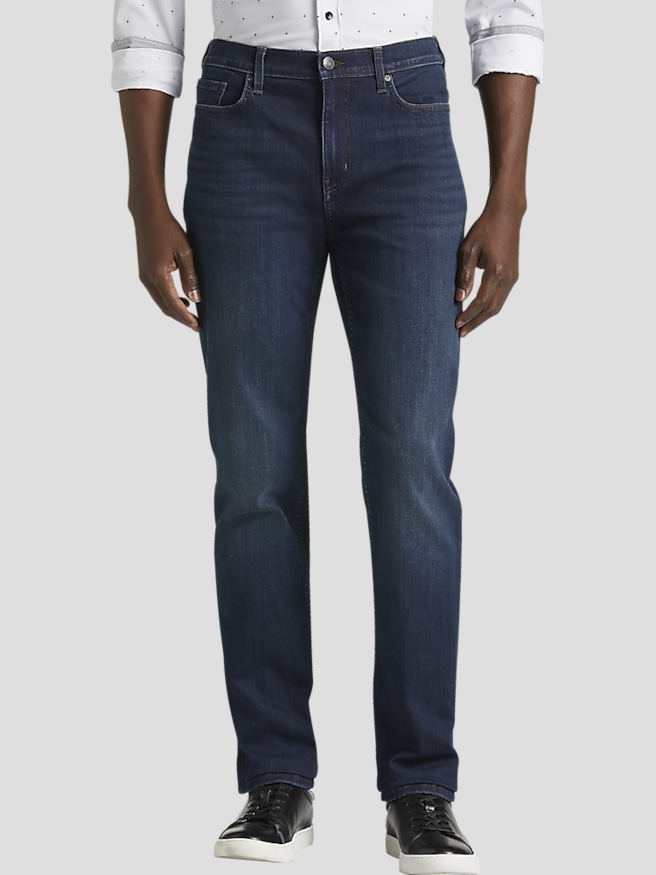
Men’s relaxed jeans are denim pants cut with extra room through the seat and thighs, creating an easy fit for everyday movement without requiring an oversized waist. That room can make a noticeable difference when sitting through a long meal, stepping into a car, or bending down to tie a shoe. Relaxed describes the fit around the body, while straight or tapered describes the shape of the leg: a relaxed pair can fall straight toward the hem or narrow gradually below the knee. The result depends on both measurements, not just the label. For men with fuller thighs or a more muscular build, that distinction helps explain why a pair can feel comfortable at the hip yet still look neat from the knee down. Men who simply prefer a less fitted silhouette can appreciate the same freedom. A waistband that rests securely without digging in gives the roomier cut its intended shape; sizing up a narrower fit often adds unnecessary fabric at the waist without providing the same balance through the seat. Rise matters, too. The distance between the crotch seam and waistband affects where jeans sit and how they feel when seated, especially with a tucked shirt or belt. Comfortable relaxed denim should allow movement without pulling sharply across the front pockets, and the seat should have ease rather than excessive drooping. Length finishes the picture. A modest break over sneakers or casual shoes keeps the leg line clean, while extra fabric pooled around the ankles can make a roomy cut look larger than intended. Boots may need a little more space at the opening, depending on their shape. These details make relaxed jeans a practical foundation for men who want comfortable denim that still looks considered, whether the day involves a commute, lunch with friends, or several hours spent traveling. The appeal is not a shapeless silhouette, but a proportioned fit with breathing room where it counts. Pocket placement, the depth of the back rise, and the way the side seams hang all contribute to that balance.
Fabric gives men’s relaxed jeans much of their character, from a crisp feel that gradually softens to a flexible construction that moves easily from the first wear. Cotton denim has a familiar texture and can develop creases and subtle fading at the knees, pockets, and other points of movement. Denim weight influences how a pair drapes: a more substantial fabric often holds its shape with a defined outline, while lighter denim can feel softer and fall closer to the body. Weight alone does not determine durability, however. Even stitching, secure belt loops, reinforced pocket openings, and well-finished seams all contribute to how jeans handle repeated use. Stretch blends add another consideration. A small amount of elastane or a similar stretch fiber can help the fabric give when sitting or bending, though flexibility and a relaxed cut are separate qualities. Room through the thighs comes from the pattern; stretch comes from the fabric. Men comparing those characteristics can also consider Male Stretch Jeans when flexibility is a priority alongside fit. Fabric recovery matters as much as the initial give, because denim that returns toward its original shape is less likely to remain stretched at the knees or seat. Care helps preserve both appearance and performance. The garment’s care label should determine washing and drying methods, since fiber blends and finishes can have different requirements. Turning jeans inside out and using cold water when permitted can reduce surface abrasion and help limit fading. Washing dark denim with similar colors also helps manage dye transfer, which can occur with deeply dyed fabrics. Excessive heat may affect fit or stretch fibers, so air-drying or a lower dryer setting is appropriate only when consistent with the label. Between washes, addressing small spots promptly can reduce the need for a full wash. Letting denim dry completely before folding it away helps keep it fresh, while checking pocket edges and hems for early wear makes small repairs easier to address before damage spreads.
The styling strength of relaxed jeans lies in their balance of familiar denim texture and an unforced silhouette. A clean, dark wash can look composed with an Oxford shirt and leather loafers for dinner at a casual restaurant, while a softly faded blue works naturally with a plain T-shirt and low-profile sneakers. The contrast between denim and a more structured layer, such as an unstructured sport coat, can also work well when the setting permits jeans. For an office with a denim-friendly dress code, an even wash, intact hems, and minimal distressing usually create a tidier impression than pronounced fading or torn details. Relaxed does not have to mean sloppy: a shoulder seam that sits correctly, sleeves with a sensible length, and shoes in good condition help the whole outfit feel intentional. A roomy leg often pairs well with a shirt that has some shape rather than excess volume everywhere. Tucking in a shirt can define the waist, while an untucked hem that ends around the middle of the fly keeps proportions balanced without concealing most of the jeans. Wash and finish influence versatility as much as fit. Dark indigo offers a cleaner visual line, medium blue has a familiar everyday character, and visible fading brings a more casual mood. For travel, the most useful pair is one that stays comfortable when seated and coordinates with several shirts and shoes, reducing the need for extra outfits. For relaxed gatherings, errands, or an informal meal, dependable pocket placement and comfortable movement can matter more than decorative details. Jeans can also make a thoughtful birthday or graduation gift for someone whose preferred waist, inseam, rise, and fit are known. Measurements from a well-fitting pair are more useful than guessing from appearance, particularly because a relaxed silhouette can vary between cuts. Men’s relaxed jeans work best when comfort, fabric, and proportion support the way the wearer actually spends the day, offering enough room to move while remaining easy to pair with familiar clothes.