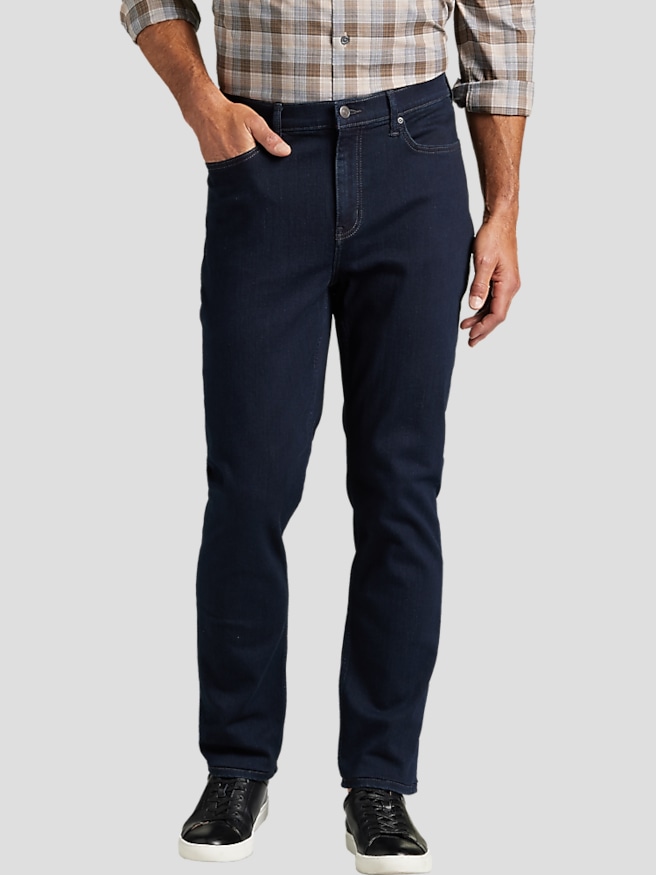
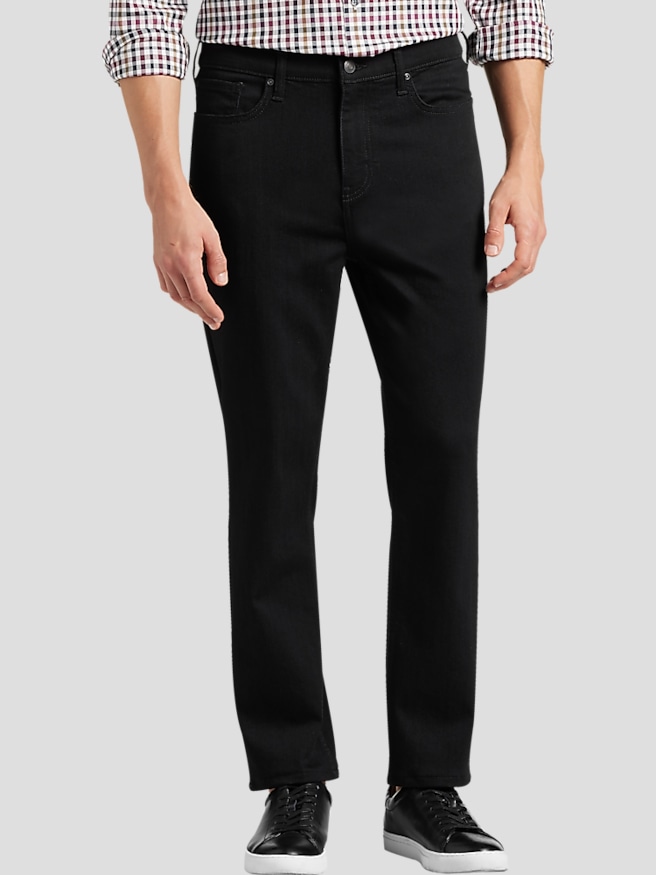
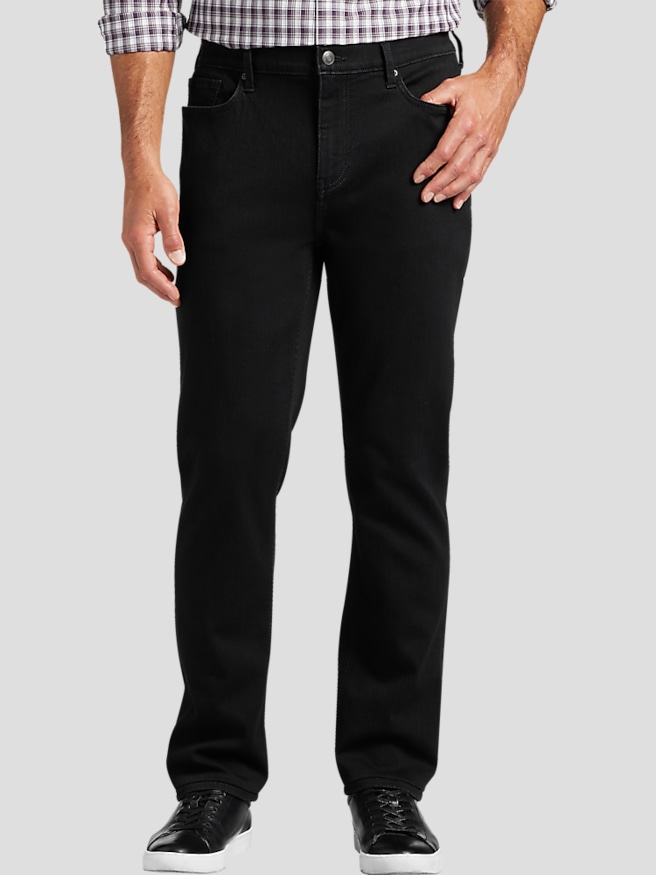
Men’s stretch jeans combine the familiar texture and structure of denim with added flexibility for everyday movement. Cotton usually forms the foundation of the fabric, while a small amount of elastane, also called spandex, helps it give when sitting, bending, or climbing stairs. Many stretch denim fabrics contain roughly 1% to 3% elastane, though the percentage alone does not determine how flexible or comfortable a pair will feel. Yarn construction, fabric weight, weave, and finishing also affect the result. Some blends include polyester or other fibers to support shape retention and influence the feel of the denim. The defining quality is a balance: enough give to make a long drive or an afternoon on foot more comfortable, with enough recovery to help the knees and seat return toward their original shape. Stretch is not the same as a loose fit, and a close-fitting pair does not need to feel restrictive. Likewise, relaxed jeans can have stretch without looking oversized or losing their traditional denim character. The Men's Stretch Jeans category brings together that classic appearance and ease of movement, making it relevant to a broad range of everyday wardrobes. These jeans suit people who spend much of the day moving between a desk, a commute, errands, and casual plans rather than dressing for a single activity. They can also make a practical gift for someone whose preferred waist size, inseam, and cut are already known. A familiar fit is generally a better starting point for gifting than assuming extra stretch will compensate for uncertain sizing. For everyday wear, the appeal is straightforward: recognizable denim details, such as pockets, belt loops, and sturdy seams, paired with fabric that moves more readily than comparable denim without elastic fibers. That combination offers comfort without requiring a distinctly sporty appearance. The amount of softness varies, too; some stretch denim feels substantial and textured, while other constructions have a smoother, more pliable hand from the first wear.
Fit determines how that flexibility feels and how the jeans sit through the waist, seat, thigh, and lower leg. Slim stretch jeans follow the body more closely, but they should still allow comfortable sitting without the waistband digging in or the front pockets pulling open. Straight-leg cuts maintain a more consistent line from the knee toward the hem, offering a familiar silhouette that works with many casual shoes. Athletic taper fits generally provide extra room through the seat and thighs before narrowing below the knee, making them useful for fuller thighs when a neater ankle opening is preferred. Relaxed fits offer more room overall, while skinny cuts stay close through most of the leg. These descriptions can vary between makers, so the actual measurements and fit notes matter more than the name alone. Stretch should complement the cut rather than make up for jeans that are too small. Strong pulling across the fly, seams twisting under tension, or a waistband that feels uncomfortable when seated can indicate a sizing or proportion issue. Rise matters as much as leg shape: the distance from the crotch seam to the waistband influences where jeans sit and how much coverage they provide when bending. Inseam and leg opening then shape the finish. A hem that rests lightly on a sneaker creates a cleaner line than several folds of fabric stacked above the shoe, while boots may need additional room at the opening. Wash and surface finish influence intended use as well. Dark, evenly colored denim with minimal distressing can pair with a tucked-in shirt and an unstructured jacket in a workplace that permits jeans. Faded finishes and more visible texture tend to read as casual, fitting naturally with polos, knit tops, and casual button-front shirts. For dinners, travel days, or informal gatherings, a comfortable waist and well-proportioned leg often do more for the overall appearance than an especially tight cut. Stretch denim remains casual clothing, even when a dark wash gives it a polished finish.
Durability depends on more than fabric thickness or the amount of stretch listed on a label. Denim construction, seam quality, fit, frequency of wear, and laundering all play a role in how a pair holds up. A heavier fabric may feel sturdy, but weight alone does not guarantee longer wear; constant friction at the inner thighs or sustained tension across the seat can put stress on any denim. A comfortable fit that allows movement without overloading those areas helps balance appearance and everyday function. Recovery is another useful consideration. Some easing with wear is normal, but fabric that rebounds well is less likely to develop pronounced bagging at the knees and seat between washes. Care should always follow the garment’s label, since dyes, finishes, and fiber blends can require different treatment. When the instructions allow it, washing inside out in cold water with similar colors and a mild detergent can help limit fading and reduce surface abrasion. Avoiding excessive heat is especially important for stretch denim because repeated high-temperature drying can weaken elastic fibers over time. Air drying or using a permitted low-heat setting can be gentler alternatives, with jeans reshaped before drying rather than stretched into position. Dark denim may transfer color, particularly during early wears and washes, so care around light upholstery, shoes, and other clothing is sensible. Between washes, airing jeans and treating small marks according to the care label can reduce unnecessary laundering, though visible dirt and odors still call for cleaning. Rotating pairs also reduces the repeated wear placed on a single garment. For someone who wears jeans through a seated workday and keeps them on for dinner afterward, comfort needs to last beyond the first few minutes in a fitting room. A waistband that stays comfortable when seated, pockets that lie reasonably flat, and knees that bend without resistance are meaningful details. Well-chosen stretch jeans bring those practical qualities together with a denim look that remains easy to dress up or keep casual.