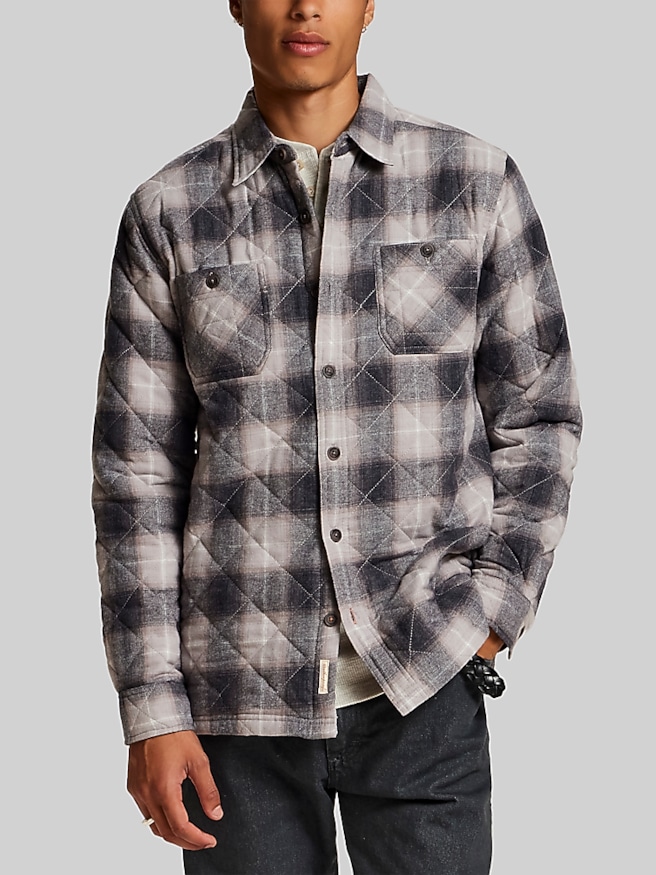
Men's quilted bomber jackets combine a classic, waist-length silhouette with stitched padding that adds insulation without the length of a traditional coat. Drawing on the shape of flight jackets, the bomber is recognizable by its compact body, front closure, and fitted hem and cuffs, although collar shapes and finishing details vary. Quilting gives this familiar outline another dimension: diamond, horizontal, or other stitched patterns secure layers of fabric and padding while creating texture across the surface. That construction makes a quilted bomber a practical option for fall and mild winter conditions, with warmth depending on the shell, fill, lining, and overall thickness. A lightly padded jacket suits a walk from the parking lot to the office or an afternoon of errands, while a more insulated version can provide additional comfort for longer stretches outside. Quilting alone does not establish a jacket's warmth or weather protection. A nylon or polyester shell can offer a smooth surface and relatively low weight, while cotton and wool-blend fabrics bring distinct textures and care requirements. Synthetic insulation is common in padded outerwear; down-filled construction has its own warmth, weight, and maintenance considerations. Water resistance, when specified, can help with light moisture, but a quilted surface does not automatically make a jacket waterproof. Rib-knit cuffs and a close-fitting hem can help limit drafts, though the amount of coverage remains shorter than that of a longer coat. The appeal is the balance of useful insulation and an easygoing shape: enough structure to look intentional over everyday clothes, without making a simple outfit feel formal. For commuting, casual dinners, travel days, or weekend plans, that balance allows a quilted bomber to work across several parts of a regular routine. Its shorter length can also feel less cumbersome when sitting in a car or settling into a train seat, provided the fit leaves enough room through the chest and shoulders. A smooth lining can make the jacket easier to slip over knitwear, while the weight and flexibility of the finished garment influence how comfortably it moves.
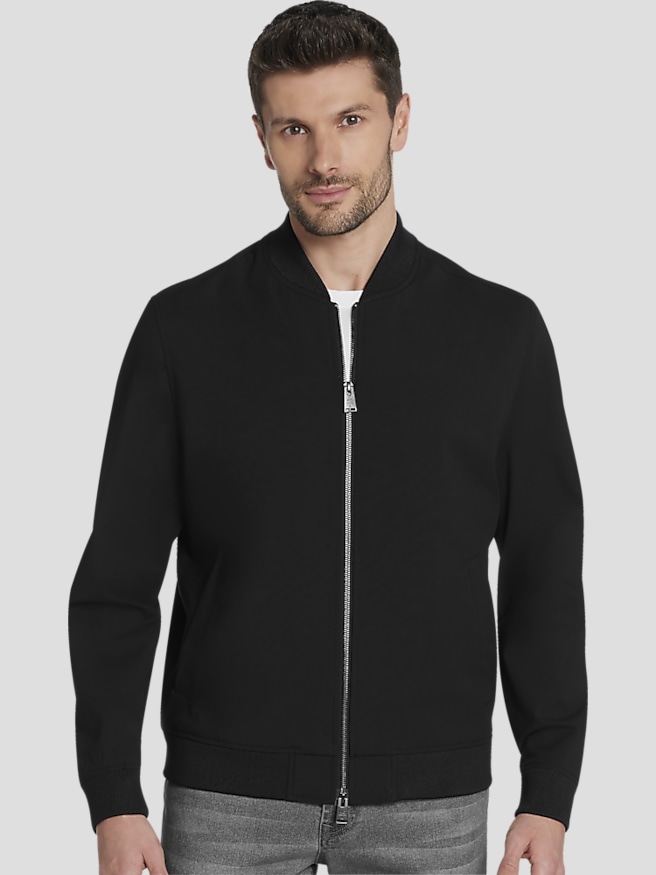
Fit has a noticeable effect on both the appearance and usefulness of a quilted bomber jacket. The shoulder area should feel settled rather than restrictive, with enough room to reach for a steering wheel or lift a bag without pulling sharply across the upper back. Set-in shoulder seams generally sit near the natural shoulder, while raglan sleeves and intentionally relaxed cuts create a different outline. Across the chest, a closed jacket should lie comfortably over the layers worn most often beneath it. A trim fit can look clean over a T-shirt or fine-gauge sweater, but the same size may feel crowded over a substantial sweatshirt. The hem typically sits around the waist or upper hip, and its elastic or ribbed finish should hold the shape without riding up excessively. Sleeves should cover the wrists with arms relaxed, with cuffs that stay comfortable rather than squeezing. Because padding adds volume, the visual effect comes from the whole proportion, not simply the size on the label. Narrower quilting can create a more understated surface, while larger quilted sections make the texture more prominent; neither pattern alone indicates greater insulation. For everyday styling, a quilted bomber works naturally with straight-leg or tapered jeans, chinos, and uncomplicated knitwear. A collared shirt underneath can bring a little polish to a relaxed office outfit, while a crewneck and clean sneakers keep the look casual. More structured trousers and leather boots offer another way to balance the jacket's sporting roots. Color and finish matter just as much as silhouette. Matte fabrics tend to look subdued, while a slight sheen makes the quilting more visible under changing light. For a darker, versatile direction, Men's Black Bomber Jackets offer a related look that pairs easily with gray, indigo, olive, and cream. Keeping the layers underneath relatively simple lets the stitching provide visual interest without competing with several strong patterns. The result can feel considered without looking overly coordinated, especially when the jacket's proportions complement the trousers.
Long-term satisfaction with a quilted bomber often comes down to construction details and care as much as its initial appearance. Even stitching, securely attached pocket openings, and a front closure that operates smoothly are useful signs to assess. Quilted seams should look consistent, without loose threads or obvious gaps that could become stress points. Ribbed areas deserve attention because cuffs, collars, and hems receive repeated friction and stretching. A lining that moves easily over clothing can reduce tugging when the jacket goes on or comes off, and pockets positioned comfortably for the hands add practical value to a shorter silhouette. Pocket closures can also matter for commuting and travel, although valuables are best kept in a secure pocket designed to hold them. Durability depends on the fabric, construction, frequency of wear, and maintenance; a heavier feel does not automatically mean a longer-lasting jacket. The care label remains the starting point because shell fabrics, insulation, trims, and linings can require different treatment. Some quilted jackets can be machine washed under specified conditions, while others need professional cleaning. Heat settings are especially important with synthetic fabrics and padded construction, and a jacket should be thoroughly dry before being stored. Down insulation may require particular washing and drying methods to preserve loft, while wool-blend shells can have separate cleaning needs. Between cleanings, prompt attention to surface marks, gentle handling of zippers, and storage in a dry space help keep the jacket presentable. Hanging it on a supportive hanger rather than a narrow hook can help maintain the shoulders, while avoiding prolonged compression protects the padded shape. These everyday details also make a quilted bomber a thoughtful gift for someone who favors practical clothing with a recognizable style. Familiarity with the recipient's usual jacket size, preferred fit, and typical layers makes the choice more personal. An understated color and uncomplicated finish can suit a birthday, graduation, or new-job gift, particularly for someone whose routine moves between commuting, casual workplaces, and time with friends. The strongest match is a jacket that fits comfortably, works with familiar clothes, and has care requirements that feel manageable.