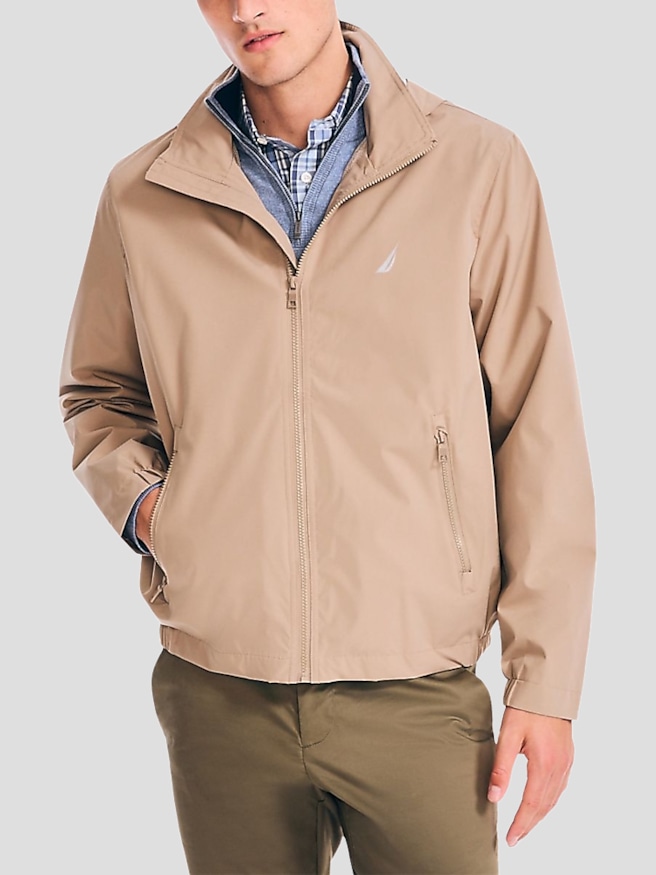
Men's black bomber jackets are waist-length outerwear defined by a zip front, a close-fitting hem, and cuffs that give the body a slightly rounded shape. Rooted in aviation clothing, the bomber has become an everyday alternative to a denim jacket or casual blazer, with a compact profile that works over a T-shirt, polo, or button-down shirt. Black emphasizes the silhouette without making the jacket difficult to coordinate: it sits naturally alongside indigo denim, gray trousers, olive chinos, and neutral knitwear. Details make a substantial difference within that familiar shape. A ribbed collar keeps the neckline understated, while a stand collar gives the jacket a more upright outline. Tonal zippers and discreet pockets create a streamlined appearance; exposed metal hardware, sleeve pockets, and pronounced ribbing bring the original utility influence forward. Materials also change how a black bomber jacket looks, feels, and moves. Nylon and polyester shells can have a smooth, crisp surface or a subtle sheen, depending on the weave and finish. Cotton and cotton-blend fabrics tend to have a more matte appearance, with texture that feels at home beside denim or twill. Leather brings a distinct surface grain and a more substantial drape, while suede offers a soft, napped finish that gives black a less reflective appearance. Neither leather nor fabric automatically determines the weight or flexibility of the finished jacket; thickness, construction, and lining all contribute. A minimally structured shell can fold easily over the arm, while a more substantial design holds its shape when worn open. Smooth linings help sleeves slide over a shirt without catching, and ribbed trims provide contrast against the main body fabric. For everyday use, the most useful distinction is often not between dressy and casual, but between a jacket that feels relaxed and one that creates a sharper outline. Both can belong in the same wardrobe, serving different routines without requiring an entirely different way of dressing.
The fit of a men's black bomber jacket depends on its proportions as much as its labeled size. The shoulder seams generally sit near the ends of the shoulders in a conventional fit, with enough room through the chest and upper back for ordinary movement. Reaching for a steering wheel, sitting at a restaurant table, or carrying a shoulder bag should not pull the zipper taut or make the jacket bind across the back. A dropped shoulder or roomier body can be an intentional design choice, but excess length changes the classic bomber silhouette. The hem typically rests around the waistband or upper hip, allowing the ribbing to anchor the jacket without bunching it high above the pants. Sleeves should reach the wrists with the cuffs resting comfortably rather than squeezing. A closer fit creates a clean line over a tee or fine-gauge sweater; a more relaxed cut leaves space for an Oxford shirt or a sweatshirt without compressing the layers underneath. The right balance becomes especially noticeable when the jacket is zipped, since a bomber that looks comfortable open can still pull across the midsection when closed. Styling benefits from that same attention to proportion. A black bomber over a white crewneck, straight-leg jeans, and simple sneakers makes an easy combination for errands, a casual meal, or a weekend visit. With a knit polo, charcoal trousers, and leather loafers, the silhouette becomes more polished without imitating a suit jacket. In a workplace where casual jackets are appropriate, restrained hardware and a smooth, matte finish can keep the overall appearance understated. An all-black outfit gains definition when the fabrics differ: a textured knit beneath a smooth shell, for example, prevents the layers from blending into one flat surface. Longer shirts can show below the hem deliberately, while a tucked shirt creates a more defined waistline and keeps the jacket's shorter length visually balanced.
Care and construction have a lasting effect on how a black bomber jacket wears. Dark fabric can make lint, dust, and pet hair noticeable, so a fabric-appropriate clothes brush or lint remover is useful for everyday upkeep. Cleaning methods depend on the complete garment, including its lining, trim, and any surface treatment, rather than the outer fabric alone. The care label takes priority: some fabric jackets allow machine washing under specified conditions, while others require professional cleaning. Leather and suede need material-specific care, and a cleaner intended for smooth leather may not be suitable for a napped surface. When permitted by the care instructions, testing a treatment in an inconspicuous area helps reduce the chance of a visible change in color or texture. Prompt attention to marks is generally preferable to repeated, aggressive scrubbing, which can alter the finish. Storage matters, too. A supportive hanger helps preserve the shoulder line, and avoiding prolonged pressure from tightly packed clothing can protect the jacket's shape. Durability is reflected in practical details such as even stitching, secure pocket openings, neatly finished lining seams, and a zipper that moves smoothly without catching nearby fabric. Ribbed cuffs and hems should retain their shape through regular wear, since stretched trim can change the fit of the whole jacket. Pockets are useful for small essentials, but bulky contents can pull at the silhouette and put stress on the openings. As a gift, a black bomber jacket suits someone who regularly wears jeans, chinos, or casual trousers and prefers a recognizable shape over elaborate decoration. Familiar jacket measurements, preferred sleeve length, and usual layering habits offer better clues than guessing from shirt size alone. For a related interpretation of the silhouette, Men's Spring Bomber Jackets provide another point of comparison. A well-chosen black bomber earns its place through comfortable movement, manageable care, and details that feel natural with the clothes already worn most often.