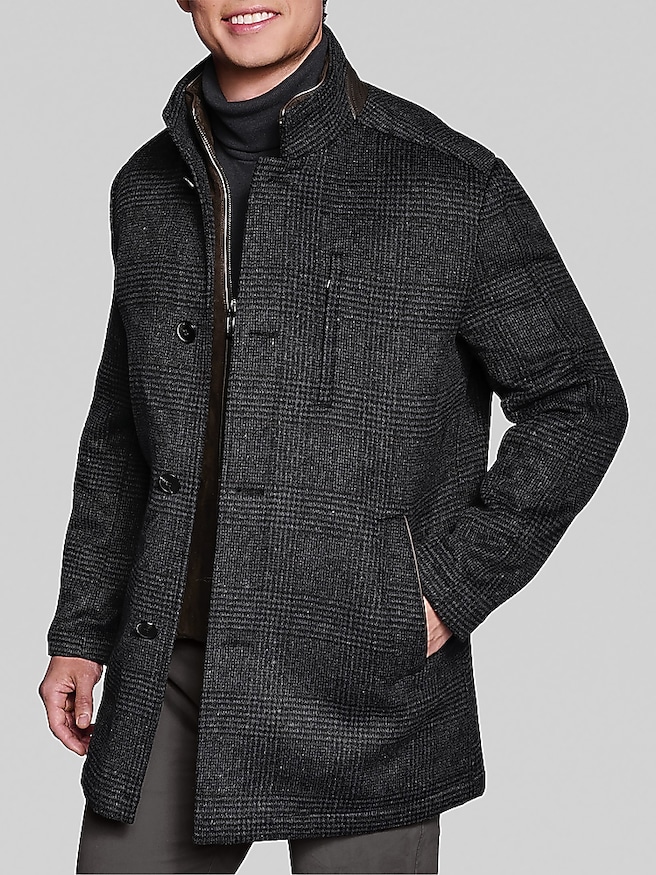
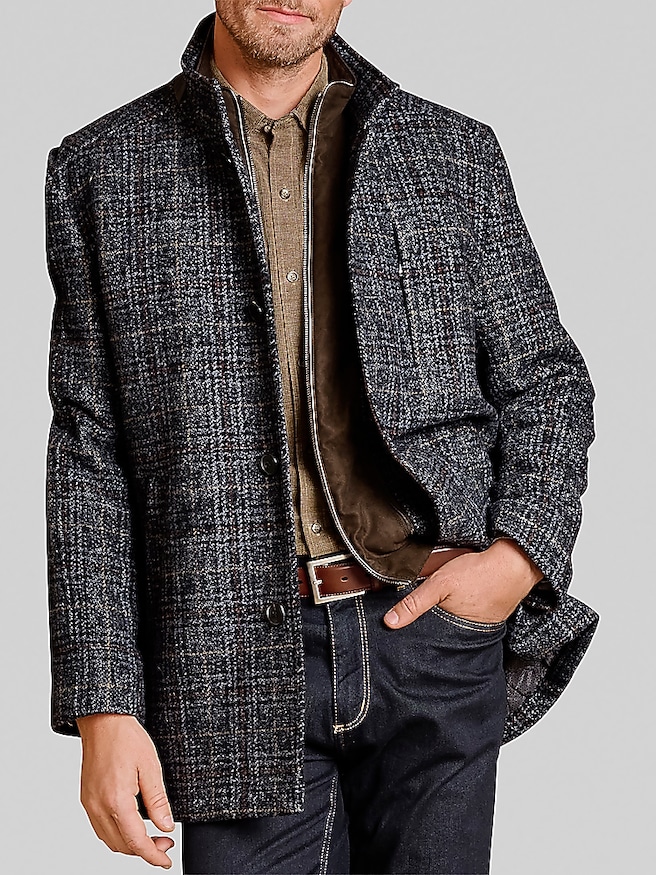
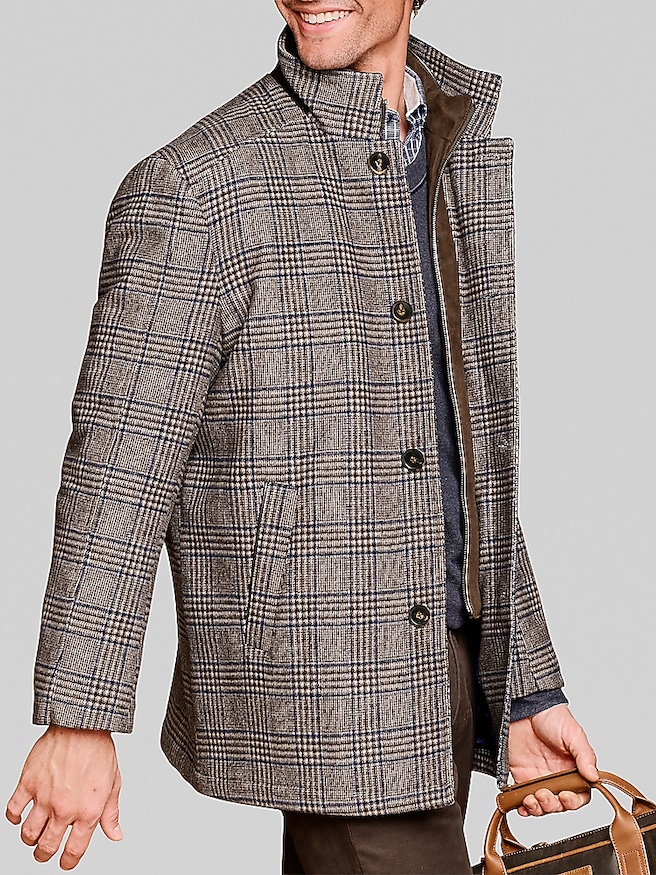
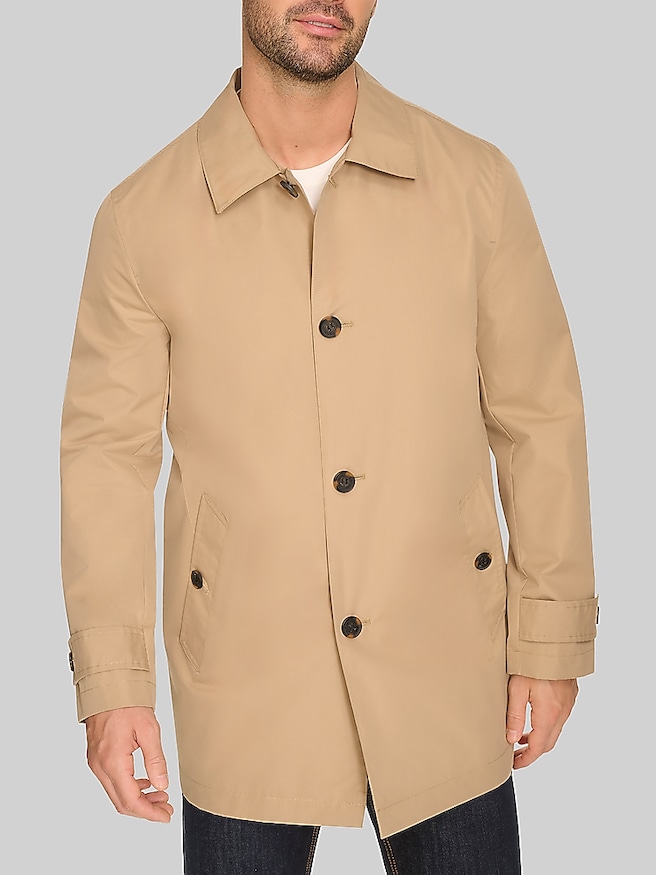
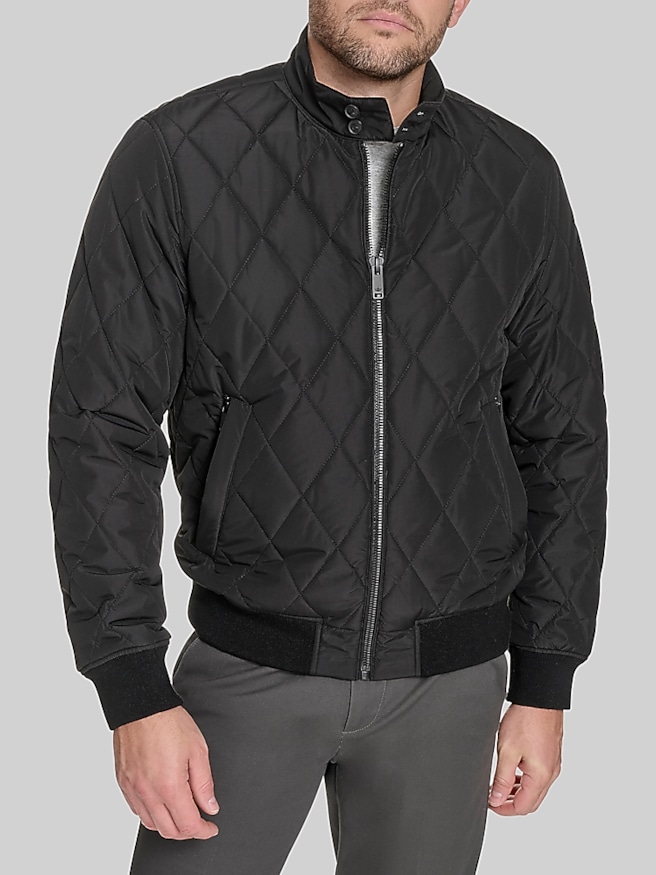
Men's quilted shirt jackets combine the familiar shape of a collared shirt with the added structure and insulation of a lightweight jacket. Often called quilted shackets, they typically feature a button or snap front, adjustable shirt-style cuffs, and enough room to wear over another layer without the bulk of a heavily padded coat. Their defining detail is the stitched pattern across the fabric. Diamond, square, and channel quilting create distinct textures while helping hold layered materials in place; when insulation is present, that stitching also helps limit shifting. The result can look understated from a distance and more dimensional up close, especially in a solid color that lets the seams stand out. Fabric plays a major role in the overall character. Cotton twill has a familiar, substantial hand, brushed fabrics introduce softness, and smooth nylon or polyester shells can give the same basic shape a more streamlined appearance. A shell's weight is separate from its insulation: a sturdy outer fabric does not necessarily mean thick padding, and a lightly padded jacket can still have a substantial feel. Synthetic fill is common in insulated constructions, though the amount of fill and the lining also influence how substantial a jacket feels. A smooth lining helps sleeves slide over a knit shirt, while a brushed lining adds texture against the inside. Details such as a point collar, flap chest pockets, and a rounded hem reinforce the shirt-inspired design. Straight hems and discreet side pockets can make the silhouette read more like outerwear. Buttons offer a traditional finish, while snaps create a clean front and make fastening straightforward. Pocket placement matters in everyday use, too: chest pockets keep small essentials close, and lower pockets provide a comfortable place for hands. Secure closures are useful for small items, although bulky contents can interrupt the jacket's lines. Together, these construction details determine whether a quilted shirt jacket feels relaxed and workwear-inspired or neat enough for a casual office.
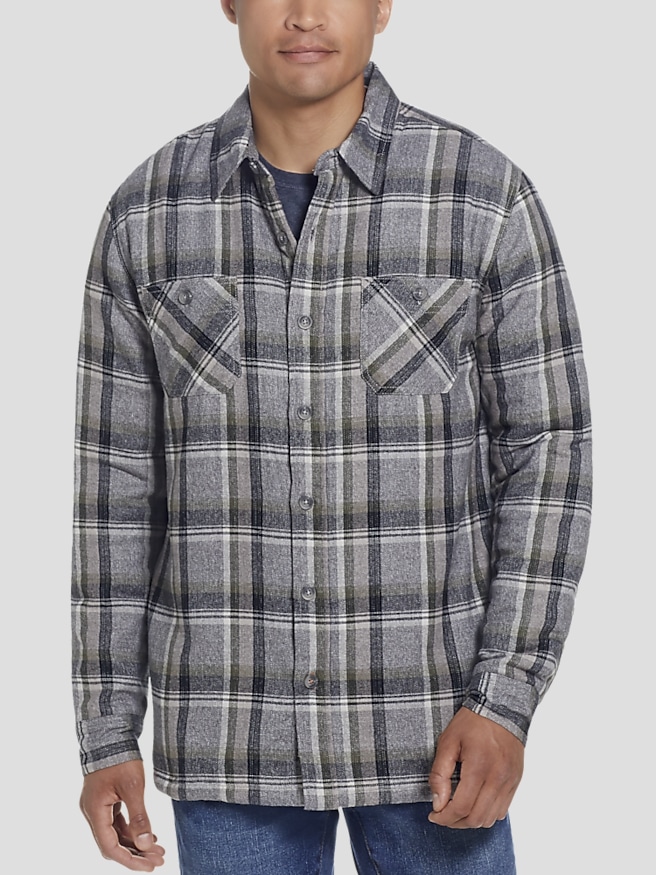
Fit gives a men's quilted shirt jacket much of its usefulness. The shoulders should sit comfortably without pulling across the upper back, and the chest needs enough ease for the layer underneath. A T-shirt requires less room than a textured sweater, so the intended combination matters more than simply choosing a larger size. An easy fit should still have a clear shape: excess fabric through the torso can bunch when seated, while an overly close cut can cause the front to pull between fastenings. Sleeve length deserves attention because shirt-style cuffs generally sit near the wrist rather than extending over the hand. There should also be enough room through the upper arm to bend an elbow or reach across a desk comfortably. Many quilted overshirts finish around the hip, a length that works untucked and keeps the proportions balanced with jeans, chinos, or casual trousers. A curved hem emphasizes the overshirt look, while a straight hem gives a more defined jacket edge. In an everyday outfit, an olive quilted layer over an off-white tee and dark denim creates contrast without relying on a busy pattern. Navy or charcoal can sit easily alongside khaki trousers, a fine-gauge knit, and leather sneakers. A checked shell brings more visual activity, making a plain shirt underneath an uncomplicated companion. Texture can do the same work as color: a matte quilted surface adds interest to smooth cotton trousers without making the outfit feel dressed up. For a workplace with a relaxed dress code, the shirt collar and orderly front offer a finished appearance, although the silhouette remains casual rather than a substitute for tailored suiting. For a stronger emphasis on a soft, plush interior, men's sherpa-lined flannel shirt jackets offer a related layering style; sherpa describes the lining texture, while quilting describes stitched construction. Those features can overlap, but they are not interchangeable.
Durability depends on the full construction of a quilted shirt jacket, not just the thickness of its shell. Even stitching, securely attached fasteners, neatly finished seams, and reinforced pocket openings all contribute to how well a frequently worn layer holds up. Areas that receive repeated handling—the cuffs, front placket, collar edge, and pocket corners—deserve particular attention. A substantial fabric can feel reassuring, but a lighter jacket with sound construction may be better suited to someone who spends much of the day moving between a car, a desk, and casual plans afterward. Care requirements are equally important because the shell, lining, and insulation may respond differently to washing and drying. The sewn-in care label should determine the cleaning method; machine washing is appropriate only when the label permits it. Fastening closures before a permitted wash can help reduce snagging, and avoiding unnecessary heat helps protect fabrics and finishes. If padded sections become compressed or uneven, the label's drying directions matter more than a general rule for outerwear. Small marks may respond to gentle spot treatment with a fabric-appropriate method, while ground-in soil or unfamiliar stains can call for professional cleaning. Between wears, allowing the garment to air out and storing it without crushing the quilted panels helps preserve its shape. These practical details also make quilted shirt jackets thoughtful gifts for someone who favors useful, uncomplicated clothing. A father who wears chinos most days, a brother whose wardrobe centers on denim, or a partner who likes an extra layer for errands may each appreciate the same basic silhouette in a different fabric or fit. An existing jacket can provide a helpful reference for measurements and preferred length. Familiar colors and a comfortable cut usually make a more personal choice than an unfamiliar pattern. The strongest match is a jacket that feels natural with the recipient's everyday clothes, with materials and care requirements that fit everyday routines.