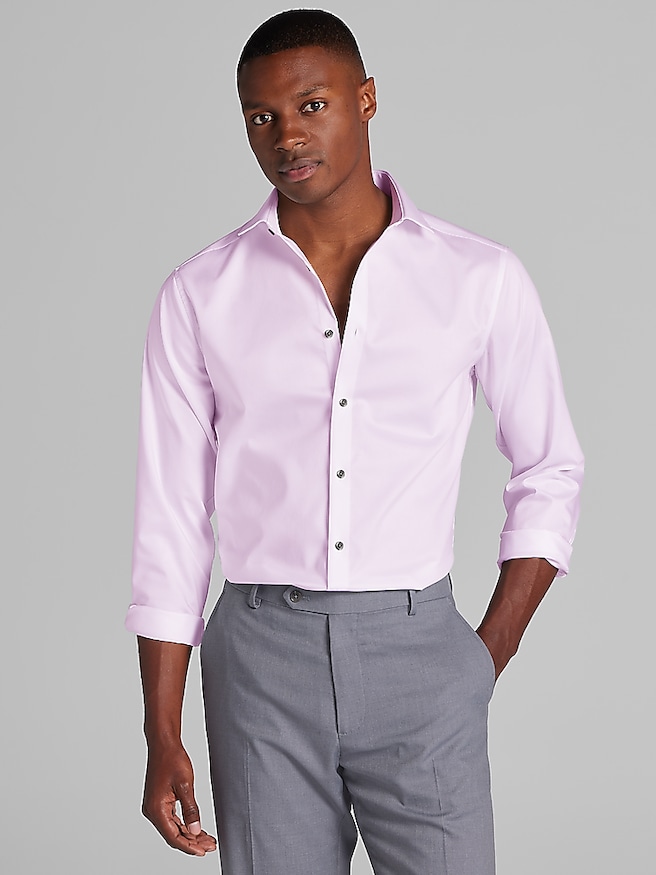
Men's pink button-down shirts bring color to a wardrobe without making an outfit feel complicated. Pale pink offers a subtle alternative to white or light blue, while dusty rose and more saturated shades create a stronger focal point against neutral pants and jackets. The color works especially well with navy, charcoal, medium gray, tan, and dark denim, giving it a place in office outfits, dinner plans, wedding guest attire, and everyday casual dressing. A light pink shirt with navy trousers and brown leather shoes feels polished without looking overly coordinated; a rose-colored shirt with straight-leg jeans and clean sneakers takes the same idea in a more relaxed direction. Fabric helps determine where a shirt fits within that range. Cotton oxford has a textured weave and substantial feel that suits chinos, denim, and softly structured jackets. Poplin has a smoother surface and typically a crisper appearance, making it a natural companion to tailored trousers. Twill has a subtle diagonal weave and often a soft drape, while linen and linen blends introduce visible texture and a more relaxed finish. Cotton blends can balance softness with easier maintenance, depending on their fiber content and finish. Stretch fabrics may provide additional give through the shoulders and elbows, though a comfortable cut still matters more than stretch alone. The shade and weave also influence how pink reads in person: a finely woven pale pink can look understated beneath a dark jacket, while a textured rose fabric has more visual depth on its own. Solid shirts make the color easy to pair with patterned ties or jackets, and pink stripes or small checks can add definition without dominating an outfit. For someone who usually wears neutral shirts, a muted pink offers a practical way to introduce color while keeping familiar pants, belts, and shoes in rotation.
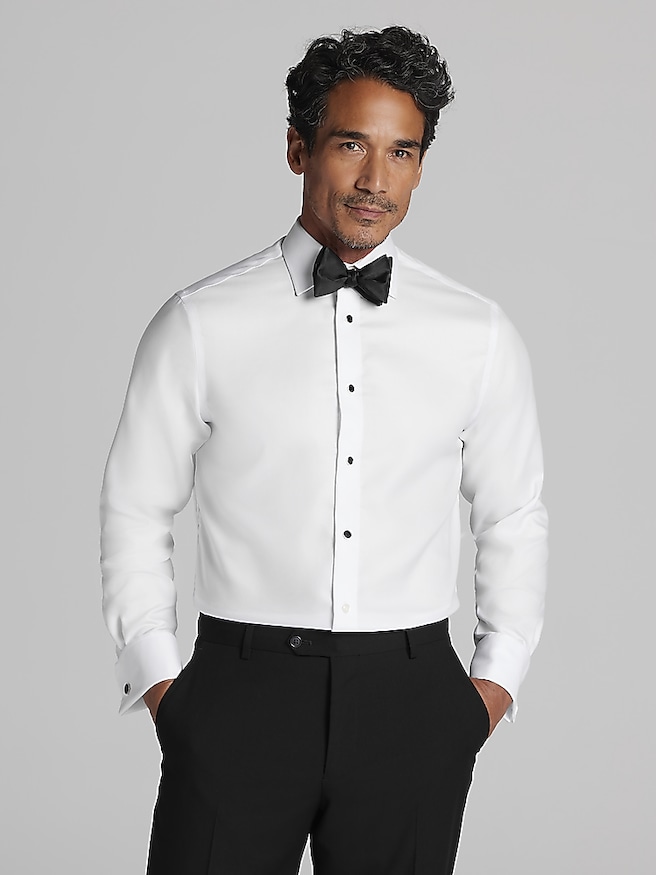
Fit gives a pink button-down shirt its shape, whether the outfit calls for a tucked-in office look or an easy untucked silhouette. A well-proportioned shoulder seam sits close to the point where the shoulder meets the arm, and the chest should allow comfortable movement without pulling the front placket apart. Sitting down, reaching forward, and bending the elbows can reveal tension that is less noticeable while standing still. Slim fits generally follow the torso more closely, while classic and relaxed fits provide additional room; the most useful choice depends on body proportions and personal preference rather than the name on the label. Too much fabric can bunch beneath a jacket, but an overly close fit can create horizontal pulling across the chest or waist. Sleeve length deserves similar attention. With the arms resting naturally, long sleeves should reach the wrist, and cuffs should close comfortably without sliding far onto the hand. A shirt intended to stay tucked needs enough length to remain secure when reaching or sitting. An untucked style generally has a shorter hem that covers the waistband without extending so far that it overwhelms the pants. Collar construction adds another distinction. Technically, a button-down collar has small buttons that secure its points to the shirt, while button-up describes the front closure. Those terms are often used interchangeably, but the collar detail affects the finished look. Button-down points keep the collar neat beneath a sweater or casual jacket, and an open neckline can frame the face without needing a tie. With a tie, the collar should close comfortably at the neck and accommodate the knot without strain. For a presentation or client lunch, pale pink with charcoal trousers and a navy jacket offers restrained contrast. For a birthday dinner or an afternoon gathering, an open collar, rolled sleeves, and well-fitting chinos create a more relaxed combination. Keeping the surrounding colors simple allows the pink to look intentional rather than overly matched.
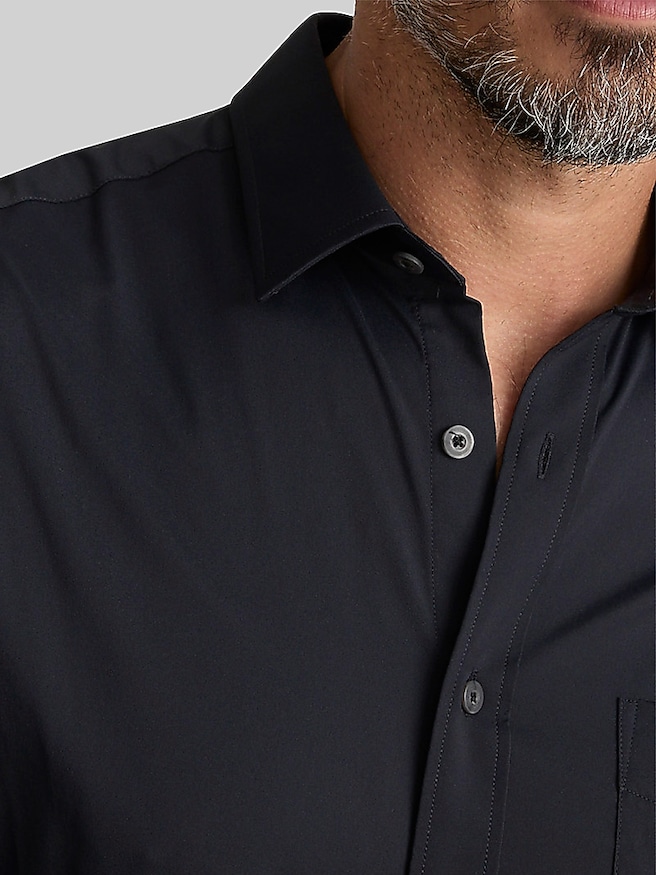
Care and construction help determine how well a pink shirt holds its appearance through repeated wear. Even stitching, neatly finished seams, securely attached buttons, and a placket that lies flat are useful signs of careful construction. Reinforcement at stress points can support durability, particularly around cuffs and sleeve openings that receive frequent handling. The care label remains the best reference for cleaning because cotton, linen, stretch blends, and specially finished fabrics do not all respond the same way to washing, drying, or ironing. Washing with similar colors and avoiding unnecessary heat can help protect the shade and fabric, when consistent with the label's directions. Prompt attention to marks around the collar and cuffs can prevent ordinary buildup from becoming harder to remove; any stain treatment should be suitable for the fabric and tested in an inconspicuous area. Removing a shirt promptly after an approved wash or dry cycle and smoothing the collar, placket, and cuffs can reduce creasing before it is hung. If ironing is appropriate, the correct setting matters, especially for blends containing heat-sensitive fibers. Wrinkle-resistant finishes may reduce maintenance, but they do not eliminate the need for proper care. These practical details matter for a shirt worn regularly to work, packed for business travel, or kept ready for dinners and celebrations. Pink can also be a thoughtful gift for a father, brother, partner, or friend who enjoys tailored clothing or wants another option beyond blue and white. A familiar fit, preferred sleeve length, and easy-to-coordinate shade make that choice more personal than color alone. For a broader wardrobe that includes additional colors, patterns, and collar styles, Men's Button Up Shirts provide a natural complement to pink. Paired with dependable neutral pieces and cared for according to its fabric, a pink button-down can become a regular part of getting dressed rather than a shirt reserved for one occasion.