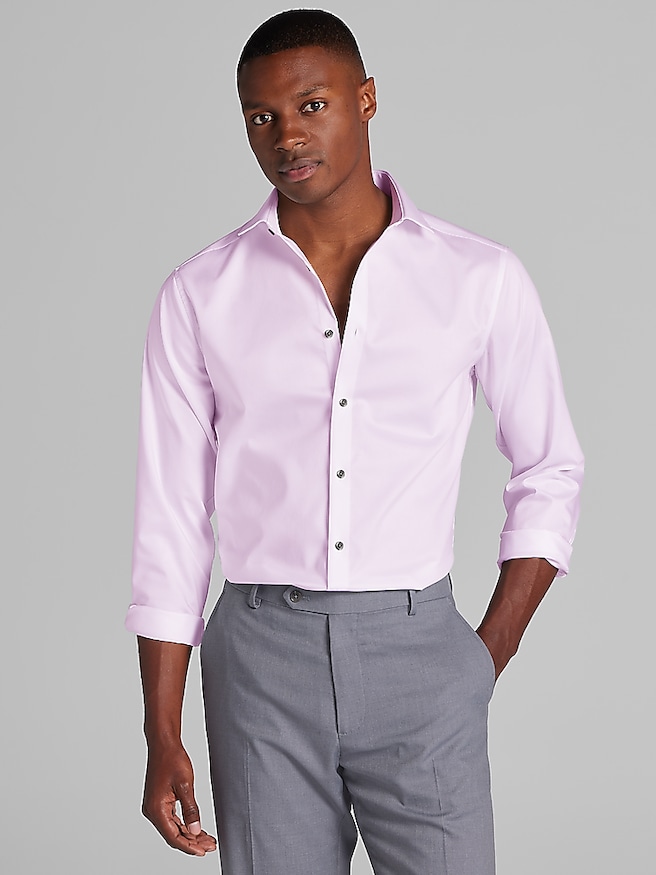
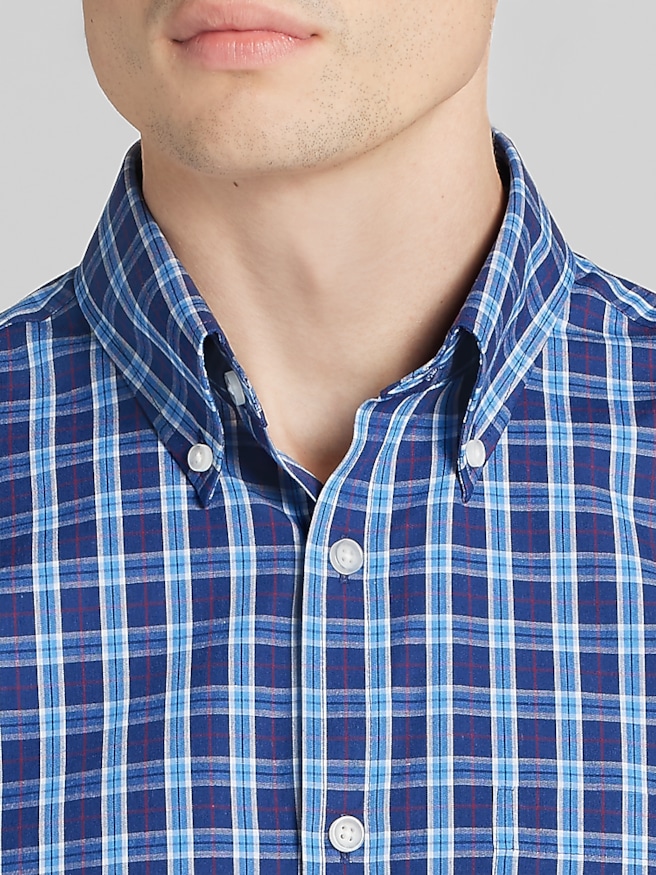
Pink button-down shirts for men bring color to everyday dressing without requiring a bold pattern or an elaborate outfit. The category spans casual oxford shirts, smooth dressier styles, and textured fabrics that sit comfortably between the two, making pink a useful option for office days, dinners, celebrations, and relaxed weekends. Pale pink reads softly against charcoal trousers, while dusty rose adds depth beside dark denim or olive chinos. Brighter shades make a more noticeable statement, especially when the rest of the outfit stays simple. The distinction between a button-down and a button-up matters: a true button-down has small buttons that secure the collar points, while button-up describes the front closure and can include several collar styles. Those secured collar points help maintain a neat shape beneath a sweater or sport coat and give an open neckline a tidy finish. A fine-textured pink shirt with a crisp collar can look polished with navy tailoring; a more substantial oxford with sleeves casually rolled suits a lunch reservation or an afternoon gathering. Solid colors keep attention on the fabric and fit, while subtle stripes, checks, or a small woven texture add interest without competing with patterned accessories. Pink also works well with familiar wardrobe staples. Brown leather shoes and a matching belt provide a grounded finish, white sneakers keep a casual outfit clean, and a navy tie creates definition against a lighter shirt. For business-casual settings, the combination of a pale pink shirt, gray trousers, and a dark belt feels considered without looking overly formal. At a wedding rehearsal dinner or birthday celebration, a rose-toned shirt beneath a textured jacket introduces color while leaving the overall outfit understated. The shade, collar construction, and surface texture all influence how dressed up the shirt feels, allowing the same color family to serve a wide range of personal styles and occasions.
Fabric and fit determine much of a pink shirt’s comfort, appearance, and usefulness over time. Cotton is a familiar choice for its soft feel and breathability, though the weave changes the character considerably. Oxford cloth has a visible basketlike texture and a substantial hand that pairs naturally with chinos and denim. Poplin usually has a smoother surface and a crisper appearance, making it well suited to outfits with tailored trousers. Twill brings a subtle diagonal weave, a fluid drape, and often a slightly richer visual finish. Linen has a distinct texture and natural creasing that lends itself to less structured outfits, while cotton-linen blends combine characteristics of both fibers. Blended fabrics may include fibers intended to improve stretch, wrinkle resistance, or moisture management; those benefits depend on the actual composition and finish rather than the shirt’s appearance alone. A pale pink fabric can also vary in opacity, so a discreet undershirt close to the wearer’s skin tone may create a cleaner look than bright white beneath a thin weave. Fit names offer a starting point, but the shirt’s measurements and cut provide a more useful picture. Slim fits generally sit closer through the torso, while classic or relaxed fits allow more space through the chest and waist. Shoulder seams should sit near the shoulder edge, and the button placket should lie flat rather than pull open across the chest when seated. Enough room through the upper back makes reaching for a steering wheel or working at a desk more comfortable. Long sleeves should reach the wrist without bunching excessively, with cuffs secure enough to stay in place. For tucked-in wear, a longer hem helps the shirt remain anchored through normal movement. Shirts intended to be worn untucked generally have shorter proportions that look balanced over the waistband. Collar size also matters when a tie is part of the outfit: a comfortably closed collar creates a cleaner foundation than one that pinches or leaves a large gap.
Thoughtful construction helps a frequently worn pink button-down keep its shape and polished appearance. Even stitching, securely attached buttons, and neatly finished seams are useful details, particularly at cuffs, collar points, and other areas that receive repeated handling. Fabric weight alone does not determine durability; fiber quality, weave, construction, and care all play a part. Easy-care and wrinkle-resistant finishes may simplify upkeep, but the care label remains the best reference for washing, drying, and pressing. Cotton and linen can shrink with excessive heat, and repeated overdrying can be hard on fibers and finishes. Washing with similar colors helps preserve the shirt’s appearance, while prompt attention to marks around the collar and cuffs can keep routine wear from becoming more noticeable. Any stain treatment should be compatible with the fabric and tested discreetly when needed. Removing a washable shirt promptly after the recommended drying cycle and smoothing the collar, placket, and cuffs can reduce stubborn creasing. Pressing requirements vary by material, particularly when stretch fibers or special finishes are involved. A well-shaped hanger supports the shoulders between wears, and allowing the shirt to dry completely before storing helps keep it ready for the next occasion. These practical details make a pink shirt useful for someone building a business-casual wardrobe, adding variety to an established collection of neutrals, or looking for a comfortable option for social plans. It can also make a thoughtful gift when the recipient’s preferred fit, neck size, sleeve length, and usual dress habits are known. Someone who regularly wears tailored trousers may appreciate a smooth, understated pale pink, while someone who favors denim may get more use from a textured rose oxford. For another versatile color in the same wardrobe, Blue Button Down Shirts For Men pair with many of the same jackets, trousers, and accessories while offering a distinct alternative to pink.