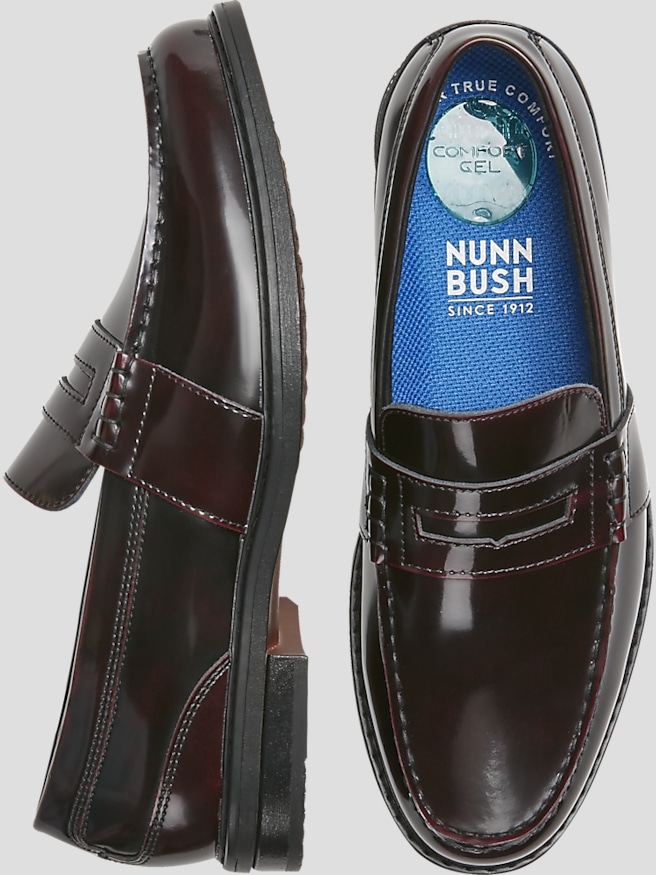
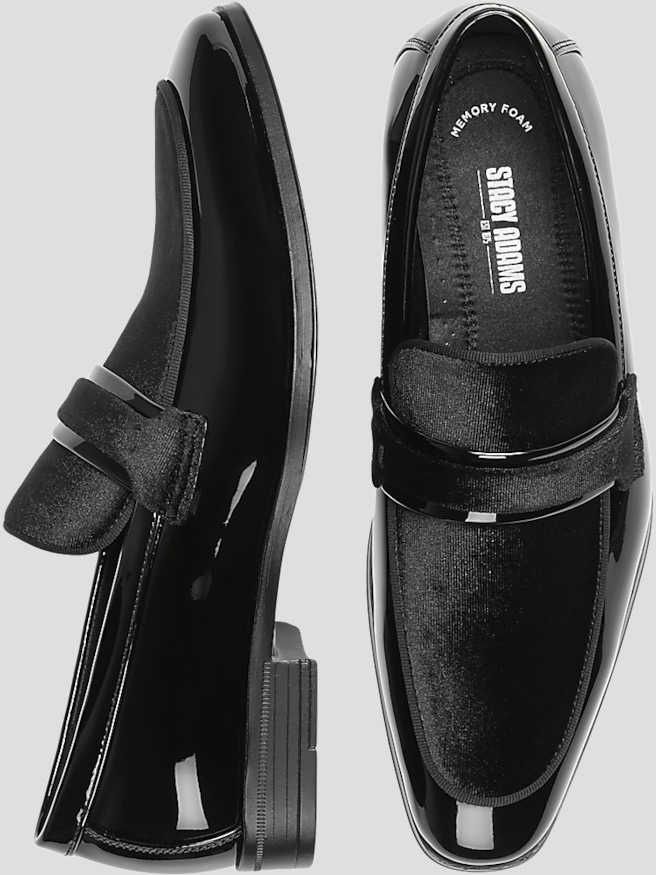
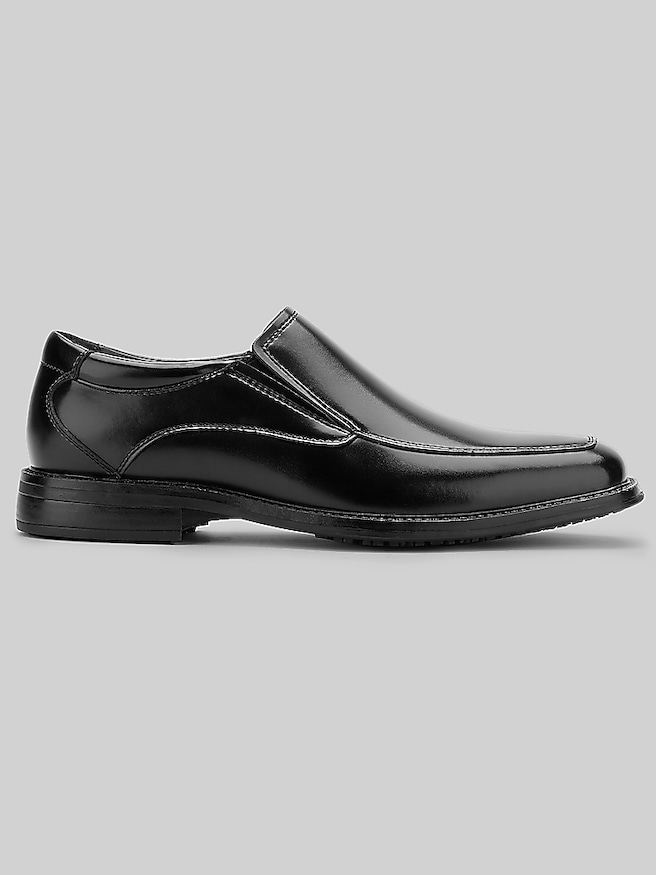
Men's loafers for narrow feet should feel secure through the heel and midfoot without crowding the toes. The right fit comes from the shoe's interior shape, not simply a pointed toe or a slender-looking sole. A loafer can look sleek from above yet still have more room than a narrow foot needs, while a rounded style built on a narrower last—the form used to shape a shoe—may hold the foot comfortably. Because loafers have no laces to adjust, heel width, instep volume, and the shape of the opening all play important roles. A close-fitting heel cup helps limit slipping, and a vamp that extends farther over the top of the foot can provide a more secure feel than a deeply cut opening. Neither feature should create pressure across the instep or force the toes together. Proper length still matters: sizing down solely to eliminate extra width can leave too little space at the front and place the shoe's flex point behind the ball of the foot. A narrow-width option, when indicated in the sizing information, is a more useful starting point than assuming a smaller size will solve the problem. Even within the same stated size, construction and shape can change how a loafer fits. The most reassuring fit feels close around the sides, allows the toes to rest naturally, and keeps the foot from sliding forward with each step. A little initial movement at the heel can occur while a firm sole begins to flex, but repeated lifting, rubbing, or a need to grip with the toes suggests a mismatch. Fit also changes with hosiery, so the thin dress socks worn with trousers or the low-cut liners worn with chinos belong in the equation. Leather may soften with wear, but breaking in should not be expected to transform an overly roomy shoe into a narrow one. That distinction makes secure proportions more valuable than a slim appearance alone.
Materials and construction give narrow-fitting loafers much of their character, influencing both their appearance and the way they settle around the foot. Smooth leather has a clean finish suited to tailored clothing and can develop a softer feel and a richer patina with regular care. Suede brings a muted, textured surface that works naturally with chinos, textured trousers, and dark denim. Soft uppers may feel accommodating from the start, although softness by itself does not guarantee support or a secure heel. More structured leather and a substantial heel counter can help maintain the shoe's shape, while smooth linings and neatly finished seams reduce potential friction points. For a narrow foot, the balance matters: an upper should follow the foot closely without collapsing loosely around it. Penny loafers offer a restrained, familiar look, tassel loafers add movement and detail, and metal-bit styles introduce a more noticeable accent. These design choices affect the overall impression, but they do not determine width. Sole construction deserves equal attention. A thin leather sole creates a low-profile outline that complements sharply pressed trousers, whereas rubber soles can offer more cushioning or traction, depending on their design. Neither a thin sole nor a sleek silhouette is proof of a narrow fit. Flexibility at the ball of the foot can make walking feel more natural, especially when the heel stays seated rather than lifting with every stride. For someone moving between a desk, meeting rooms, and an evening reservation, a balanced combination of flexibility, cushioning, and shape retention often matters more than an especially lightweight feel. Stitching, edge finishing, and the connection between the upper and sole also contribute to durability. Some constructions permit resoling, while others do not, making the stated care and repair details worth considering. A well-matched loafer should complement its intended use, whether that means a polished workday appearance, an understated wedding-guest outfit, or a relaxed dinner look.
The appeal of loafers lies in how easily they bring a finished look to everyday clothing, particularly when the proportions stay clean. A narrow-fitting pair can sit neatly beneath tapered trousers without the sides gaping at the opening, creating a continuous line from hem to shoe. Smooth, minimally detailed styles tend to suit dress trousers and sport coats, while textured uppers and more casual soles work comfortably with chinos or straight-leg denim. For business-casual offices, graduation celebrations, dates, and family gatherings, the most useful choice is one that matches both the dress expectations and the amount of walking involved. Someone who spends much of the day on foot may value underfoot cushioning and flexible soles more than a particularly delicate profile. Someone seeking a dressier finish may favor smooth leather and restrained detailing, provided the fit remains comfortable. Loafers can also make a thoughtful graduation or milestone gift, especially when the recipient's size, width, and preferred sock thickness are already known; familiar styling alone cannot account for a narrow heel or a low-volume instep. If measurements point to a broader forefoot instead, the Men's Wide Loafers category provides a separate width-focused comparison rather than a solution for excess room. Once the fit is right, consistent care helps preserve both appearance and structure. Dust and surface grit should be removed before they build up, with a soft brush for suede and an appropriate cloth or brush for smooth leather. Leather conditioner and polish should match the material and finish, while suede needs products intended for its nap. Cedar shoe trees can help absorb perspiration and support the upper between wears without being forced tightly into the shoe. Allowing worn loafers to dry naturally before wearing them again helps protect linings and uppers; direct heat can make leather stiff or brittle. Attention to worn heel edges and thinning soles can also keep a comfortable pair in service longer. The result is footwear that retains its shape and polish while continuing to feel secure on a narrower foot.