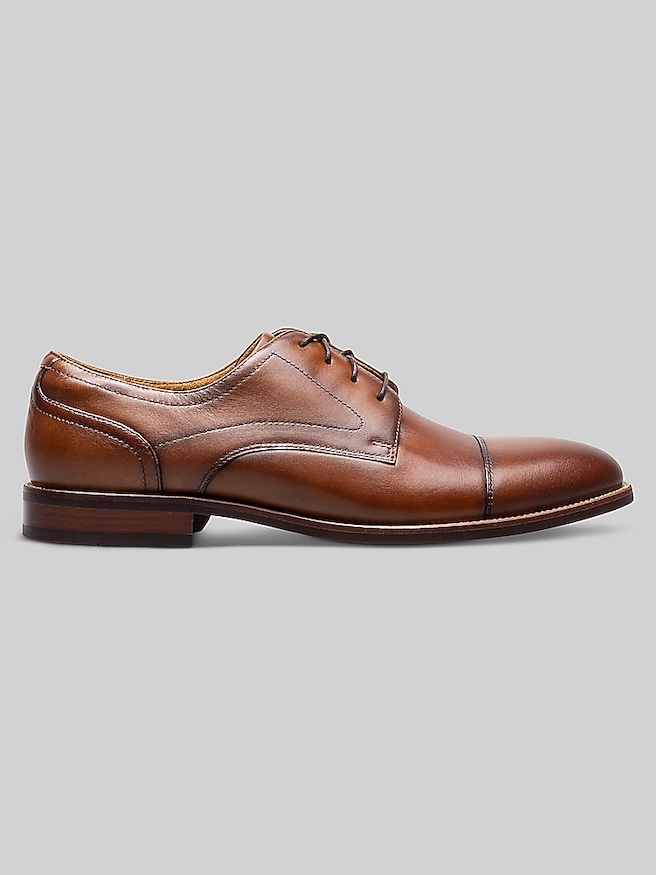
Men's leather dress shoes give tailored clothing a finished look, whether the occasion calls for a business suit, dress pants with a sport coat, or formal evening attire. Their appeal comes from the balance of shape, texture, and proportion: a smooth leather upper, a neatly defined toe, and a polished finish can make even a straightforward outfit feel considered. Oxfords are distinguished by closed lacing, with the lace panels attached beneath the front section of the upper for a clean, close-fitting appearance. Derbies have open lacing, which creates a slightly more relaxed look and often allows greater adjustment across the instep. Loafers offer a slip-on alternative that works especially well with tailored separates and business-casual clothing, although their suitability for more formal settings depends on the design and dress code. Toe details also influence the impression a shoe makes. A plain toe keeps the silhouette simple, a cap toe adds a restrained line of definition, and wingtip detailing introduces decorative perforations known as broguing. Those perforations generally make a shoe less formal than an otherwise similar unadorned style. Black leather dress shoes are a dependable match for black and charcoal suits and also work with navy when a crisp, formal appearance is the goal. Dark brown leather complements navy, gray, and earth-toned clothing, while cognac and lighter brown shades create more contrast and a less formal impression. For black-tie events, sleek black shoes with a highly polished or patent finish are traditional companions to a tuxedo. At a job interview, client meeting, wedding ceremony, or graduation, the most effective pairing respects the occasion without drawing attention away from the person wearing it. A belt in a similar leather color helps the outfit look coordinated; an exact shade match is less important than keeping the tones compatible. The shoe's proportions matter, too. A streamlined toe usually sits comfortably beneath tailored pant legs, while an exaggerated point or bulky profile can interrupt the clean line from the trouser hem to the floor.
Leather quality, interior construction, and fit all contribute to how dress shoes feel after several hours of wear. Full-grain leather retains the hide's natural grain surface and can develop a distinctive patina with appropriate care. Top-grain leather has undergone additional surface processing, while corrected-grain leather is treated to create a more uniform appearance. These terms describe aspects of the material, not a complete guarantee of comfort or craftsmanship; tanning, finishing, stitching, and construction also matter. Smooth leather tends to suit polished business and occasion dressing, whereas suede has a soft, textured surface that reads as more relaxed. Patent leather has a glossy finish associated with formal eveningwear and requires care suited to its coating rather than ordinary leather conditioning. Inside the shoe, a smooth lining helps reduce friction, and cushioning can soften the feel under the heel and ball of the foot. Support and cushioning serve different purposes, so a plush footbed alone does not establish whether a shoe fits well. The heel should feel secure without pinching, the widest part of the foot should sit comfortably within the widest part of the shoe, and the toes need room to move without pressing against the front. A small amount of heel movement can occur in some new leather-soled shoes, but repeated slipping, rubbing, or toe pressure deserves attention. Leather may soften and conform with wear, yet a break-in period should not be expected to correct a shoe that is too short or substantially too narrow. Trying shoes with the dress socks intended for regular use gives a more useful sense of fit than relying on the size number alone. Differences in toe shape, width, and instep height can make the same labeled size feel quite distinct across designs. The comfort considerations behind Mens Comfortable Dress Shoes are particularly relevant to workdays with standing presentations, ceremonies with extended receptions, and evenings that continue onto the dance floor. A well-fitting pair should support those plans without making every step a reminder of the shoes.
Durability depends on more than the leather upper. The outsole, the way it is attached, and the attention given to regular care all influence how well men's leather dress shoes hold up. Leather soles have a traditional appearance and can feel flexible as they adapt to wear, while rubber soles can provide cushioning and traction; the actual grip depends on the sole's design and the surface underfoot. Welted construction can make resoling possible when the upper remains in good condition, though repair options vary by design and should be assessed by a qualified shoe repair professional. Other construction methods can produce lightweight, flexible shoes, so the best choice depends on intended use rather than one construction label alone. Someone who wears dress shoes throughout the workweek may place more emphasis on supportive interiors and a durable outsole, while someone dressing for occasional formal events may prioritize a sleek profile and a finish that complements a suit or tuxedo. Regular care helps either kind of pair retain its appearance. Surface dust and dirt are easier to address before they settle into creases, and leather conditioner, used sparingly according to the material's care directions, can help maintain suppleness. Cream polish can refresh color and provide a soft sheen, while wax polish can add shine, particularly at the toe and heel. Neither should be applied indiscriminately to suede or patent finishes. Cedar shoe trees can help absorb interior moisture and preserve shape between wears, and alternating pairs gives the lining time to dry naturally. Direct heat can damage leather, so patient drying is preferable to placing shoes against a heater. For a gift recipient, leather dress shoes can mark a graduation, a career milestone, or another meaningful occasion, especially when the recipient's size and preferred style are already known. Familiar details matter: a person who wears navy tailoring often may appreciate dark brown leather, while someone with frequent formal commitments may favor polished black. With suitable fit and consistent care, leather dress shoes can remain a dependable part of a wardrobe through many meetings, celebrations, and dressier everyday moments.