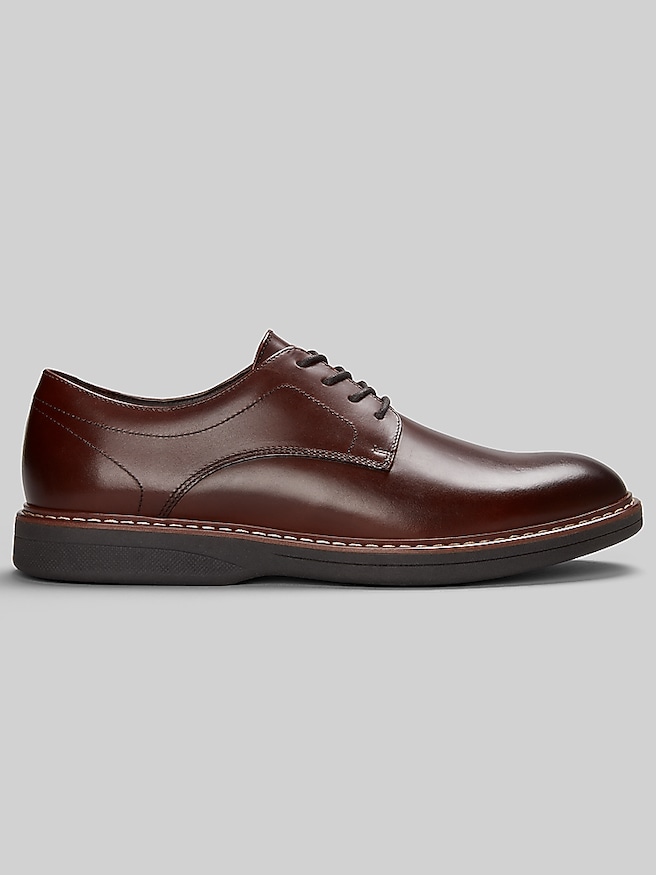
Men’s comfortable dress shoes bring together the clean lines of traditional footwear and the cushioning, flexibility, and support that make a full day on your feet more manageable. Their appeal is practical: a polished appearance for a morning presentation, a comfortable stride between meetings, and enough versatility for dinner afterward. Comfort depends on the whole shoe, not just a soft footbed. A well-fitting upper, adequate toe room, secure heel, supportive cushioning, and an outsole suited to the setting all contribute to how a pair feels over several hours. Oxfords offer a streamlined profile that complements tailored suits, while derbies have a more open lacing arrangement that can provide greater adjustment across the instep. Loafers offer an easy slip-on shape for dress trousers, chinos, and more relaxed office outfits, though their fit needs to stay secure without help from laces. Cap toes add understated structure, plain toes keep the look simple, and brogue detailing brings texture to wool trousers or a subtly patterned suit. Black smooth leather has a crisp, formal presence; brown and burgundy tones add warmth alongside navy, gray, and earth-toned clothing. For workplaces where tailoring meets a less formal dress code, men’s sport dress shoes offer a related direction, combining dress-inspired uppers with athletic-influenced sole designs. A slim, discreet outsole generally looks dressier than a thick, contrasting one, even when both provide cushioning. The right balance depends on the occasion: a wedding ceremony may call for a more traditional silhouette, while a conference day with long corridors and extended standing can make a lighter construction especially appealing. During the cooler months, these shoes also sit naturally beneath flannel trousers, textured sport coats, and heavier suits. A smooth upper and restrained detailing can carry the same pair from everyday business clothing to a celebratory evening without drawing attention away from the outfit. That range makes comfort-focused dress footwear useful for commuters, frequent travelers, wedding guests, and anyone whose schedule stretches well beyond a seated workday.
Materials and construction help explain why dress shoes with similar appearances can feel noticeably distinct. Smooth leather can soften and develop creases with wear, while its surface responds well to appropriate conditioning and polishing. Full-grain leather retains the hide’s natural grain, but that label alone does not determine softness, flexibility, or overall comfort; thickness, tanning, lining, and construction matter too. Suede offers a softer visual texture that works particularly well with brushed cotton and wool, although it needs care suited to its nap and is less forgiving of wet, muddy conditions. Textile or knit panels can make a dress-casual shoe lighter and allow more airflow, with a less formal effect than an uninterrupted leather upper. Inside, smooth seams and a comfortable lining help limit rubbing, while moisture-managing materials can help move perspiration away from the foot. Breathability still depends on the combined upper, lining, socks, and conditions of wear. Underfoot, foam cushioning can soften impact, but the softest feel is not automatically the most supportive. A stable base and cushioning that does not collapse too readily can feel more balanced during extended standing. Rubber outsoles often provide useful flexibility and grip, while lightweight foam midsoles can reduce bulk and cushion each step. Leather outsoles offer a traditional finish, though traction varies with the surface and any added rubber sections. Tread design matters on smooth lobby floors and damp sidewalks, and a dress shoe should not be assumed slip-resistant or waterproof unless identified that way. Flexible forefoot construction allows the shoe to bend near the ball of the foot rather than forcing a stiff stride. A structured heel helps hold the rear of the foot in place. Some constructions also allow resoling, which can extend useful life when the upper remains sound; others prioritize low weight and easy flexibility. For daily wear, the most useful combination is one that matches the wearer’s walking distance, standing time, and expected level of formality rather than relying on a single comfort feature.
Fit brings those features together. Comfortable men’s dress shoes should feel secure through the heel and midfoot, with enough space for toes to rest naturally rather than bunch against the front or sides. Length alone does not tell the full story: width, toe shape, instep height, and the curve of the shoe all affect how it sits on the foot. A narrow-looking silhouette may feel restrictive even in the usual size, while a roomier shape can provide breathing space without excess length. Trying shoes with the socks intended for everyday wear gives a more useful sense of fit, especially when lightweight dress socks give way to slightly thicker pairs in cooler weather. Feet can swell through the day, so a late-day fitting can reveal pressure that might go unnoticed in the morning. For lace-up styles, the closure should hold comfortably without creating a tight band across the top of the foot. Loafers should stay on during a normal stride without requiring the toes to grip. Leather may ease with use, but persistent pinching, numbness, or pronounced heel rubbing should not be treated as a necessary break-in stage. Removable footbeds can accommodate replacement insoles or prescribed orthotics when the shoe has sufficient depth, though the fit should be checked with the intended insert in place. For gift recipients, a familiar size is a starting point rather than a guarantee; knowing their preferred width, usual dress code, and favored shoe shape adds useful context. Lasting comfort also depends on care. Allowing shoes to dry naturally between wears, away from direct heat, helps protect their materials. Shoe trees can help leather uppers retain their shape, while a soft brush removes dust before it settles into seams and creases. Appropriate leather conditioner, polish, or suede care keeps the finish suited to the material. Checking worn heel edges, thinning tread, and compressed footbeds helps identify when maintenance or replacement is needed, preserving both a polished appearance and a dependable feel underfoot.