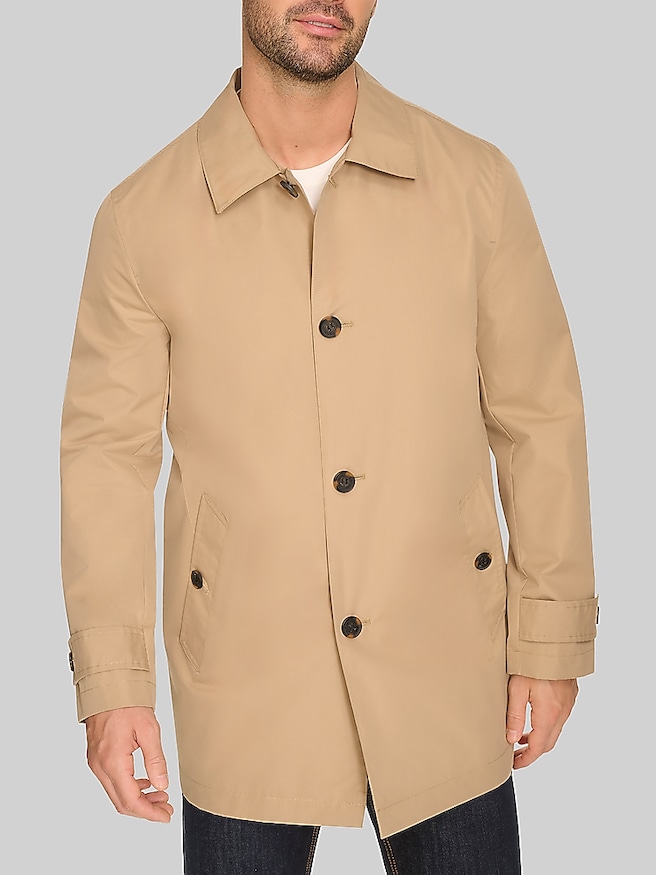
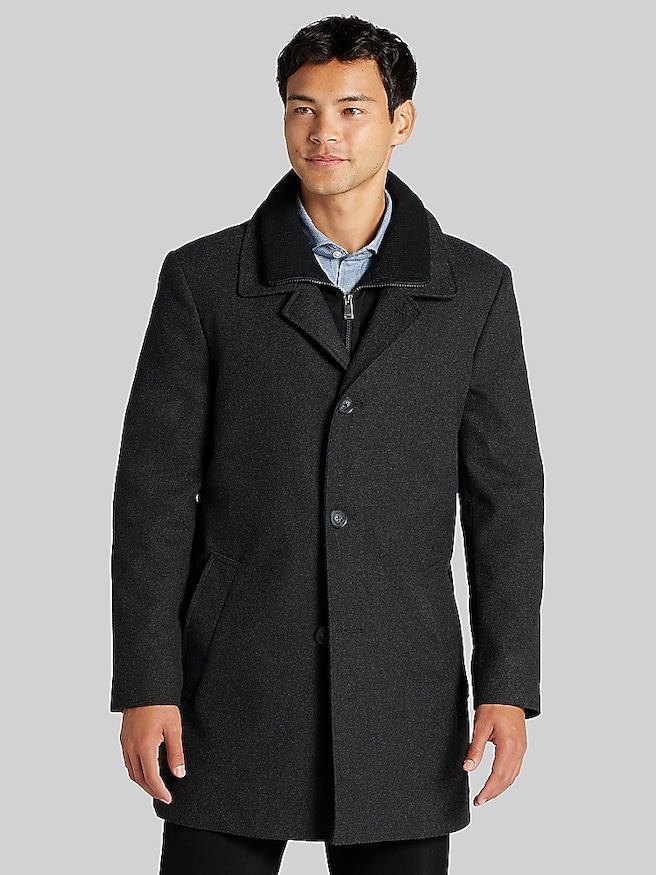
Men’s grey overcoats are tailored outer layers designed to fit over suits, sport coats, and everyday clothing, adding warmth without losing a clean, structured appearance. Their appeal starts with the color: light grey brings a softer contrast to dark trousers, medium grey works easily with both business and casual wardrobes, and charcoal offers a deep neutral that feels especially natural over formal clothing. A heathered fabric introduces subtle variation, while a smoother surface creates a more uniform finish. These distinctions give grey overcoats considerable range, from the daily commute to an evening at the theater. Wool is a traditional overcoat material because its fibers provide insulation, help manage moisture vapor, and recover well from ordinary creasing. Wool blends combine those qualities with the characteristics of other fibers; the exact composition matters more than the blend label alone. Cashmere can add softness, while synthetic fibers may contribute strength or help a fabric maintain its shape. Fabric weight, weave, lining, and construction all influence how a coat feels and performs. A dense cloth can offer more resistance to moving air than a loosely woven fabric, but an overcoat should not be assumed waterproof unless its care and performance information specifically says so. A smooth lining helps the coat slide over a jacket or sweater without catching, and thoughtful seam construction supports an even drape. Texture also changes the character of the garment. A brushed finish feels relaxed and tactile, while a compact, smooth finish emphasizes the lines of the lapels and front closure. For someone moving between a train platform, an office lobby, and a restaurant, that balance of warmth and tailored shape makes a grey overcoat a practical finishing layer. It belongs comfortably over a navy suit, yet it can look equally appropriate with dark denim and a substantial knit. The result is outerwear with a clear purpose: covering the layers beneath while keeping the overall outfit composed.
The fit of a grey overcoat depends on what sits underneath it as much as on the measurements of the coat itself. A silhouette that looks sharp over a thin shirt may feel restrictive over a suit jacket, particularly across the shoulders, upper arms, and chest. A well-proportioned overcoat leaves enough space for those layers while following the body rather than hanging loosely from it. The shoulder line should sit cleanly, and the front should close without pulling the lapels outward or creating pronounced tension around the buttons. Reaching forward, settling into a car seat, or carrying a work bag should feel manageable rather than constrained. Slim cuts tend to sit closer through the torso and sleeves, while classic cuts generally allow more layering room; neither description replaces checking the actual garment measurements. Length has an equally visible effect. An overcoat that covers the hem of a suit jacket maintains an uninterrupted outline, while a longer cut provides additional coverage through the thighs and around the knees. Shorter lengths can feel less cumbersome when walking briskly or sitting, though the balance still needs to work with the clothing underneath. Sleeve length should account for a jacket sleeve and allow the hands to move comfortably. Single-breasted fronts offer a straightforward, adaptable look, while double-breasted construction creates a broader front with overlapping coverage and a more pronounced tailored presence. Notched lapels tend to read as understated; peaked lapels bring greater definition to the chest and shoulders. Pockets, vents, and closures matter beyond appearance. Hand pockets should be comfortably placed, interior pockets can keep small essentials close, and a back vent can ease movement through the stride. Deeply filled pockets, however, may distort the coat’s shape. For someone who regularly wears tailoring, the most useful proportions are those that accommodate the full outfit without adding unnecessary bulk. For someone whose routine centers on sweaters and chinos, a slightly easier silhouette can feel natural without sacrificing polish.
Grey also simplifies the task of building a coherent outfit. A charcoal overcoat over a navy suit creates depth without a stark color break, while a pale grey coat can brighten the appearance of black trousers and a dark sweater. Brown leather shoes bring warmth to the palette; black leather keeps the effect crisp and restrained. With casual clothing, a textured knit, straight-leg denim, and clean boots complement the coat’s tailored structure without making the outfit feel overly formal. A scarf in burgundy, navy, or muted green can introduce color near the face, though a tonal grey scarf keeps the look quiet. For occasions that call for a more dressed-up finish, Grey Dress Coats provide a related outerwear category to consider alongside the shape and formality of the outfit beneath. Long-term appearance depends partly on how the coat is treated between wears. A broad, supportive hanger helps preserve the shoulders, and enough space in the closet keeps the fabric from being compressed. A gentle clothing brush can lift surface dust and lint from suitable wool fabrics, following the fabric’s direction rather than scrubbing against it. Any cleaning or spot treatment should follow the care label, since fiber content, lining, and internal construction can require specialized handling. If a coat becomes damp, allowing it to air-dry away from direct heat helps protect its shape; it should be fully dry before storage. Avoiding repeated friction from an overloaded shoulder bag can also reduce wear in one concentrated area. These habits help maintain the surface and structure that make an overcoat look refined. As a gift, a grey overcoat is especially thoughtful for someone starting a role that calls for business attire, refreshing a tailored wardrobe, or seeking a polished layer for dinners and other dressier plans. Knowing the recipient’s usual jacket size, preferred length, and typical layering habits makes the choice more personal. The strongest match is a coat that feels comfortable in familiar settings and looks at home with clothing already worn often.