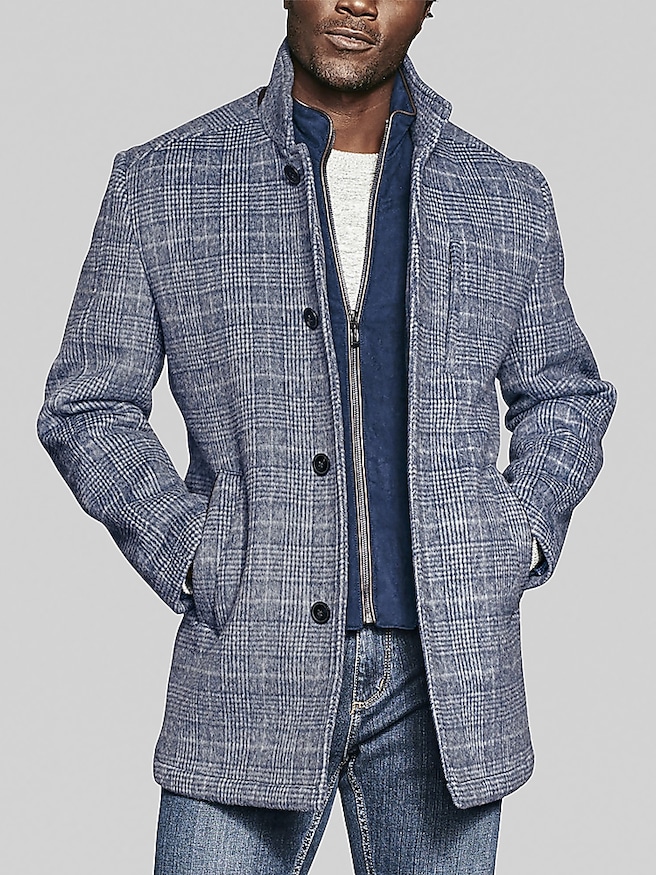
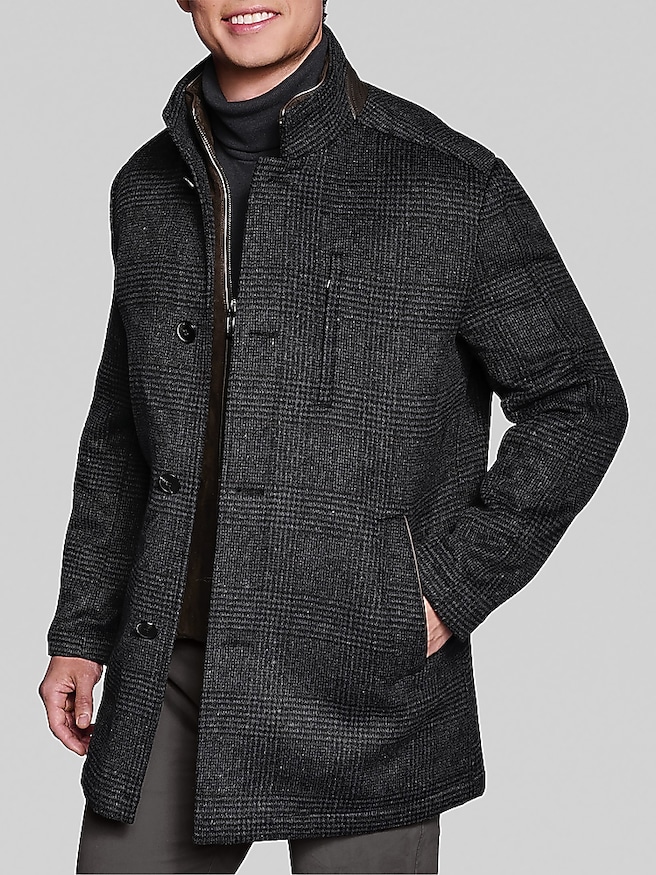
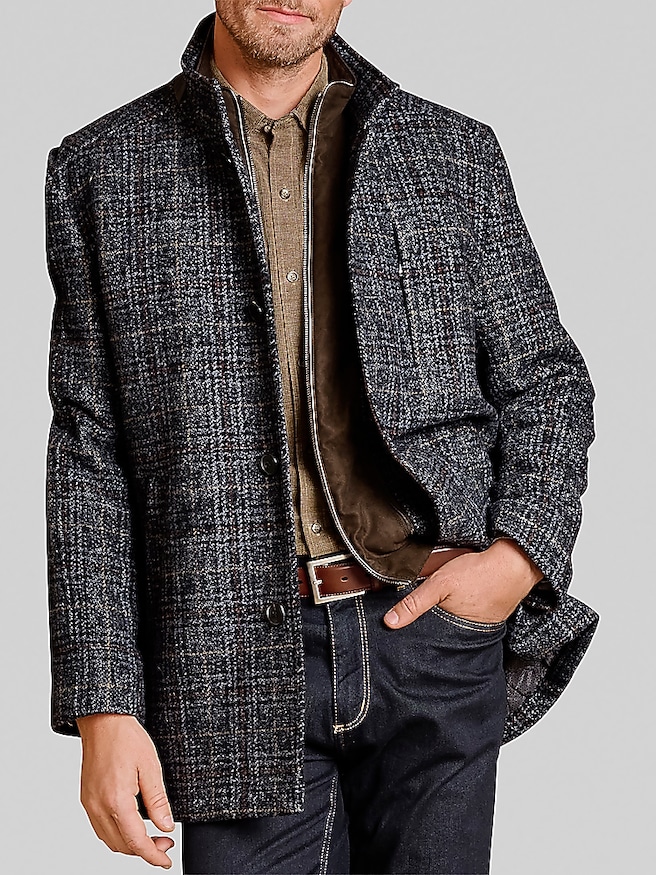
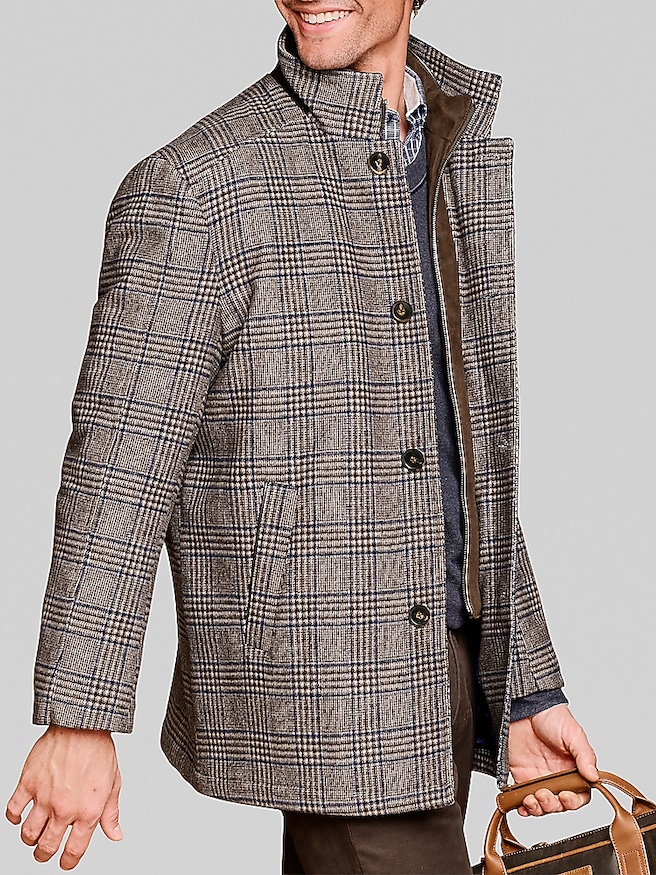
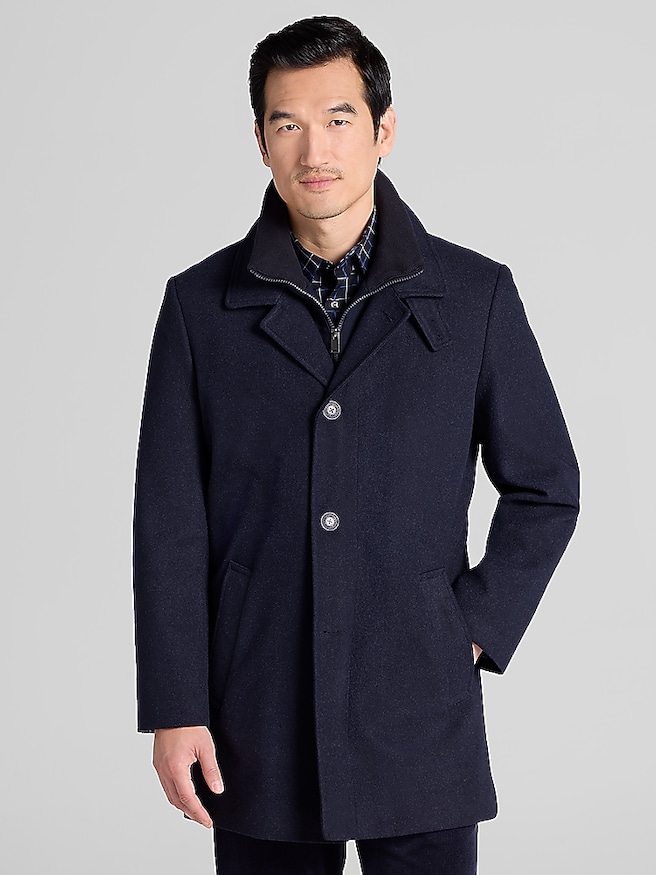
Men’s all-weather overcoats combine the polished shape of traditional tailored outerwear with construction intended to help manage rain, wind, and changing temperatures. Their appeal is practical: a longer coat can cover a suit jacket, shield more of the legs from wind-driven drizzle, and maintain a clean silhouette on the walk from a train platform to an office entrance. The term “all-weather” describes a versatile approach to outerwear rather than a guarantee of protection in every condition. Actual performance depends on the fabric, seams, closures, lining, and any weather-resistant treatment. Water-resistant materials can help shed light precipitation, while waterproof protection generally requires a suitable barrier and sealed seams to keep water from entering through stitched areas. A durable water-repellent finish helps moisture bead on the surface, but that finish alone does not make a coat waterproof. Tightly woven synthetic fabrics can provide a smooth, lightweight exterior, while blended fabrics may add texture, softness, or a more traditional appearance. Wool-rich construction offers warmth and a substantial drape, though wool content by itself does not establish rain protection. Breathability matters, too, especially when a commute includes brisk walking, crowded transportation, and time spent indoors before the coat comes off. A shell that blocks wind can feel noticeably more protective without requiring excessive bulk, while insulation or a removable liner, where included, can extend comfort into colder conditions. Fabric weight also affects how a coat moves: lighter constructions tend to feel less cumbersome when carried over an arm, while heavier cloth often creates a more structured outline. These distinctions make men’s all-weather overcoats useful for business travel, everyday commuting, and occasions that call for something more tailored than casual outerwear. Stylish Raincoats offer a related approach to wet-weather dressing, with an emphasis on rain protection and a finished appearance. In either category, the most meaningful details are the ones that match the conditions and clothing the coat will accompany.
Fit gives an all-weather overcoat much of its versatility. A coat worn over tailoring needs enough room through the shoulders, chest, and upper arms to accommodate a jacket without pulling across the back or compressing the sleeves underneath. That extra space should feel intentional rather than oversized; a clean shoulder line and a smooth front help preserve the coat’s tailored character. Buttoning or fastening the coat over the layers typically worn beneath it gives a more useful sense of proportion than assessing it over a thin shirt alone. Reaching forward, sitting down, and slipping a hand into a pocket can reveal tightness that is not obvious while standing still. Sleeve length should provide coverage at the wrist without swallowing the hand, and the hem should fully cover a suit jacket when the two are worn together. A longer silhouette offers additional coverage during a walk across an exposed parking lot, while a shorter overcoat can feel easier to manage when getting into a car or moving through busy transit stations. A back vent adds room for a natural stride, although its construction also influences how much wind reaches the layers beneath. Closures and collar design make a difference in daily use. A covered fastening can reduce direct exposure at the front, and a collar that closes comfortably at the neck helps limit drafts without crowding a scarf. Where included, adjustable cuffs, secure interior pockets, and a removable hood add practical flexibility. Pocket placement matters when hands need a comfortable resting place, but carrying bulky objects can interrupt the coat’s lines. Color and texture shape its role in a wardrobe as well. Dark neutrals sit naturally over business clothing, while softer earth tones can complement knitwear, chinos, and textured trousers. A restrained silhouette moves easily from a morning meeting to an evening performance, giving the same coat a purpose beyond the daily commute without making every outfit feel overly formal.
Durability in men’s all-weather overcoats comes from more than a substantial feel. Even stitching, well-secured buttons, smoothly operating zippers, and reinforcement around frequently used pockets all contribute to reliable everyday wear. The areas that experience the most friction—cuffs, pocket openings, collar edges, and the points where a shoulder bag rests—deserve particular attention because repeated abrasion can affect both appearance and protective finishes. Care requirements vary considerably by construction. Some technical fabrics are washable according to their care labels, while tailored wool blends and structured coats may require professional cleaning. A waterproof membrane, bonded seam, or specialized surface treatment can also have care restrictions that differ from those of a conventional overcoat. Following the garment’s instructions helps preserve its shape and performance; fabric softener, high heat, or an unsuitable cleaning method can interfere with certain finishes and components. After exposure to rain or snow, giving the coat room to dry thoroughly before storing it helps prevent lingering dampness. A broad, supportive hanger helps maintain the shoulders, and a coat should not be pressed tightly into a crowded closet while wet. Drying away from direct heat is generally gentler on fabrics, trims, and bonded details, subject to the care label. Surface repellency can diminish with use, so any restoration treatment should be compatible with the fabric and recommended care method rather than applied indiscriminately. These practical considerations are especially relevant for someone who wears an overcoat several days a week or packs one for frequent work trips. An all-weather overcoat can also be a thoughtful gift for someone starting a professional role or building a tailored wardrobe, provided the recipient’s measurements, usual layers, and care preferences are understood. Its lasting usefulness rests on a straightforward balance: comfortable movement, appropriate protection, dependable construction, and a shape that feels at home over the clothes already worn most often.