Men’s formal wedding accessories include ties, bow ties, pocket squares, cufflinks, shirt studs, tie bars, suspenders, belts, dress shoes, and dress socks. Together, these finishing touches connect a suit or tuxedo to the occasion, whether the wearer is a groom, a member of the wedding party, a parent, or a guest. The invitation’s dress code provides the starting point: traditional black-tie attire centers on a tuxedo and black bow tie, while weddings calling for a formal suit allow more room for necktie colors, patterns, and textures. Silk neckwear has a fluid drape and can feature a smooth satin finish, a subtle woven texture, or a restrained pattern. The distinction matters against a jacket: a lustrous bow tie complements satin lapels, while a softly textured necktie adds depth to a solid suit without demanding attention. Neckwear proportions also affect the overall impression. A tie width that relates to the jacket’s lapels tends to look balanced, and enough length for the tip to reach around the trouser waistband creates a clean finish. Bow ties should sit comfortably at the collar without pulling or leaving an obvious gap. Pocket squares bring another layer of texture near the face, from the crisp edge of white linen to the softer folds of silk. They can echo a color in the tie or wedding palette without repeating the exact fabric and pattern. A white pocket square with a straight fold feels restrained and traditional; a softly folded square introduces more movement. For a wedding party, shared neckwear colors establish continuity in group photographs, while a distinct pocket square or slightly different texture can distinguish the groom. The most cohesive combinations give each detail a purpose, leaving enough visual space for the tailoring, shirt, and wearer to remain the focus.
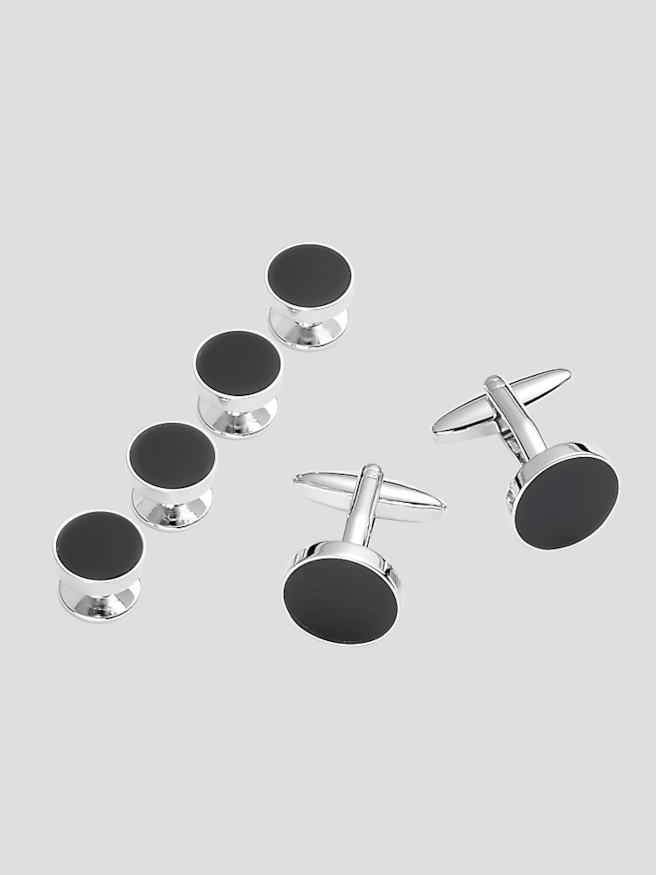
Metal accessories add polish while performing practical jobs throughout the ceremony and reception. Cufflinks secure French cuffs, with their size and fastening style influencing how comfortably the cuffs sit beneath jacket sleeves. Smooth edges and secure closures matter during handshakes, toasts, and hours at the table. Shirt studs are appropriate for tuxedo shirts designed to accept them; not every formal shirt requires studs, so the shirt’s construction determines the right finishing pieces. Coordinating cufflinks and studs creates a consistent look across the shirt front and wrists, whether the metal has a bright polish or a quieter brushed finish. A tie bar serves a different purpose, holding a necktie against the shirt placket so it stays controlled through a busy celebration. Its length should remain narrower than the tie, and its placement should allow the tie to hang naturally rather than bunch. Belts and suspenders support trousers in distinct ways. A leather belt suits dress trousers with belt loops, while suspenders work with trousers designed for them; traditional tuxedo trousers generally rely on side adjusters, suspenders, or both rather than a belt. Wearing a belt and suspenders together adds unnecessary bulk. Suspenders with adjustable straps provide room to refine the fit, and button attachments require compatible buttons inside the waistband. Below the trouser hem, footwear and socks complete the line. Sleek black leather lace-ups are a classic formal choice, while highly polished or patent leather styles can complement a tuxedo. With suits, shoe color depends on the fabric and degree of formality. Comfortable footwear should hold the heel securely without pinching across the forefoot, with enough room for toes during extended standing. Dress socks that stay up and cover the calf when seated keep the transition from trousers to shoes tidy. Fine cotton, merino wool, and blended yarns offer distinct textures and comfort characteristics, while reinforced heels and toes can improve durability where socks experience the most friction.
The value of wedding accessories extends beyond how they appear in a portrait. A tie needs to settle neatly after the jacket comes off, a pocket square needs enough body to hold its fold, and cufflinks need to remain secure from the first photographs through the last dance. Fabric weight, stitching, attachment hardware, and finishing all contribute to that experience. Silk offers depth of color and an elegant hand, while polyester neckwear can provide resilience and straightforward care, depending on its construction. Linen pocket squares are prized for crisp folds and visible texture; silk versions create softer shapes with more sheen. Care labels remain the best reference for cleaning because fibers, dyes, linings, and decorative finishes can require different treatment. Untying neckwear after use rather than pulling it loose helps protect its shape, and allowing it to rest before storage reduces persistent creasing. Pocket squares benefit from being stored clean and folded without excessive pressure, while cufflinks and studs stay better protected in separate compartments that limit scratching. Leather shoes need care appropriate to their finish: smooth leather and patent leather do not always respond well to the same cleaning products. Shoe trees can help preserve shape between occasions, and fully dry shoes are better prepared for storage than footwear put away immediately after wear. These practical considerations also make formal accessories meaningful gifts for a groom, groomsman, parent, or close friend. Understated cufflinks, versatile neckwear, or a classic pocket square can carry memories of the wedding into future celebrations, especially when the style reflects the recipient’s taste rather than only the event’s color palette. The same attention to coordinated finishing touches carries into a Formal Accessories Set For Prom, another expression of dressing thoughtfully for a milestone occasion. For weddings, the lasting appeal lies in accessories that feel comfortable, suit the level of formality, and work together without looking overly matched.