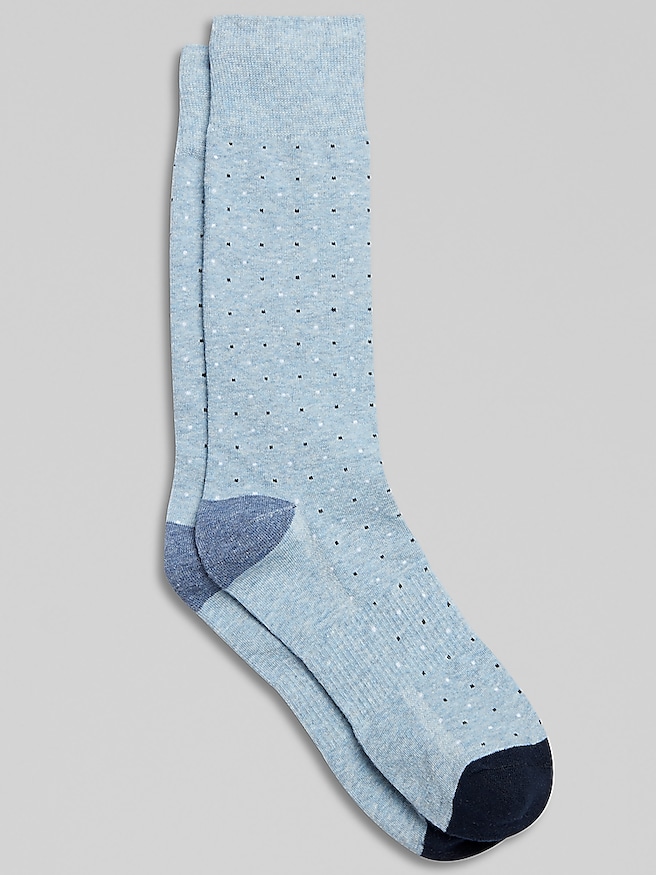
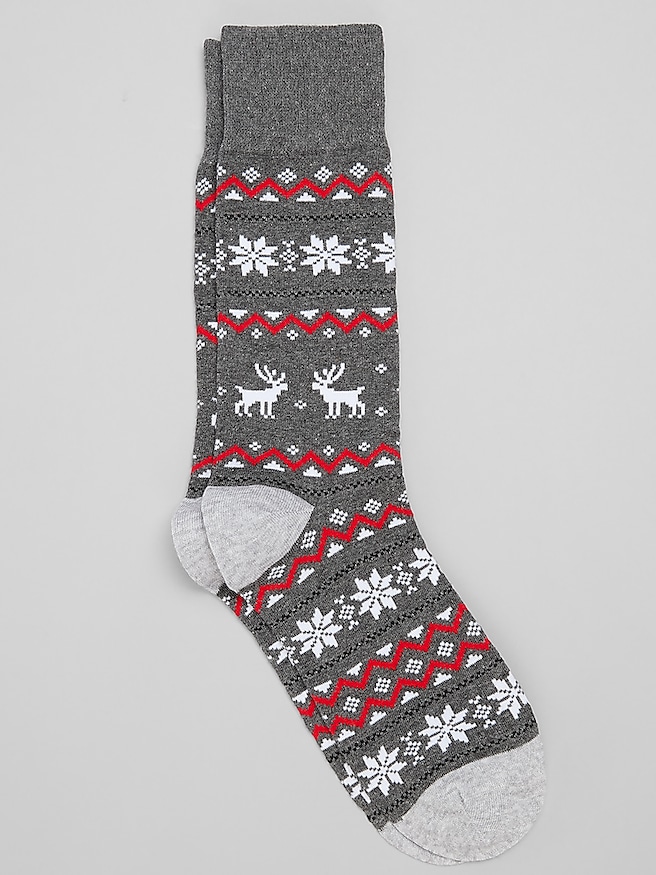
Men's crew socks extend above the ankle and typically reach the lower to middle calf, making them a versatile option for everyday outfits, office clothing, and casual footwear. That extra coverage creates a comfortable layer between the leg and the shoe collar while giving trousers a finished appearance when the wearer sits or takes a long stride. Crew length describes the height of a sock, not a single style: a fine-knit pair can work with dress shoes, while a more substantial knit feels at home with sneakers or boots. The distinction often comes down to thickness, texture, and the amount of cushioning underfoot. Smooth, lightweight socks preserve the fit of close-fitting leather shoes; cushioned soles can add comfort for someone who spends much of the day standing or walking. Solid black, navy, gray, and brown offer straightforward ways to coordinate with familiar wardrobe colors. Matching socks closely to trousers helps maintain a continuous line through the leg, while a contrasting shade creates a deliberate accent above the shoe. Stripes, small geometric patterns, and textured ribbing introduce personality without needing to dominate an outfit. A subtle pattern that picks up a color from a tie or shirt can feel especially considered with tailored clothing. Crew-length styles also overlap with Mens Dress Socks, particularly when the fabric is fine enough to sit neatly inside loafers, oxfords, or other dress shoes. For more formal settings, the height should provide adequate coverage with the chosen trousers, since some crew socks sit lower on the calf than taller dress styles. With jeans or chinos, a visible ribbed cuff or understated pattern can give the outfit a relaxed finish. The most useful everyday socks complement both the clothing and the footwear rather than forcing either to accommodate excess fabric, an awkward cuff, or a bulky toe seam.
Fabric composition has a noticeable effect on how men's crew socks feel through a full day of wear. Cotton contributes a familiar soft hand and is common in everyday blends, although cotton-rich fabric can retain moisture and take longer to dry than some synthetic materials. Merino wool offers a soft fiber with moisture-management and natural odor-resistant qualities, making it useful for extended wear as well as everyday routines. Polyester and other performance fibers may help move moisture away from the skin, depending on the yarn and knit construction. Nylon often contributes strength and abrasion resistance, while a small amount of spandex or elastane gives the sock stretch and helps it recover its shape. The blend matters more than a single fiber name, because softness, resilience, and drying performance come from the way those materials work together. Knit density also changes the feel: a fine, compact fabric sits close to the foot, while terry loops beneath the sole create a cushioned surface. Cushioning concentrated at the heel and forefoot can soften contact in those areas without adding the same thickness throughout the entire sock. Reinforced heels and toes are practical details because those areas encounter repeated friction inside shoes. A smooth or low-profile toe seam can reduce the noticeable ridge across the toes, especially in footwear with limited interior space. Fit is equally important. The heel pocket should settle around the heel rather than ride under the arch or climb toward the ankle, and the toe area should allow comfortable movement without loose fabric folding over itself. A ribbed cuff needs enough recovery to hold its position without feeling restrictive. Socks that slide down, twist, or gather beneath the foot may be the wrong size or shape for the wearer. Shoe-size ranges provide a starting point, but foot width, calf circumference, and the amount of stretch also influence comfort. For long workdays, commuting, or walking between appointments, a secure fit and suitable fabric weight often matter more than decorative details.
Well-made crew socks earn their place in a wardrobe through repeated wear, so care and construction deserve as much attention as appearance. Durability depends on the yarn, the knit, reinforcement in high-friction areas, and how the socks are washed and dried. A thicker sock is not automatically a longer-lasting one; a closely knit lightweight blend with reinforced wear points can hold up well without taking up extra room inside a shoe. The care label is the best reference for washing temperature and drying method, particularly for wool blends or socks with substantial elastic content. Turning socks inside out before washing helps expose the surface that collects skin oils and perspiration, while keeping them away from open zippers and hook-and-loop fasteners reduces opportunities for snagging. Excessive dryer heat can weaken stretch fibers or affect the shape of some fabrics, so a lower-heat setting or air-drying may be appropriate when the label allows it. Complete drying before storage helps socks stay fresh, and gentle folding avoids repeatedly stretching one cuff around the other. Rotating several pairs gives each pair time to be washed and dried between wears. Shoe fit also contributes to longevity: a tight toe box can increase rubbing, while a slipping heel can create repeated friction against the sock. These everyday details are especially relevant for commuters, office professionals, students, and anyone who moves between desk time and time on their feet. Crew socks also make a practical gift for a dad, partner, friend, or graduate building a work wardrobe. Familiar shoe size, preferred colors, and the recipient's usual footwear provide useful direction without requiring a complete outfit. Neutral shades suit someone who favors understated clothing, while a restrained pattern can bring interest to a wardrobe of solid trousers and shirts. Whether intended for daily wear or as a thoughtful gift, men's crew socks combine a small visual detail with comfort that matters throughout the day.