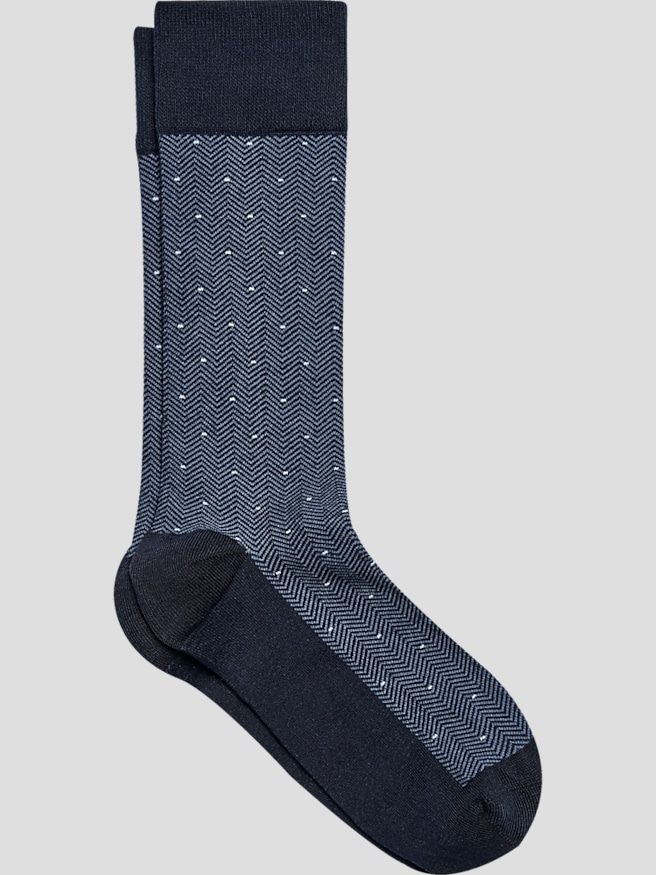
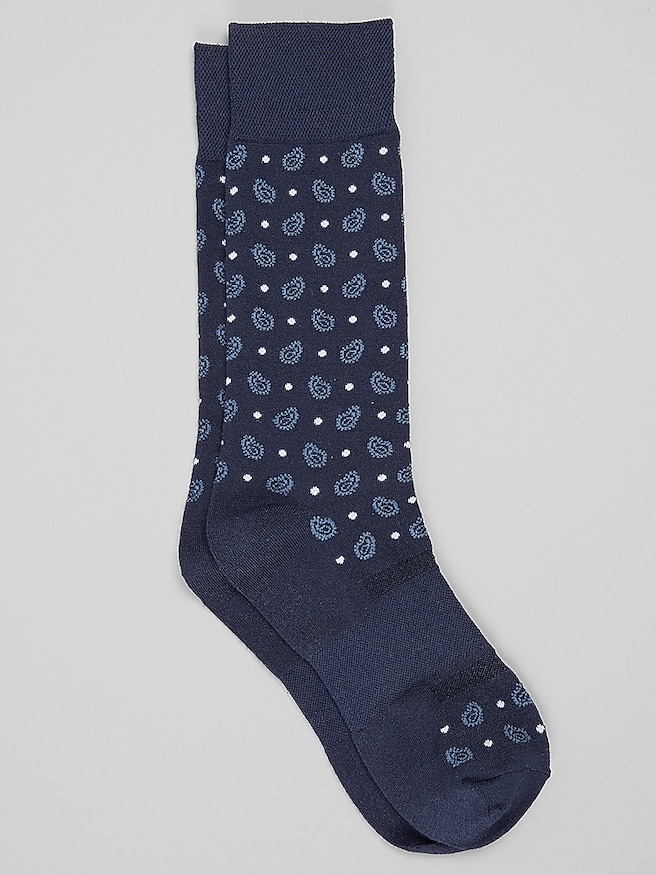
Men's dress socks are fine-knit socks designed to sit comfortably inside dress shoes and complement tailored trousers, suits, and polished everyday outfits. They are typically thinner and less heavily cushioned than athletic socks, creating a smoother fit in leather footwear without adding bulk across the instep or around the toes. Their length matters as much as their fabric: high mid-calf and over-the-calf styles provide coverage beneath trouser hems, while over-the-calf socks are especially useful for keeping bare skin from showing when seated or crossing a leg. That small detail makes a noticeable difference during an interview, a presentation, or a wedding ceremony, when trousers naturally rise above the ankle. A well-fitting pair follows the shape of the foot, with the heel pocket positioned at the heel rather than pulled underneath it or stretched toward the ankle. The toe area should leave enough room for comfortable movement without loose fabric bunching inside the shoe. Through the leg, a gently supportive knit and an elasticized cuff help maintain coverage without an overly tight band. Sizing should account for the stated shoe-size range as well as foot shape, since an excessively stretched sock can pull against the toes and place extra strain on the heel. Smooth or low-profile toe seams help limit rubbing, particularly in close-fitting loafers and lace-up dress shoes. Reinforced heels and toes can improve resistance to wear where contact and friction are greatest, although overall durability also depends on the yarn, knit density, fit, and care. For a workday that includes commuting, meetings, and time on foot, lightweight dress socks offer a practical balance of comfort and a neat appearance. For more formal occasions, a fine, even knit keeps the finish understated. The best choice is not necessarily the thinnest sock; it is one that works with the shoe's fit, stays comfortably in place, and maintains a clean line beneath the trousers without distracting from the rest of the outfit.
Material influences how men's dress socks feel against the skin, manage moisture, and hold their shape through repeated wear. Fine cotton provides a familiar, soft texture, and cotton blends often include synthetic fibers to improve stretch, recovery, or resistance to abrasion. For those who prefer this type of fabric, Men's Cotton Dress Socks offer a focused category for comparing cotton-based options. The full fiber composition is more informative than the main fiber alone: a blend with nylon can add strength, while a small amount of elastane helps the sock conform to the foot and return toward its original shape. Merino wool is another common dress-sock material, valued for its fine fibers, moisture absorption, and natural resistance to odor. Rayon made from bamboo can contribute a soft, smooth feel, but the finished fabric's performance depends on its construction and the other fibers in the blend. No single material guarantees comfort for every wearer. Someone who spends much of the day in fitted leather shoes may prefer a thin, smooth knit, while someone whose shoes have a little more room may appreciate modest cushioning underfoot. A dense, well-made knit can provide durability without the thickness associated with a heavily padded athletic sock. Care is part of preserving that balance. The care label should determine washing and drying methods, especially for wool and blends with elastic fibers. When permitted by the label, a gentle wash cycle and a mesh laundry bag can help reduce snagging and unnecessary agitation. Excessive heat can contribute to shrinkage or weaken stretch fibers, so drying instructions deserve attention rather than treating every pair like ordinary cotton laundry. Socks should be fully dry before being folded and stored, and keeping pairs together makes it easier to maintain a consistent rotation. Allowing footwear to dry between wears also supports a more comfortable setting for the next pair. Over time, thinning at the heel, stretched cuffs, or persistent bunching can indicate that a sock no longer provides its original fit.
Color and pattern give men's dress socks a role beyond comfort, connecting the trousers and shoes or adding a measured point of contrast. Matching socks closely to the trousers generally creates a continuous visual line, which is especially effective with tailored clothing. Navy socks beneath navy trousers and charcoal socks beneath gray trousers keep the lower half of an outfit composed, even when the shoes are a different color. Black socks are a straightforward companion to black trousers and many formal combinations. Matching the shoes instead can also work, but it creates a more distinct break at the trouser hem. For a conservative office or an important interview, solid colors and subtle textures keep the focus on the overall outfit. Small dots, narrow stripes, understated checks, and restrained argyle patterns can introduce detail without dominating it. A pattern that repeats a color from a tie or pocket square offers a connection without requiring every accessory to match exactly. With less formal tailoring, richer colors or more noticeable patterns can show personality when the wearer sits down, while still remaining mostly concealed when standing. Wedding attire often benefits from coordination among the suit, shoes, and socks, particularly when photographs capture seated poses or movement. Smooth, dark socks tend to suit traditional formal dressing, while patterned pairs can feel appropriate when the dress code allows a more expressive finish. Dress socks also make a useful gift for a father, partner, graduate, or colleague who wears tailored clothing regularly. Shoe size, preferred sock height, usual trouser colors, and fabric preferences all help make that gift practical rather than purely decorative. A selection centered on familiar neutrals supports everyday dressing, while a few restrained patterns provide variety for dinners, celebrations, and social occasions. Whether worn with a full suit or trousers and a sport coat, well-chosen dress socks bring together the details that matter most: comfortable fabric, dependable fit, sufficient coverage, and a finish that belongs with the clothes and shoes around it.